A fine figure depicting Old Tom Parr, a likeness based on a painting of Parr by Rubens who allegedly painted him when he was ‘140 years old’.
A fascinating story - Thomas Parr (no known relation of the well-known Staffordshire potter of the same name) was born in Winnington, Shropshire, in 1483. He married for the first time at 80, and then again at 122. He committed adultery at the age of 105 - quite the feat. He was known to be industrious and healthy, but at the tender age of 152, in 1635, he had become wrinkled and old. He was brough to London and presented to King Charles I. Crowds gathered to catch a sight of the old man. However, very soon, exposure to the noxious pollution of London caused him to sicken and die.
Parr’s bizarre life story became an established folk tale in the following centuries, synonymous with health and longevity. In 1841, a Nottingham man called Herbert Ingram developed a vegetable pill which he claimed was based on Parr’s own herbal preparation which had sustained his life beyond his 150th birthday. He called the concoction ‘Parr’s Life Pills’. Ingram was a consummate advertiser and published many overblown ‘testimonials’ about the benefits of Parr’s Life Pills. By the end of the 19th century, it was generally understood that Parr’s Life Pills and other such ‘miracle medicines’ were effectively fraudulent and that many had delayed proper medical treatment, preferring to trust apocryphal remedies advanced by England’s pill-peddling quacks in the hope that they too could see their 152nd year, just like Old Parr!
This figure depicts Parr, based on the aforementioned work by Rubens, with a basket of vegetables - the secrets of his longevity. Pugh speculates that the figure may been produced to help advertise Parr’s Life Pills.
The figure is in very good condition with no apparent damage or restoration. There is some flaking to Parr’s shoes, fading to the gilt title, and some small nibbles to the rim of the base - all commensurate with age.
This is not only an appealing and interesting figure, but a fascinating piece of history.
Reference: P. D. Gordon Pugh, Staffordshire Portrait Figures, p. I612, pl. 18, fig. 42
Height: 9.5”
Date: c. 1840
A fine figure depicting Old Tom Parr, a likeness based on a painting of Parr by Rubens who allegedly painted him when he was ‘140 years old’.
A fascinating story - Thomas Parr (no known relation of the well-known Staffordshire potter of the same name) was born in Winnington, Shropshire, in 1483. He married for the first time at 80, and then again at 122. He committed adultery at the age of 105 - quite the feat. He was known to be industrious and healthy, but at the tender age of 152, in 1635, he had become wrinkled and old. He was brough to London and presented to King Charles I. Crowds gathered to catch a sight of the old man. However, very soon, exposure to the noxious pollution of London caused him to sicken and die.
Parr’s bizarre life story became an established folk tale in the following centuries, synonymous with health and longevity. In 1841, a Nottingham man called Herbert Ingram developed a vegetable pill which he claimed was based on Parr’s own herbal preparation which had sustained his life beyond his 150th birthday. He called the concoction ‘Parr’s Life Pills’. Ingram was a consummate advertiser and published many overblown ‘testimonials’ about the benefits of Parr’s Life Pills. By the end of the 19th century, it was generally understood that Parr’s Life Pills and other such ‘miracle medicines’ were effectively fraudulent and that many had delayed proper medical treatment, preferring to trust apocryphal remedies advanced by England’s pill-peddling quacks in the hope that they too could see their 152nd year, just like Old Parr!
This figure depicts Parr, based on the aforementioned work by Rubens, with a basket of vegetables - the secrets of his longevity. Pugh speculates that the figure may been produced to help advertise Parr’s Life Pills.
The figure is in very good condition with no apparent damage or restoration. There is some flaking to Parr’s shoes, fading to the gilt title, and some small nibbles to the rim of the base - all commensurate with age.
This is not only an appealing and interesting figure, but a fascinating piece of history.
Reference: P. D. Gordon Pugh, Staffordshire Portrait Figures, p. I612, pl. 18, fig. 42
Height: 9.5”
Date: c. 1840
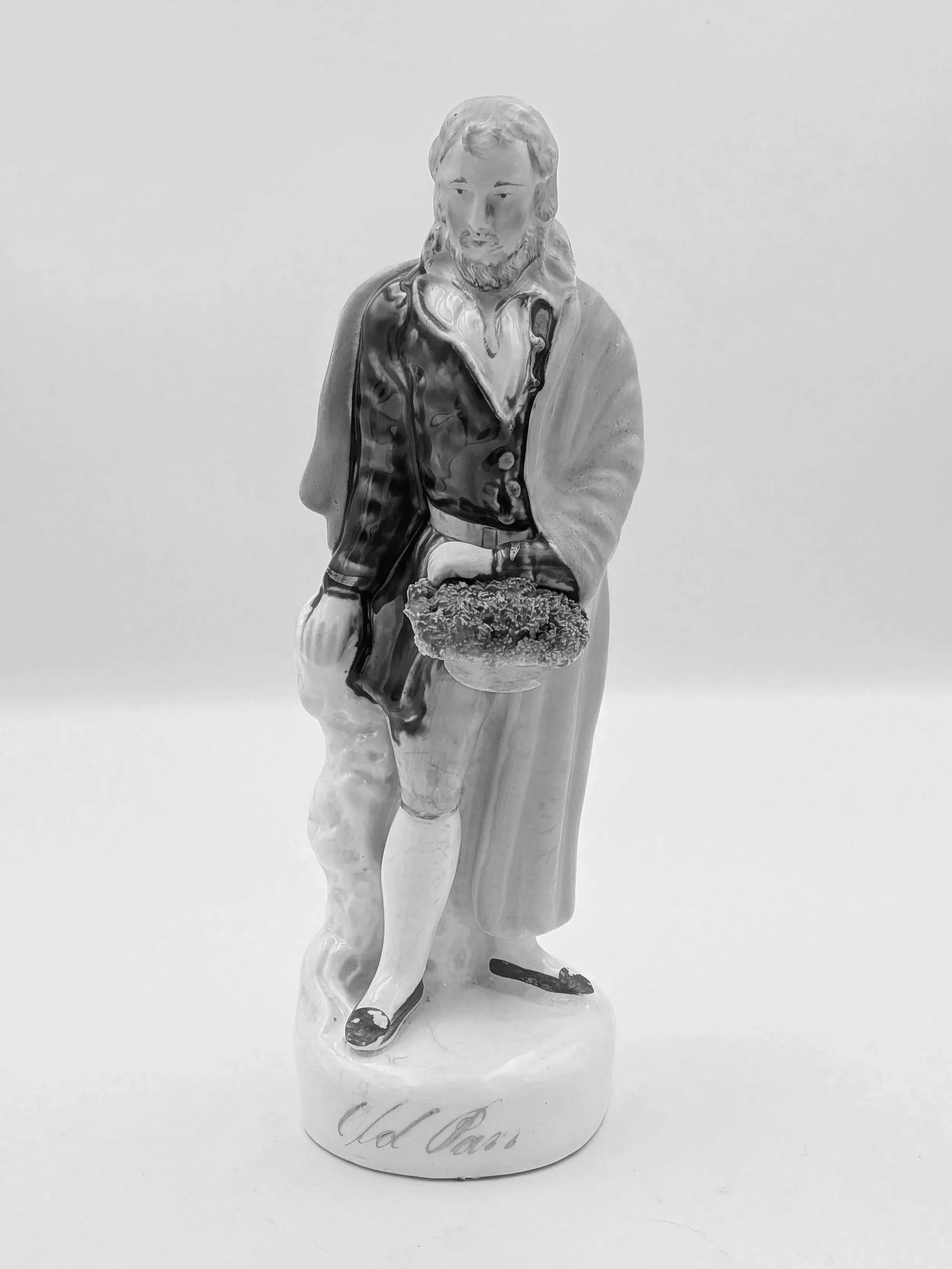 Image 1 of 23
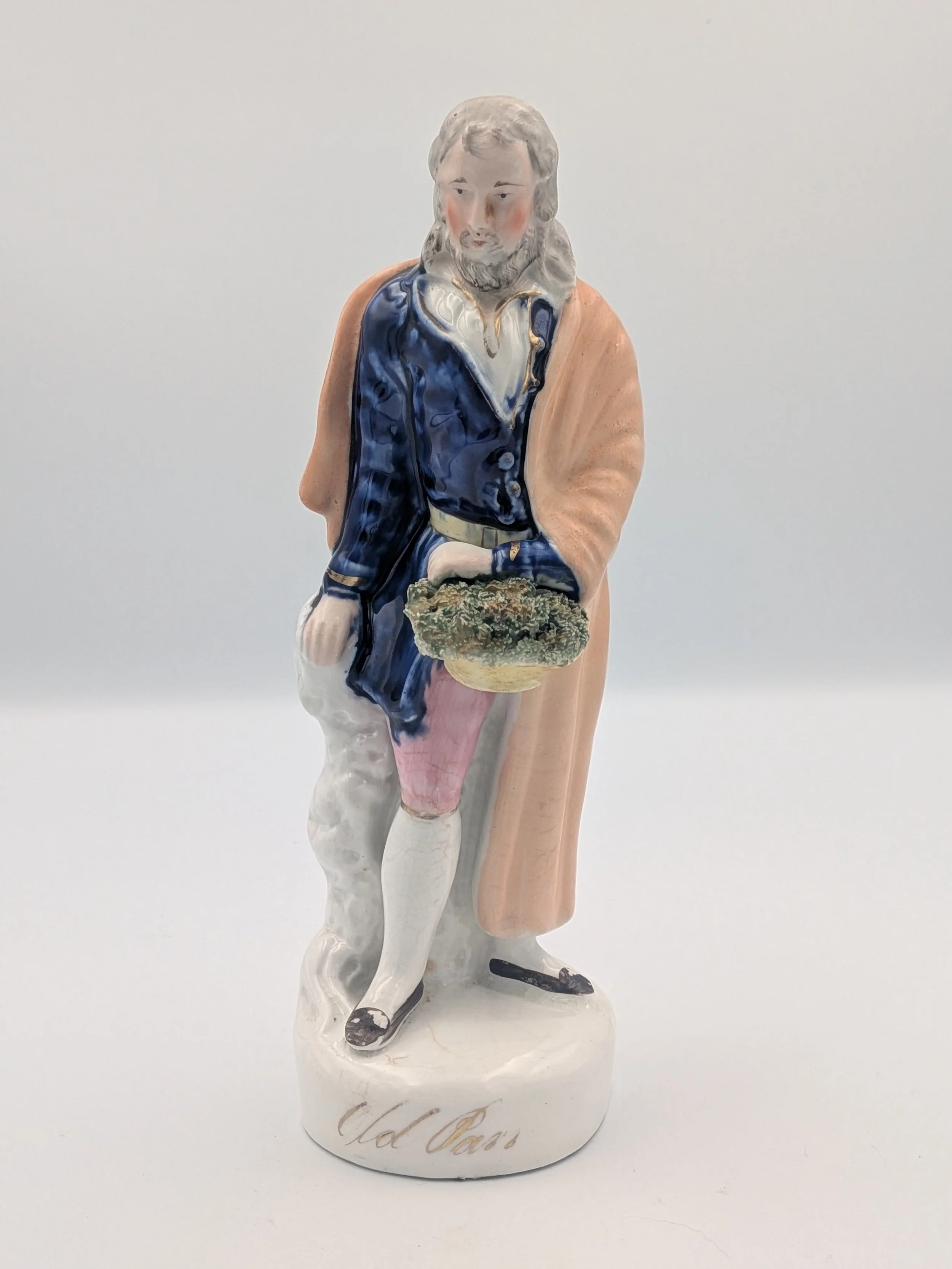 Image 2 of 23
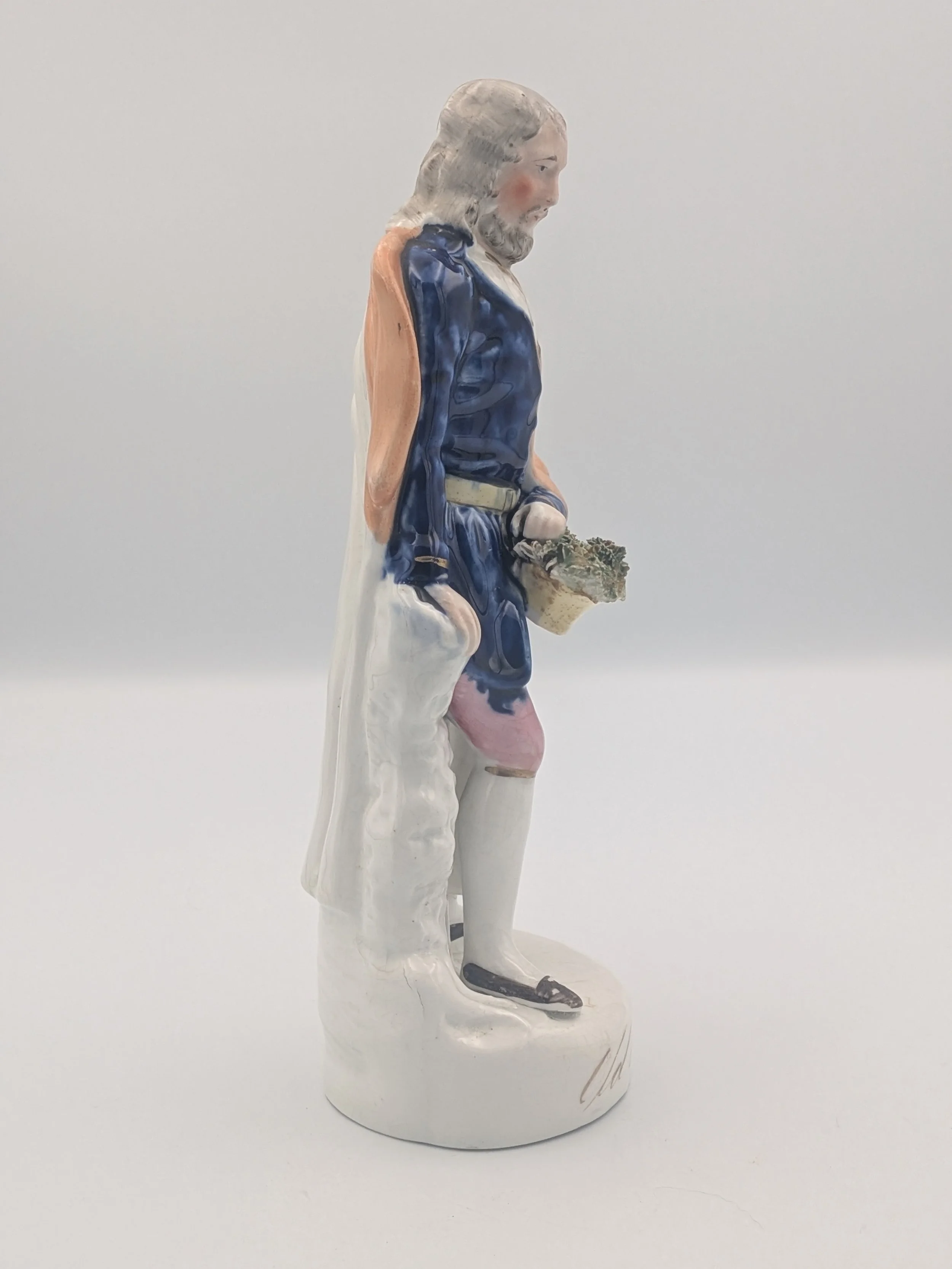 Image 3 of 23
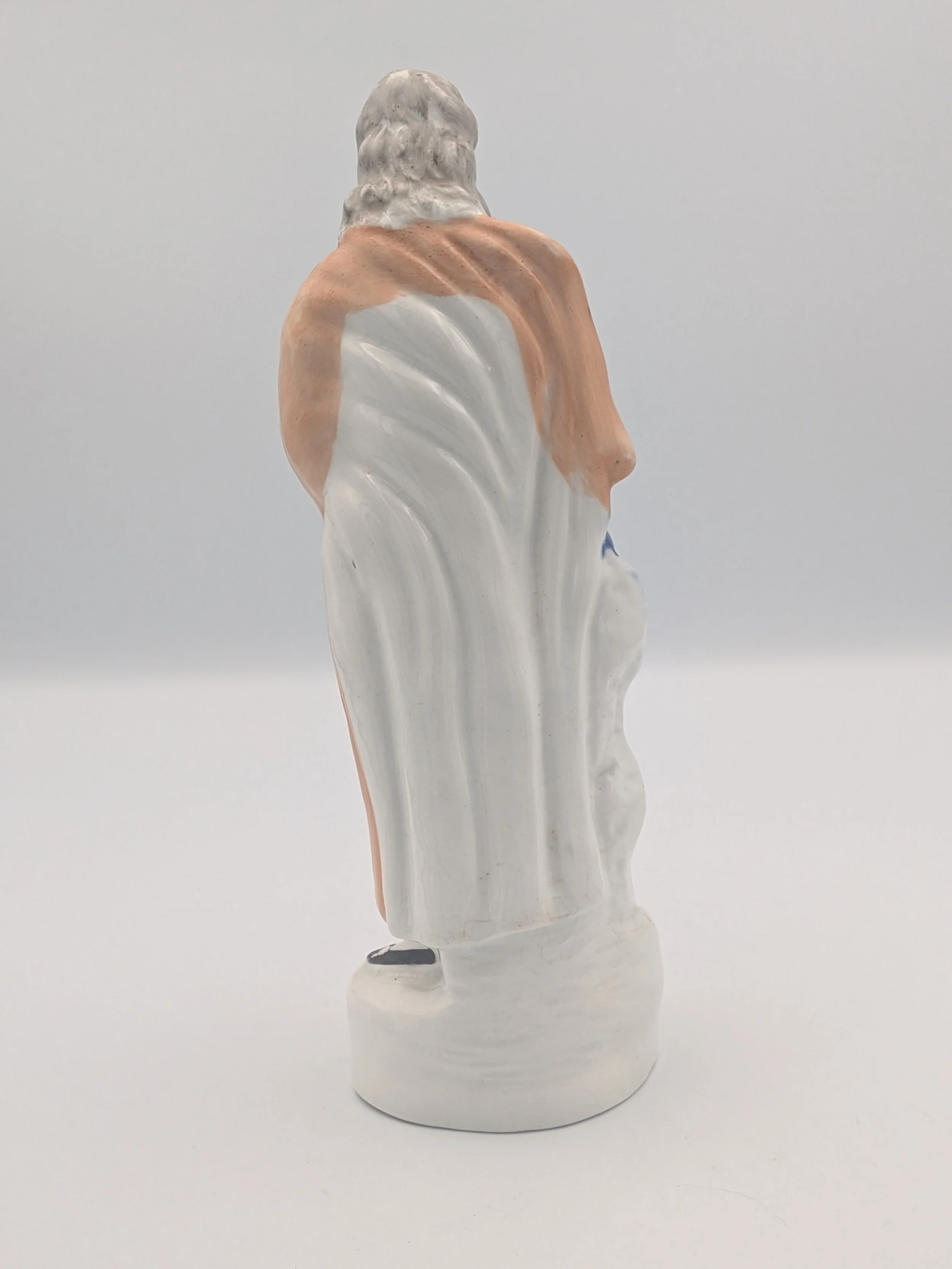 Image 4 of 23
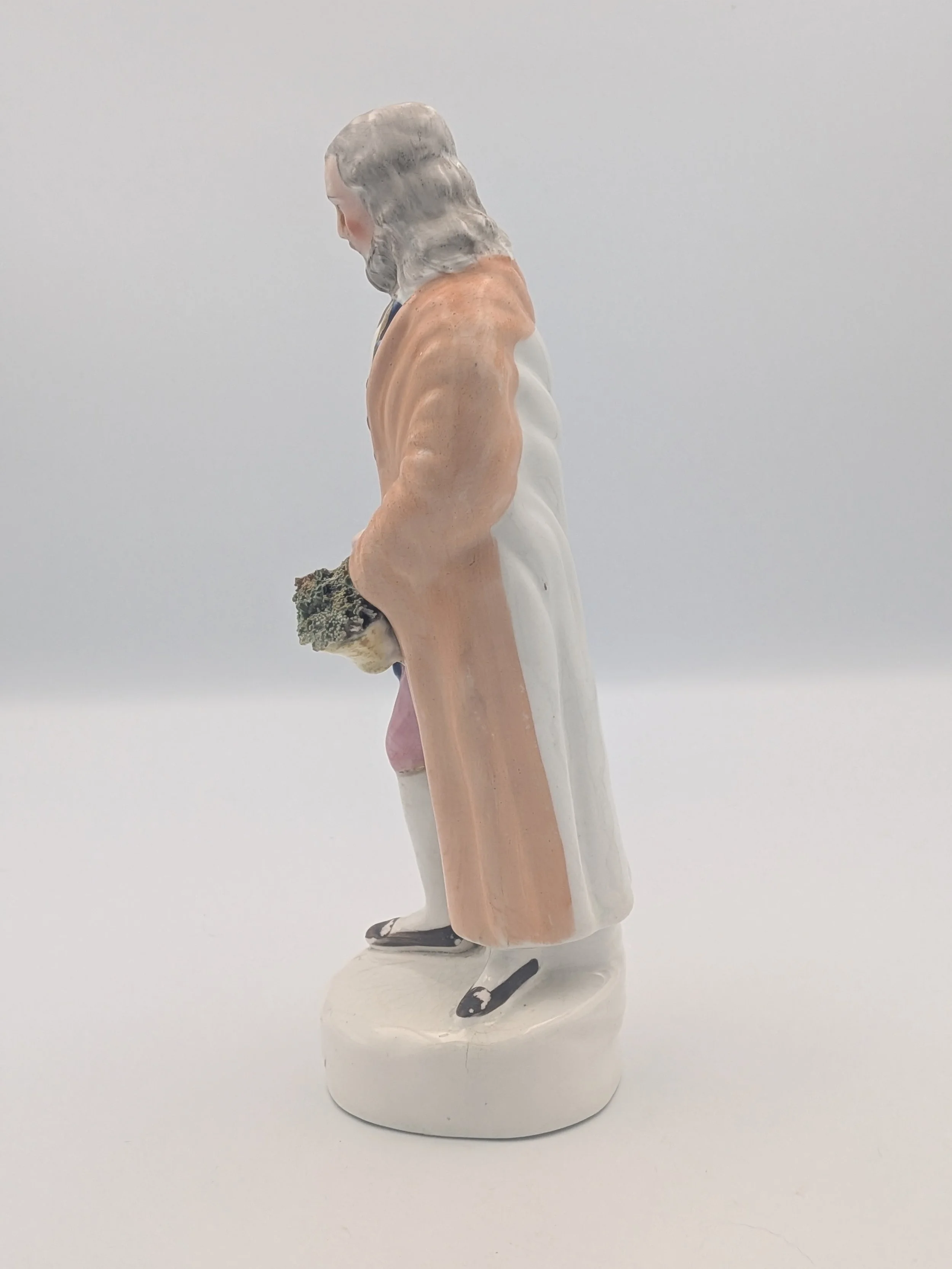 Image 5 of 23
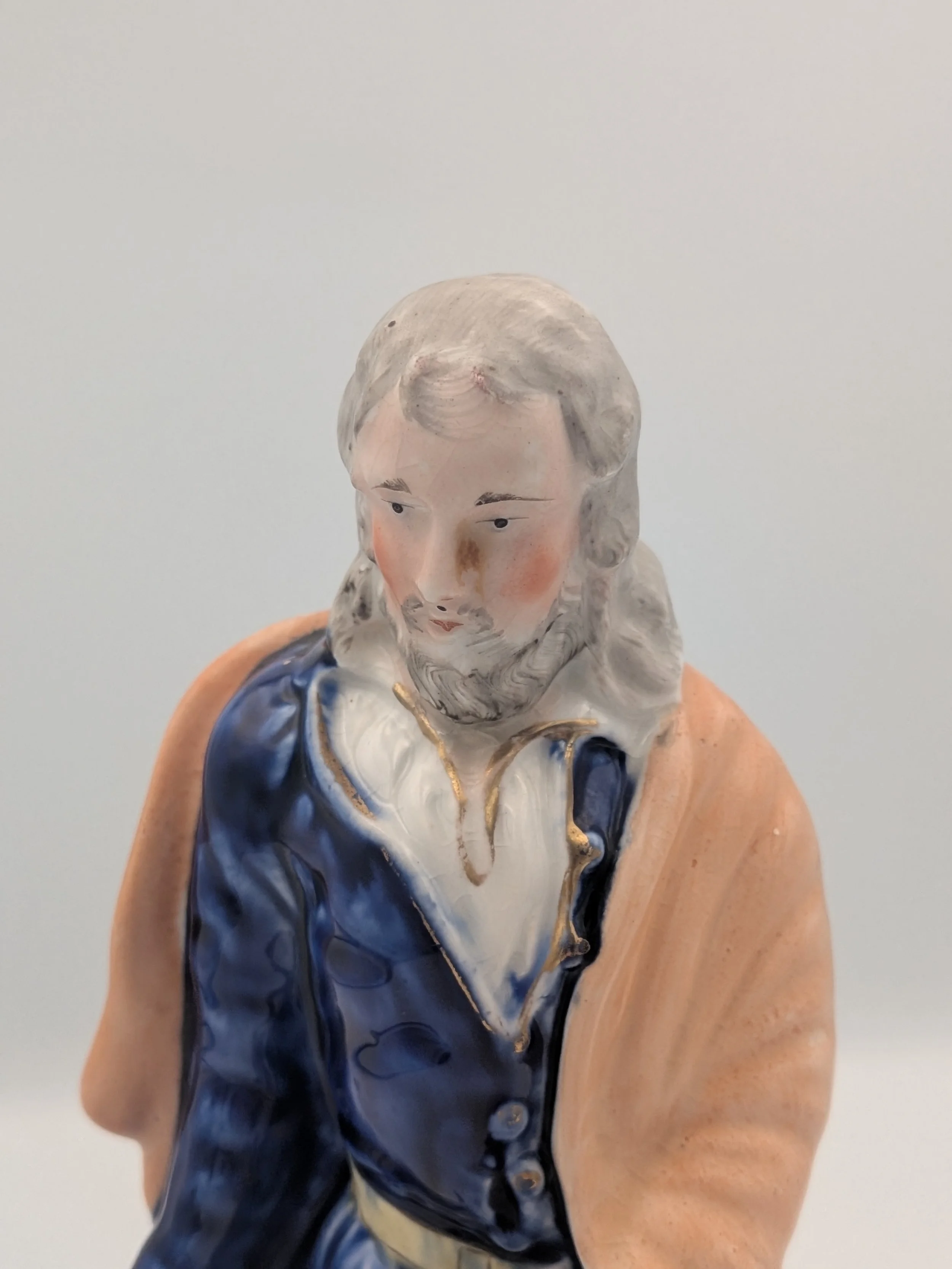 Image 6 of 23
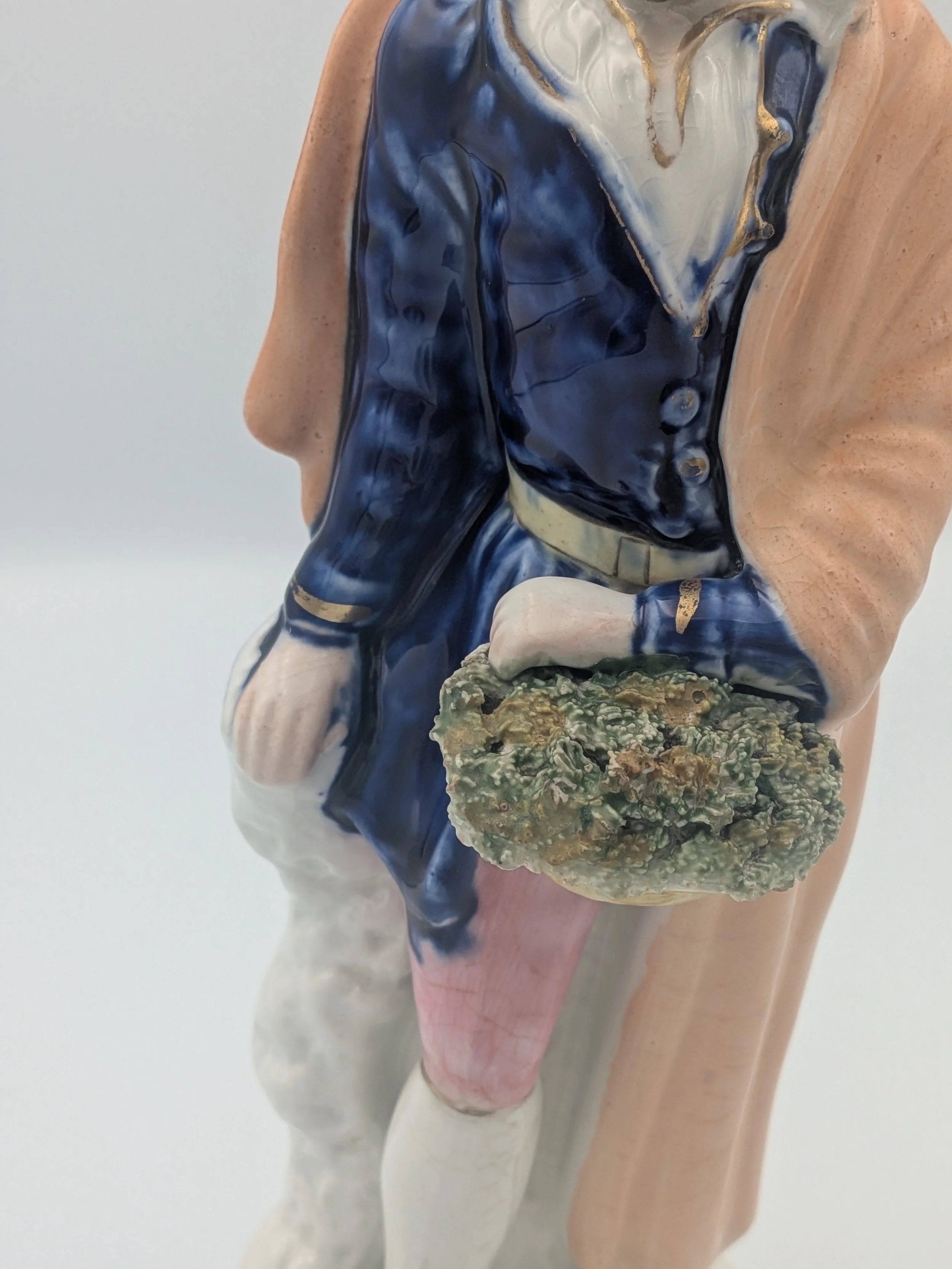 Image 7 of 23
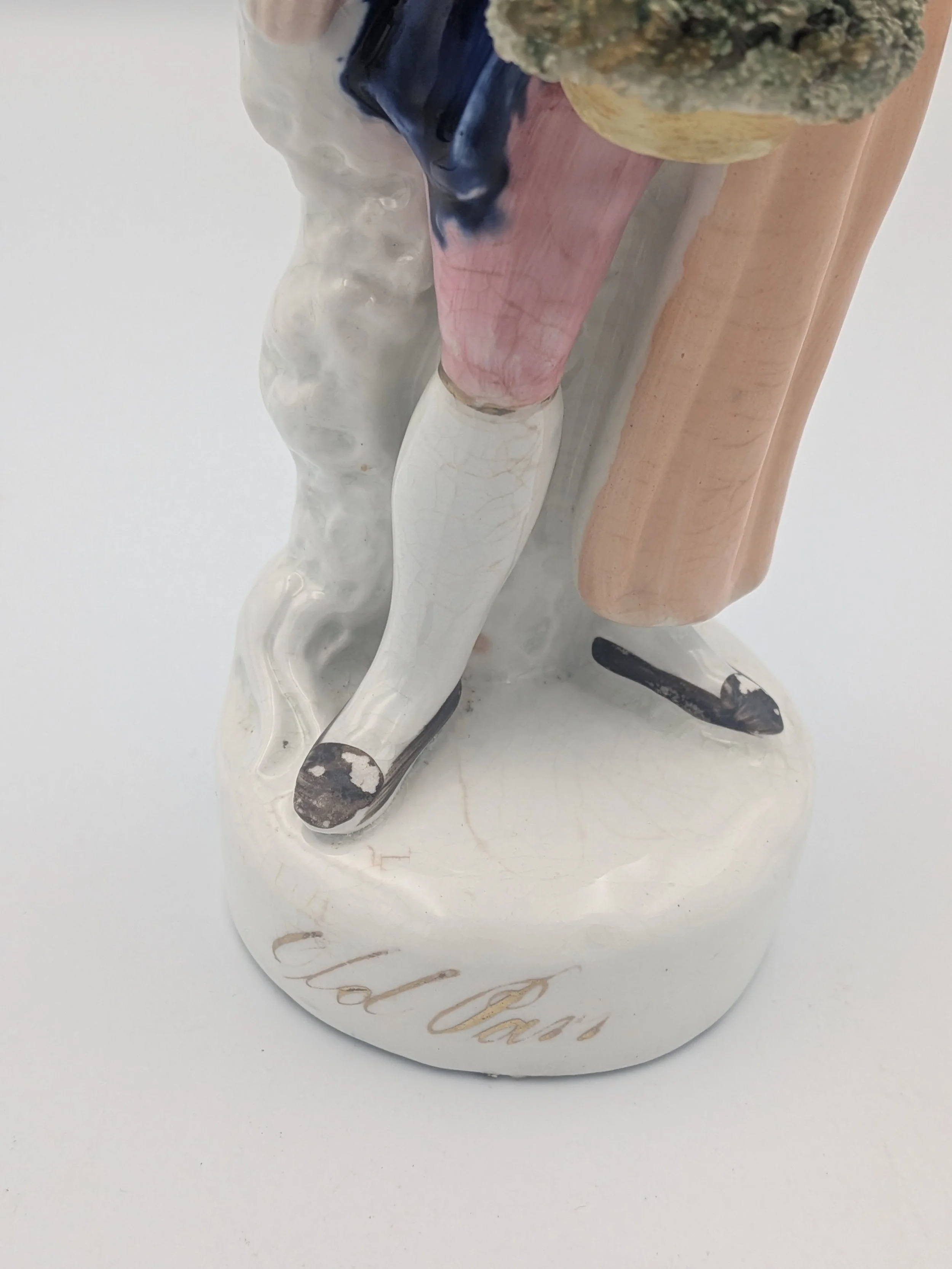 Image 8 of 23
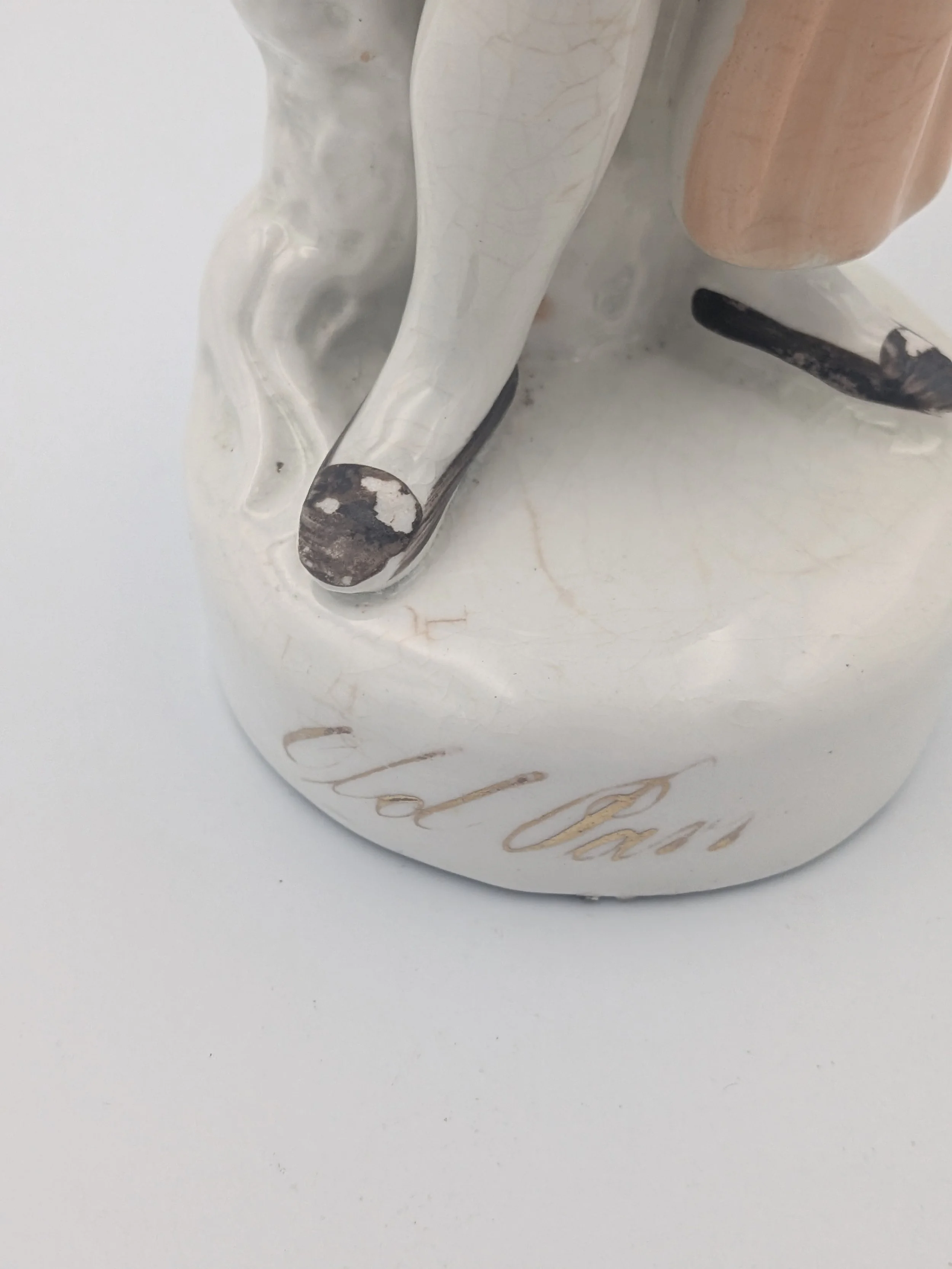 Image 9 of 23
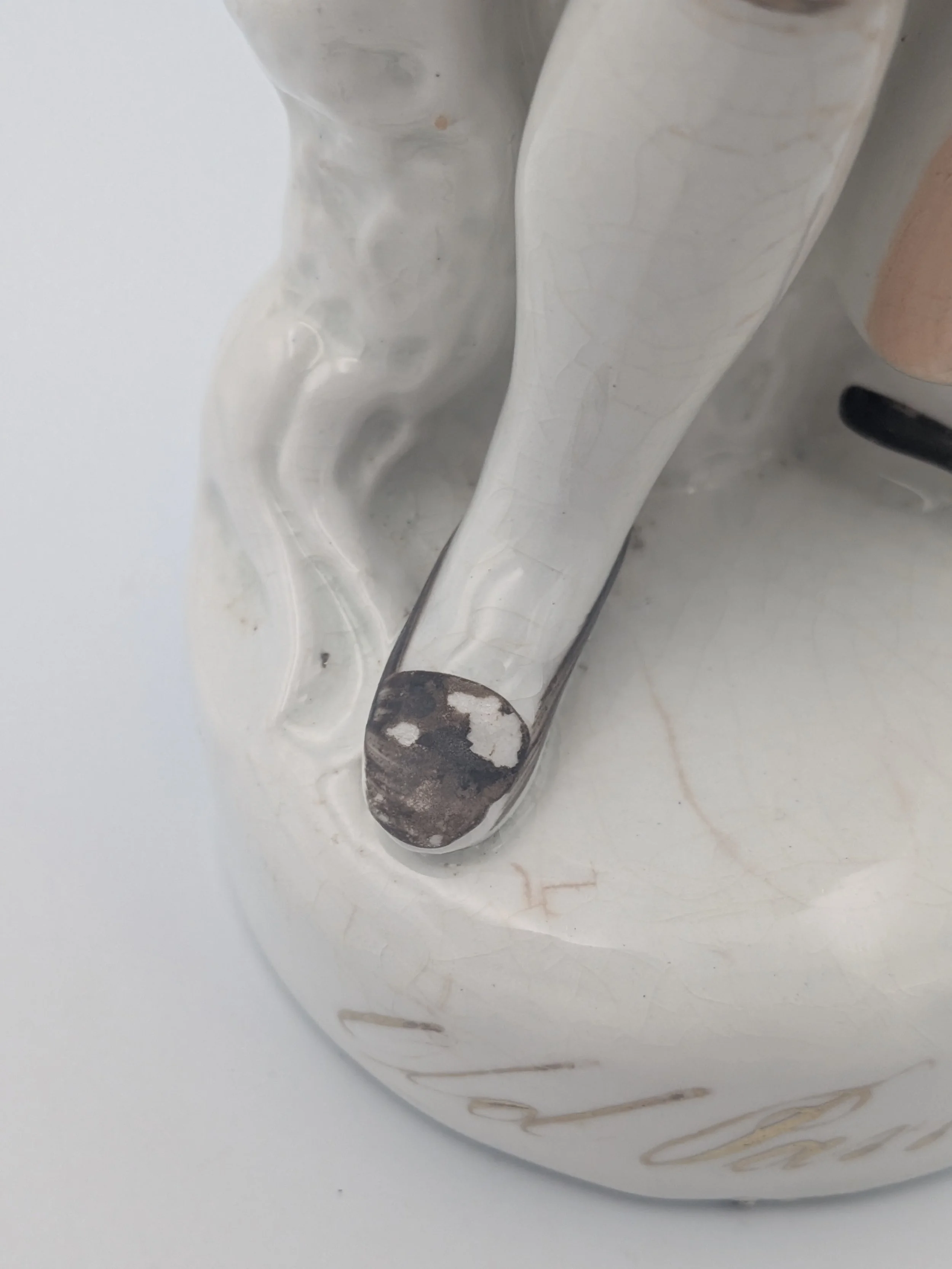 Image 10 of 23
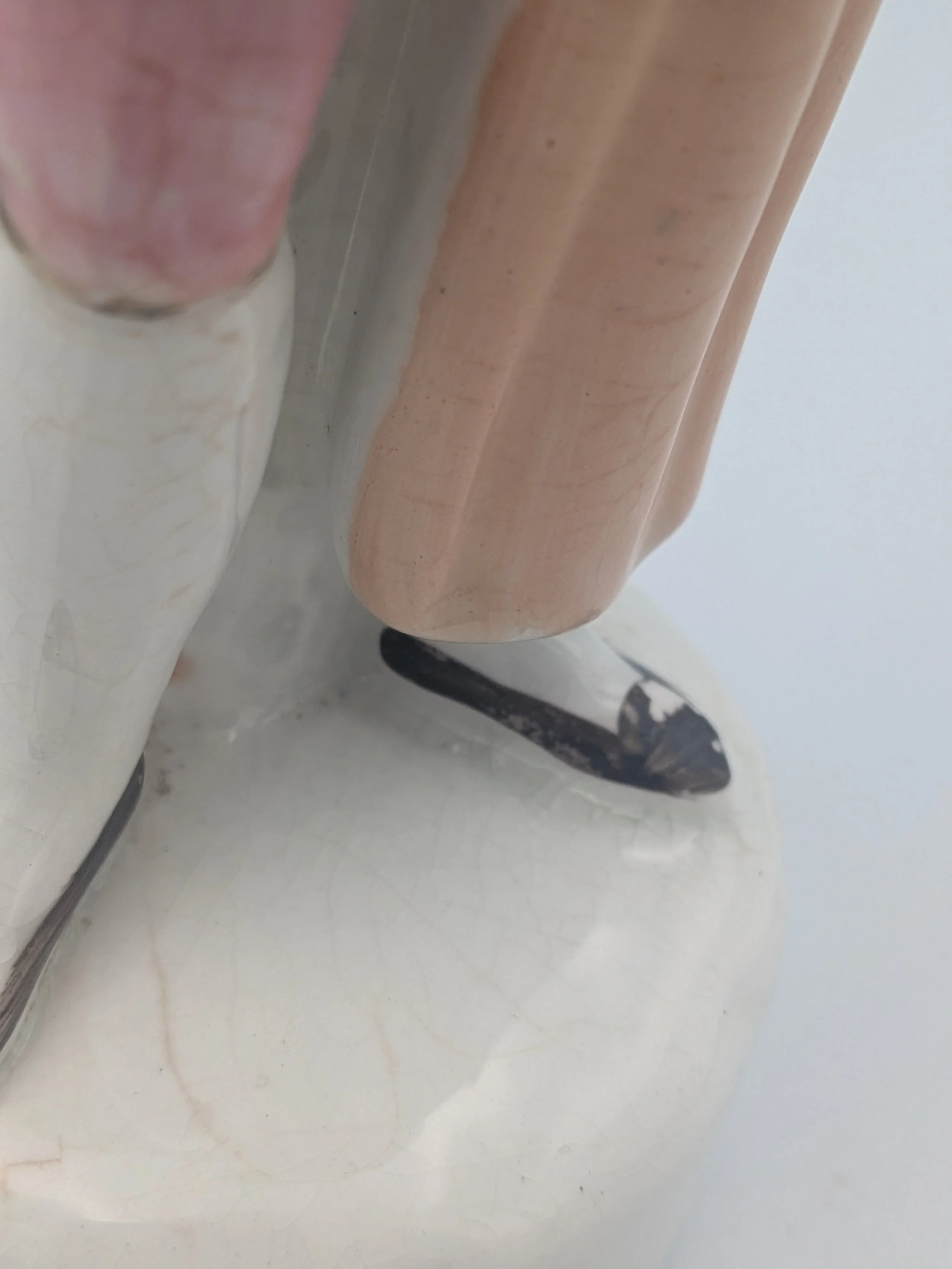 Image 11 of 23
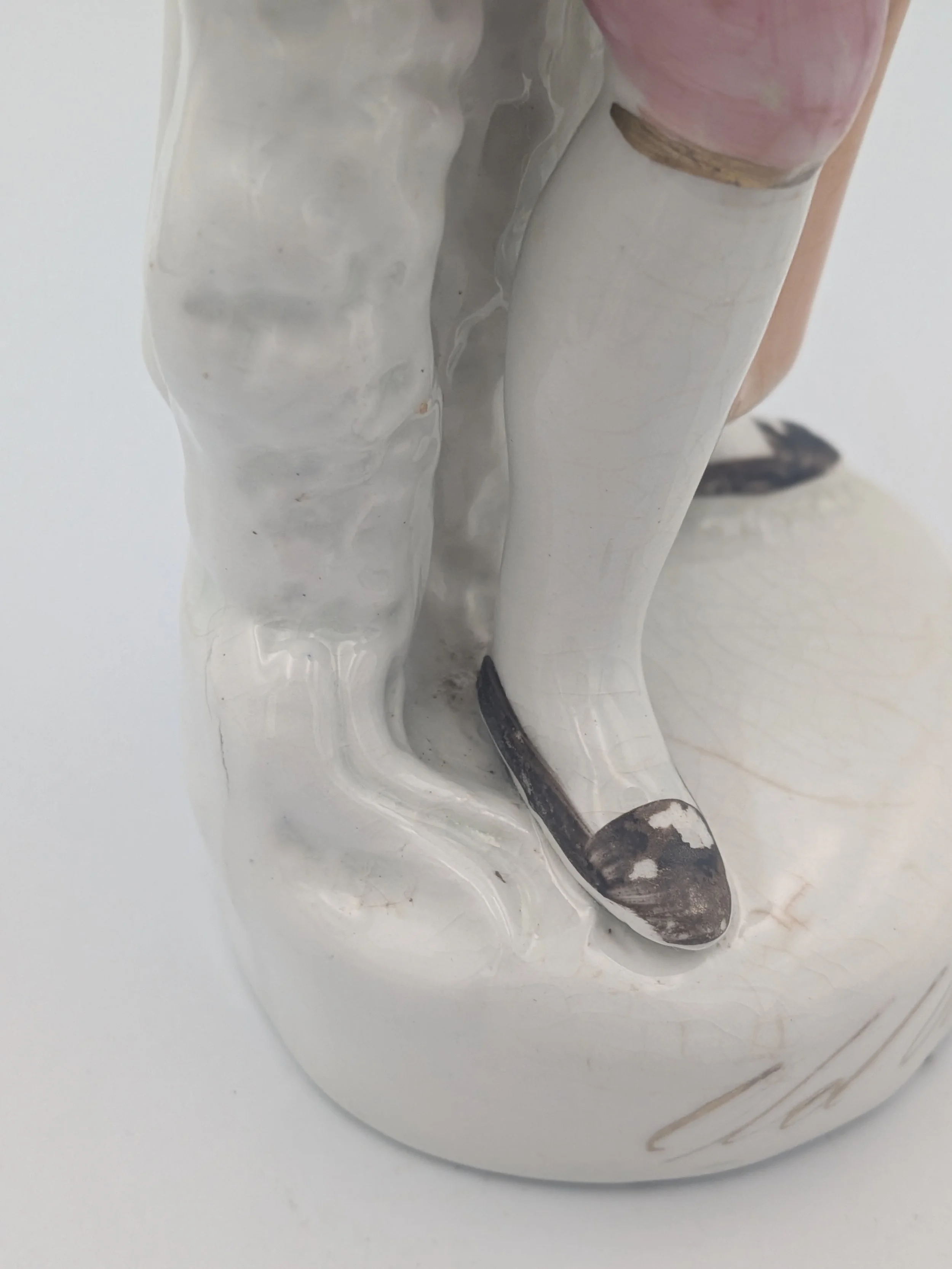 Image 12 of 23
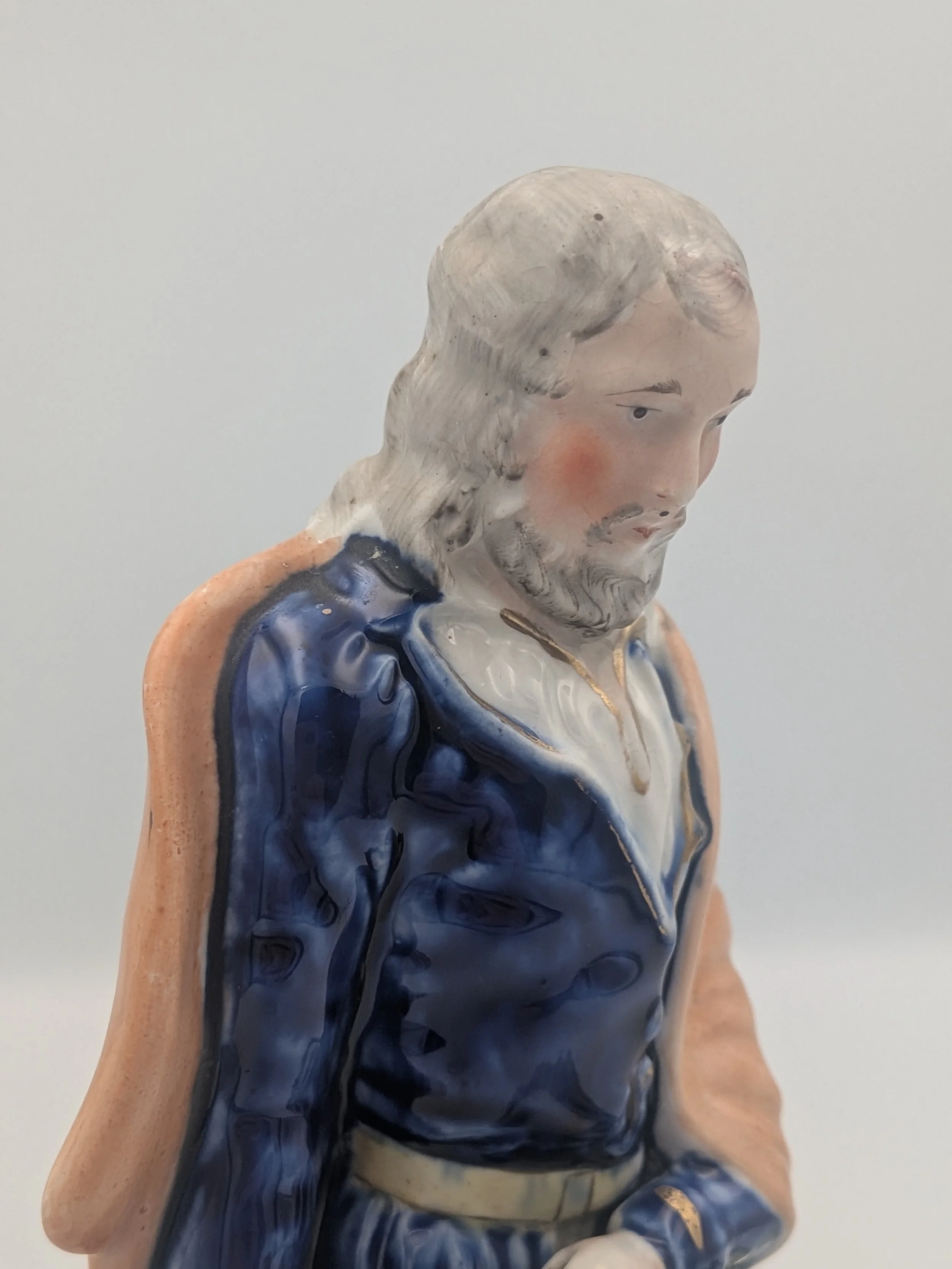 Image 13 of 23
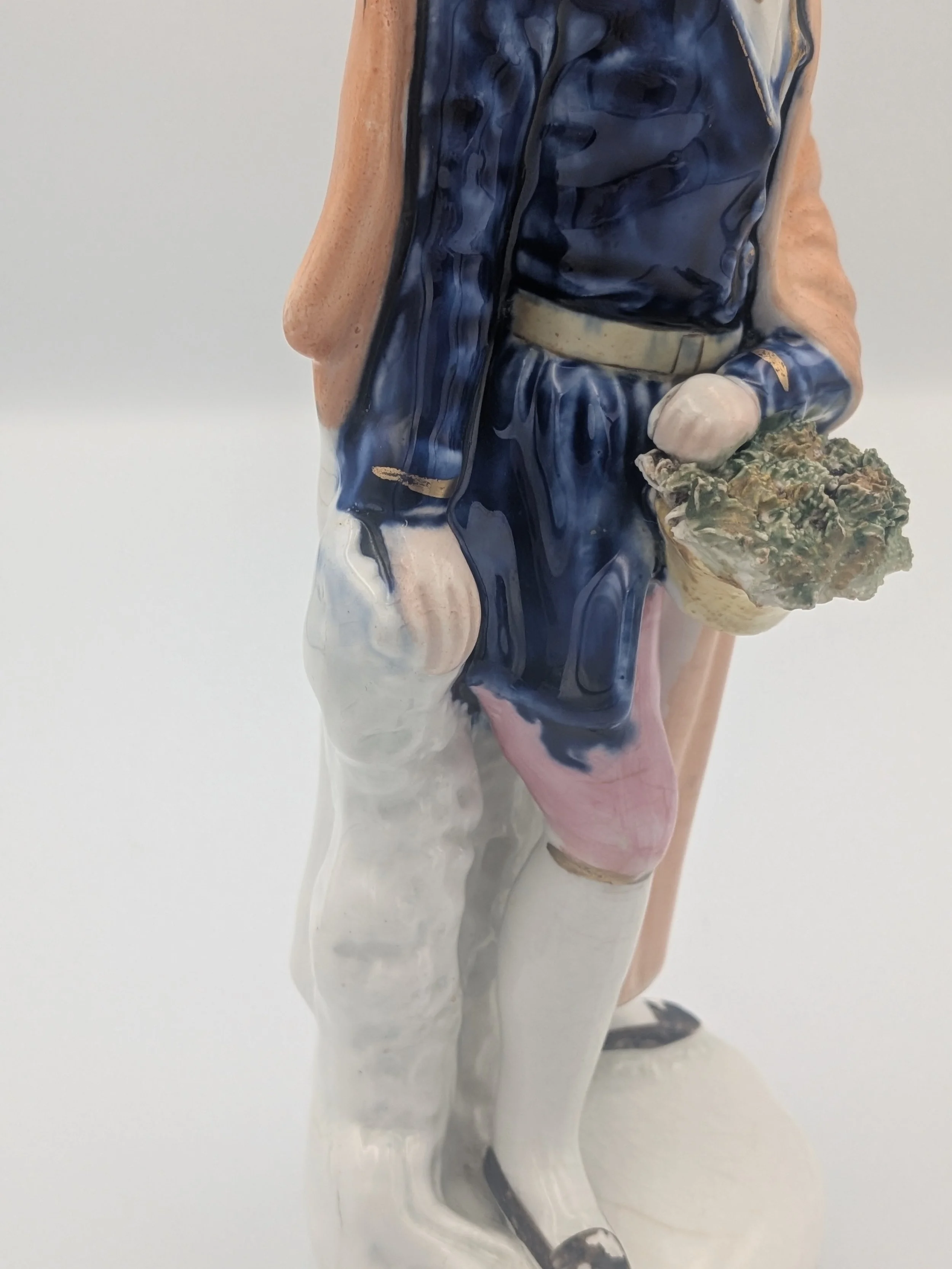 Image 14 of 23
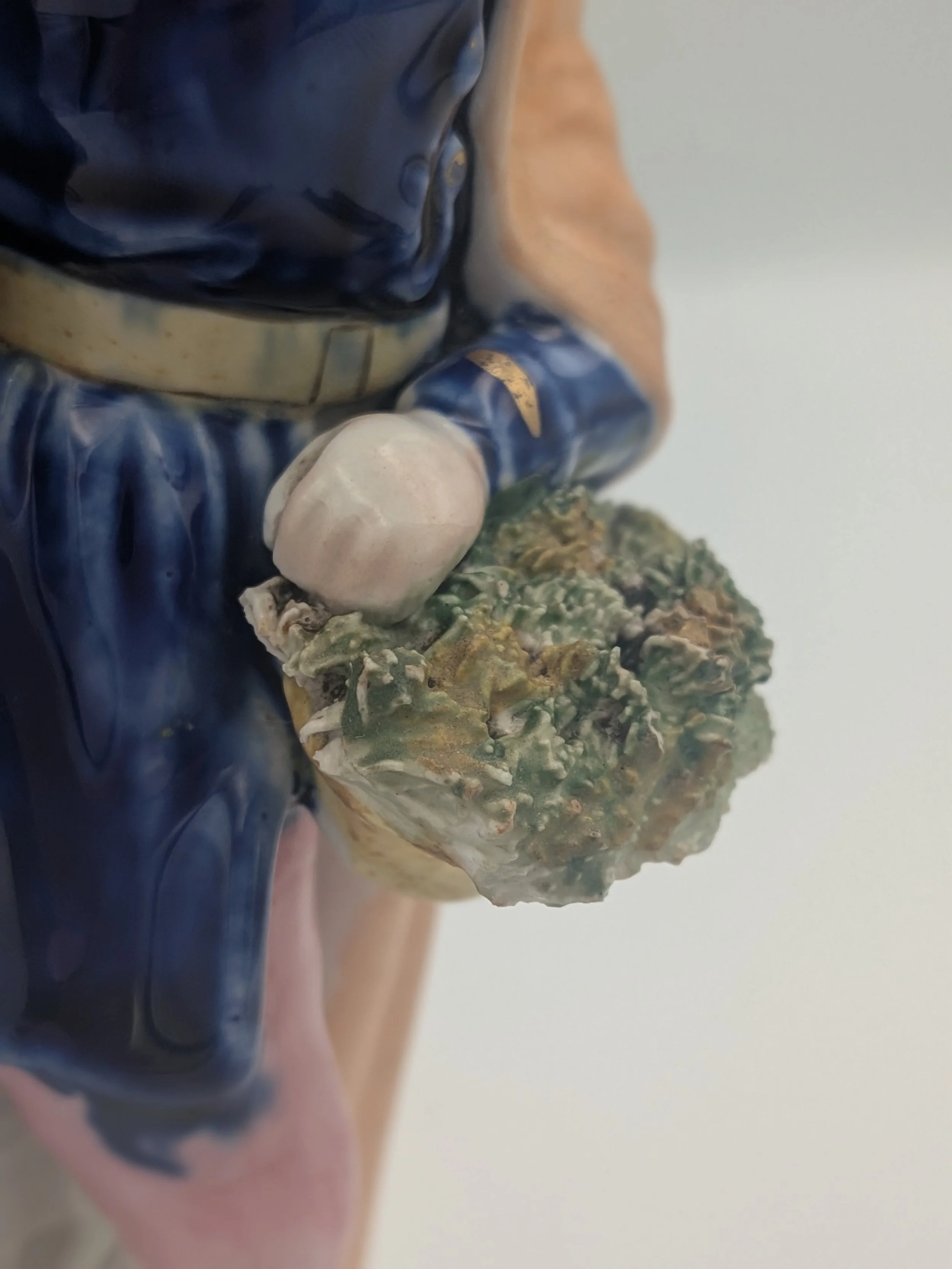 Image 15 of 23
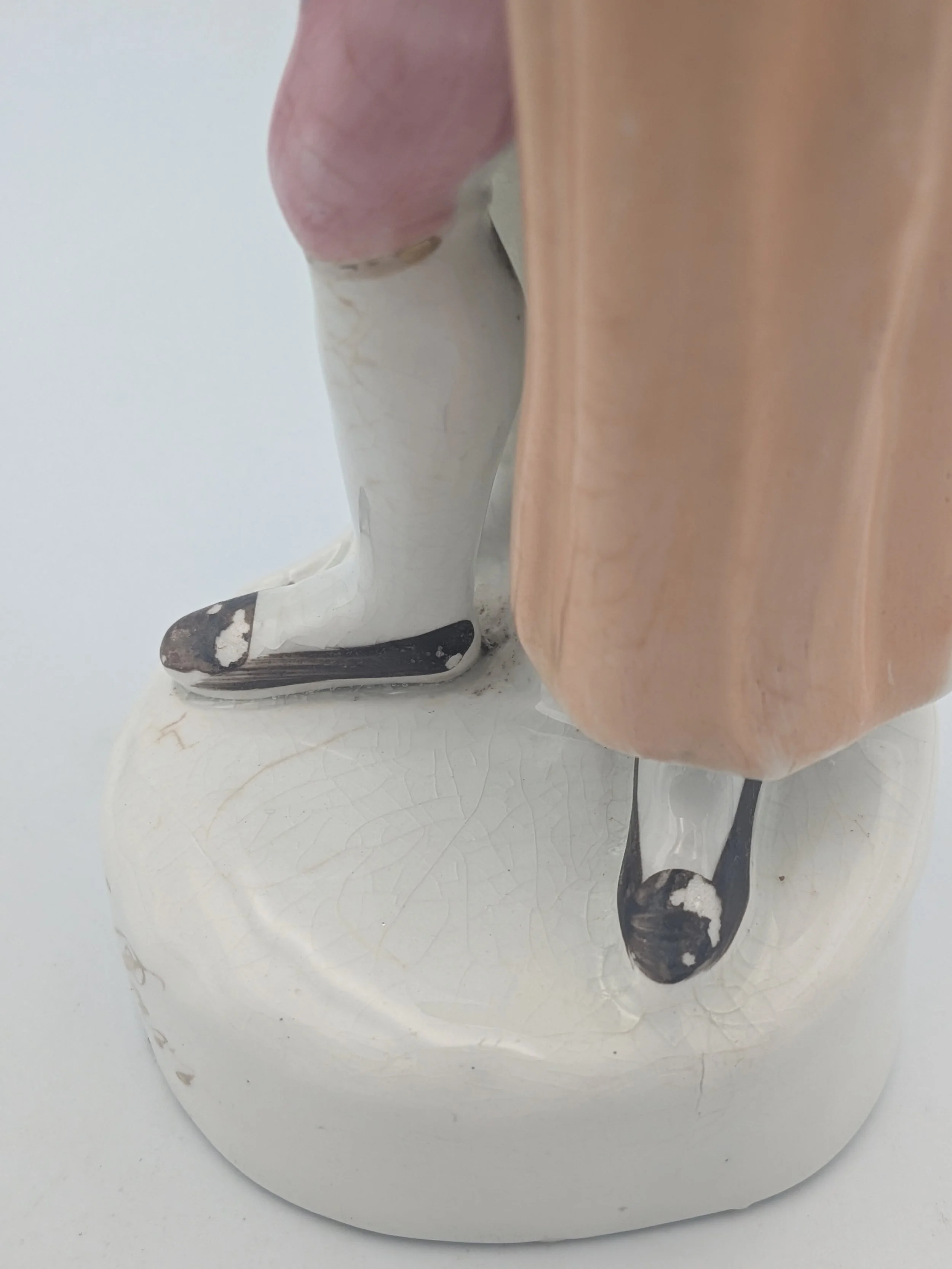 Image 16 of 23
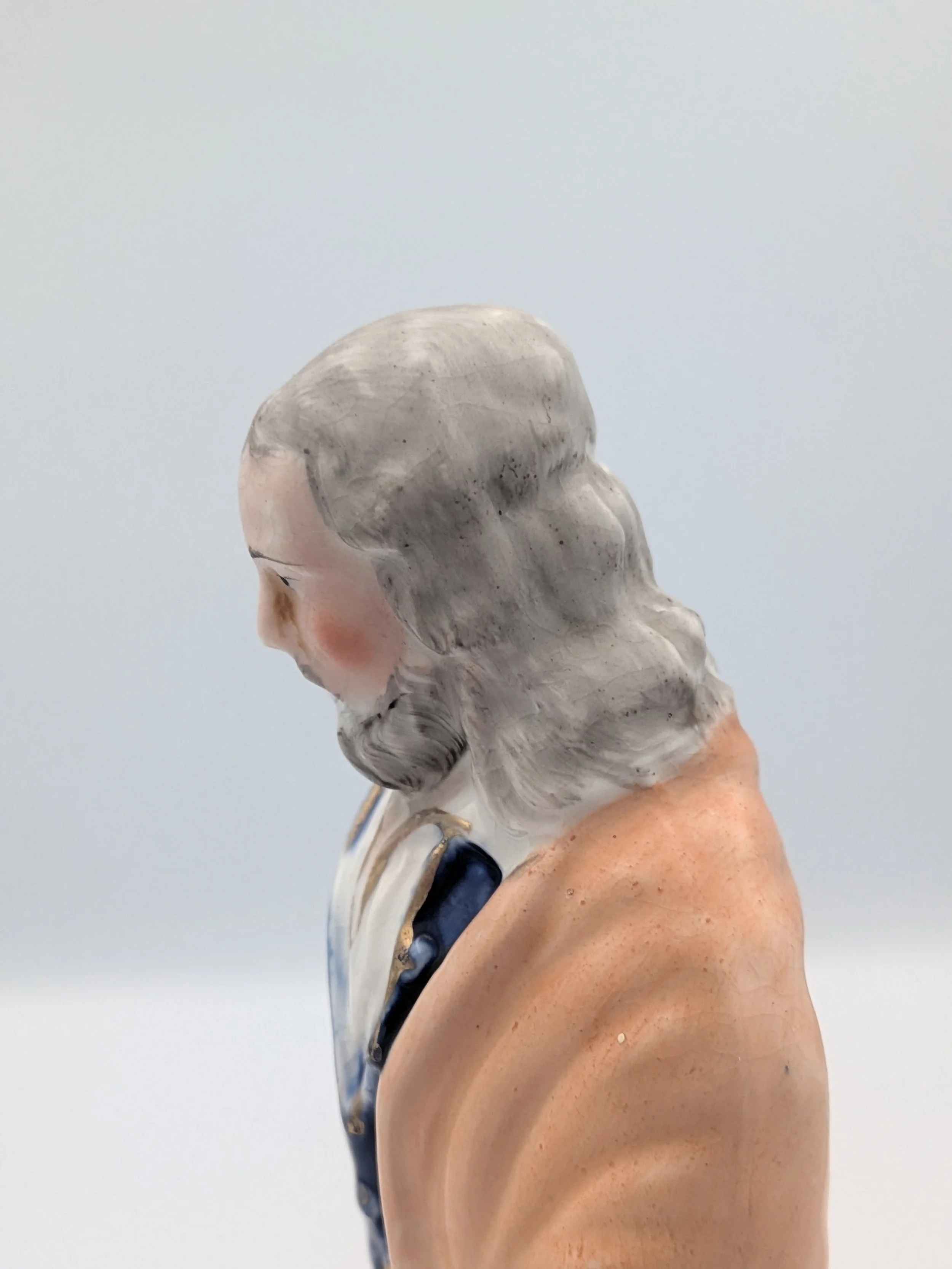 Image 17 of 23
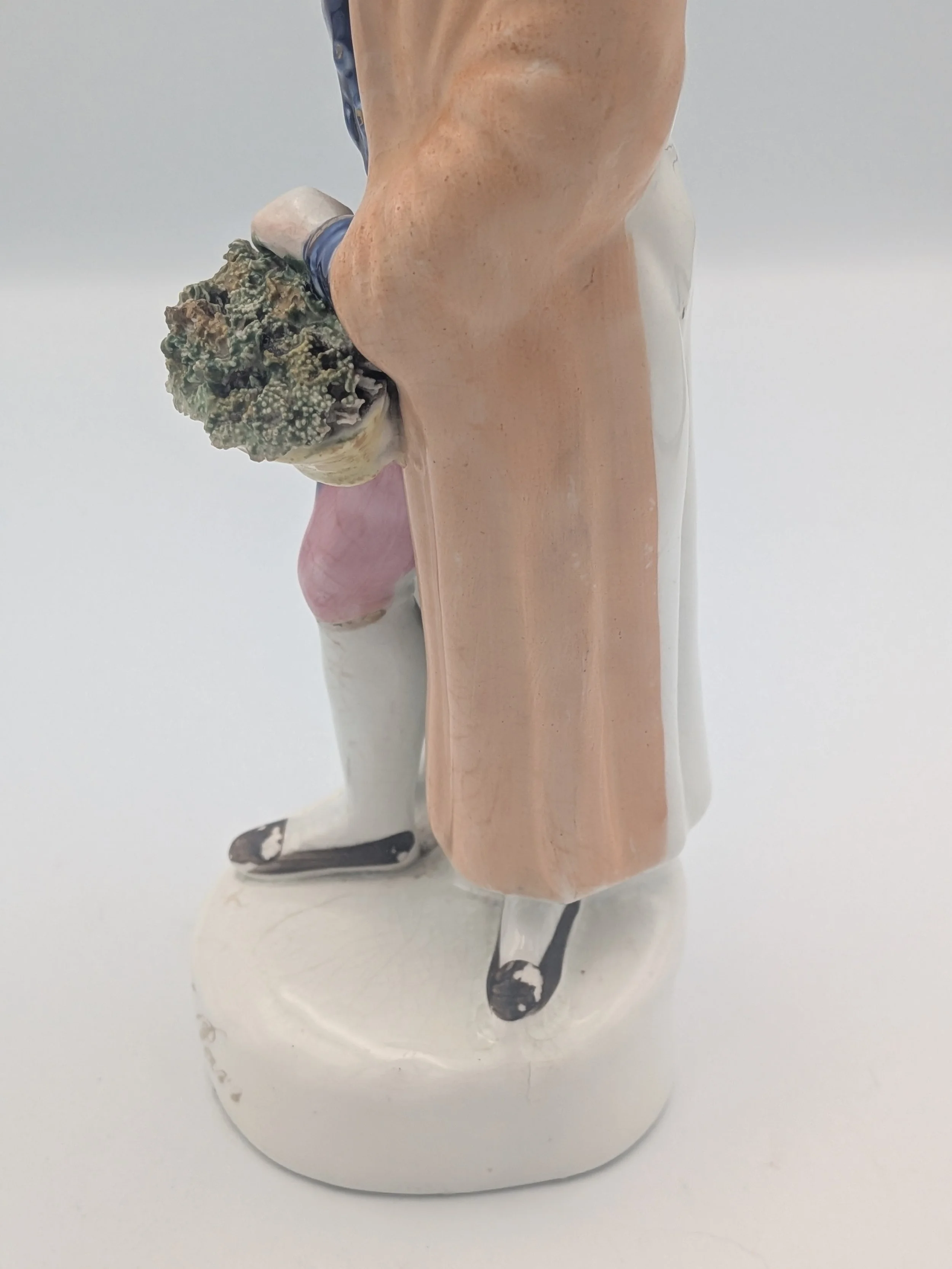 Image 18 of 23
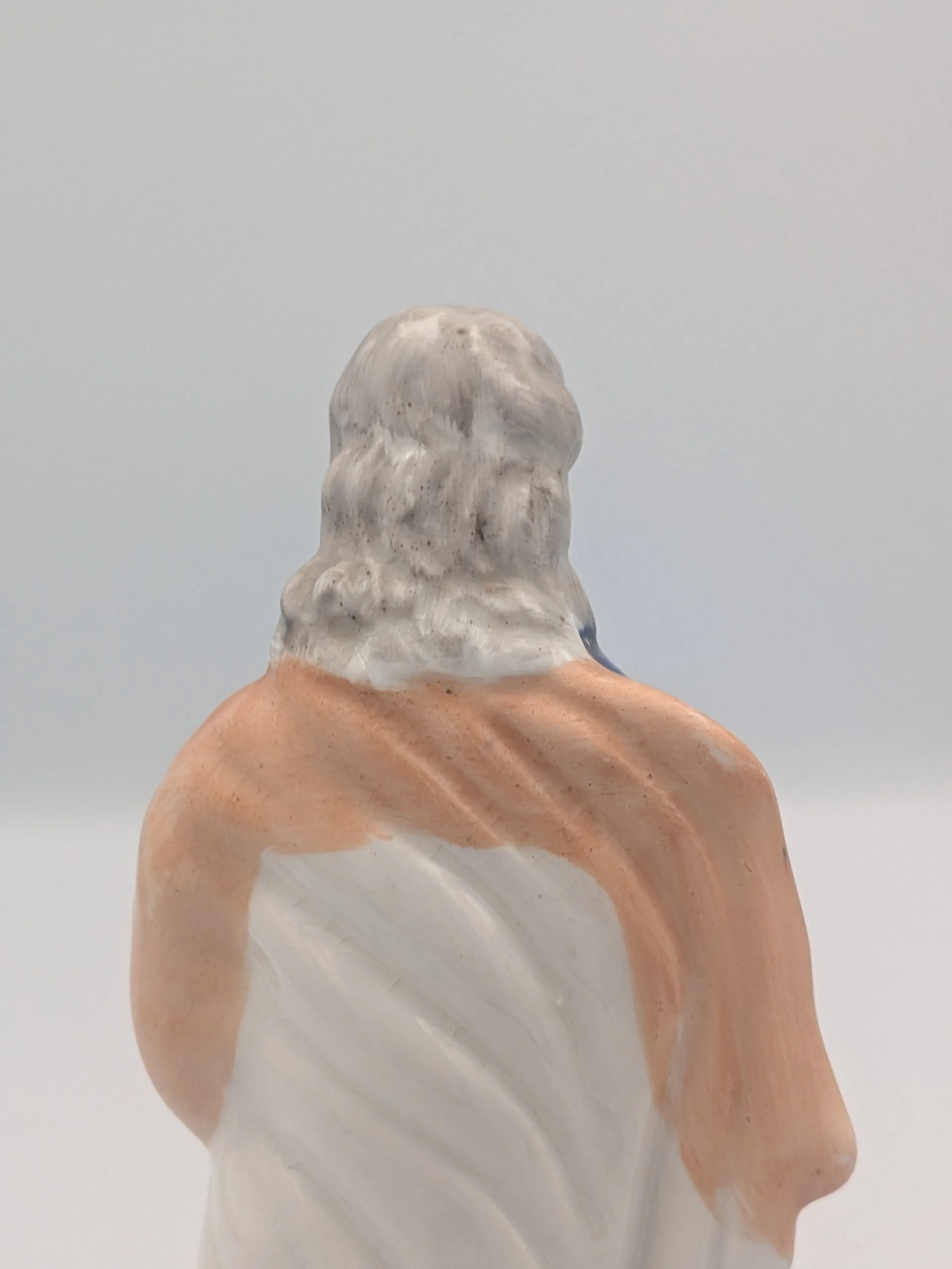 Image 19 of 23
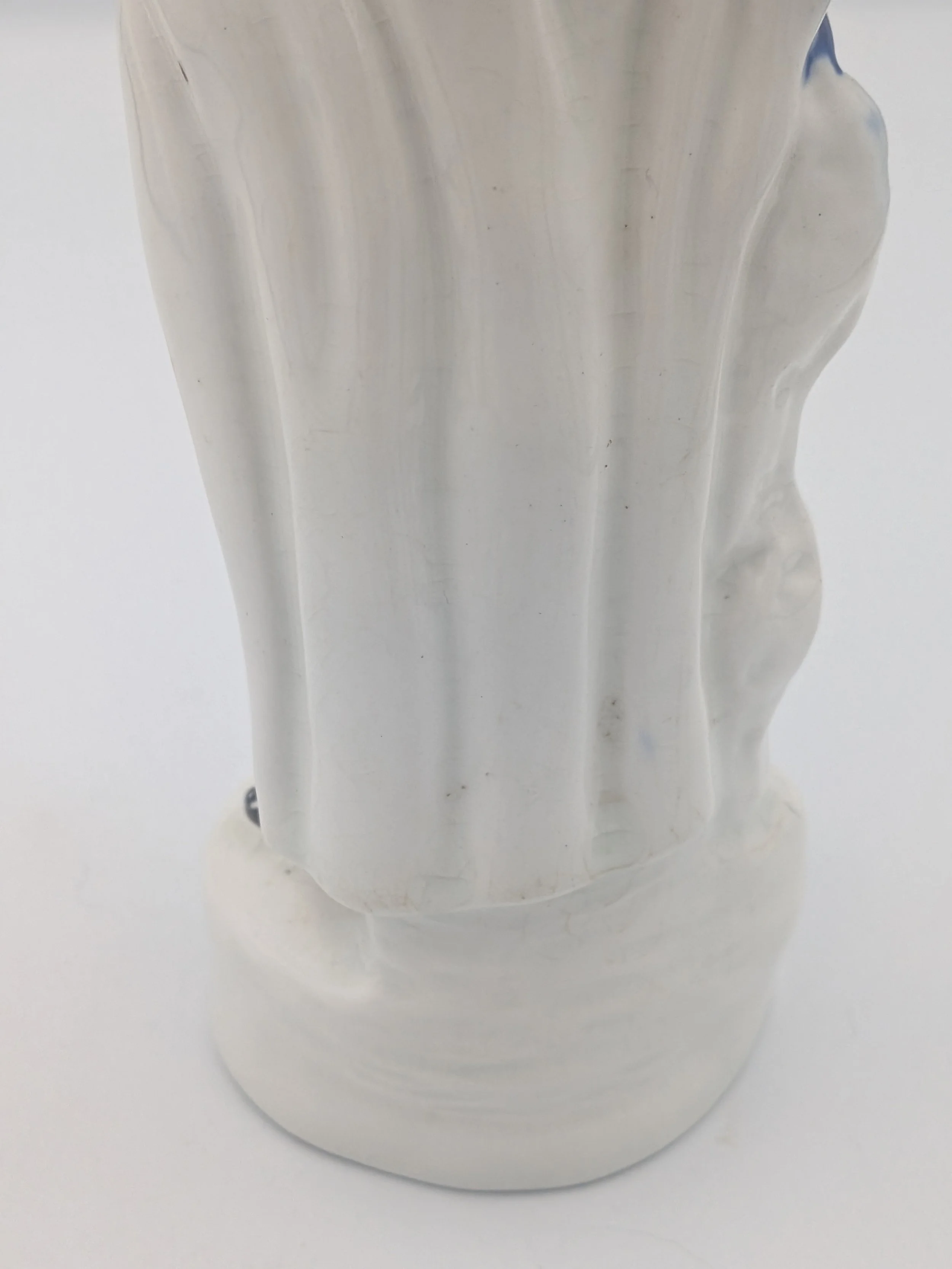 Image 20 of 23
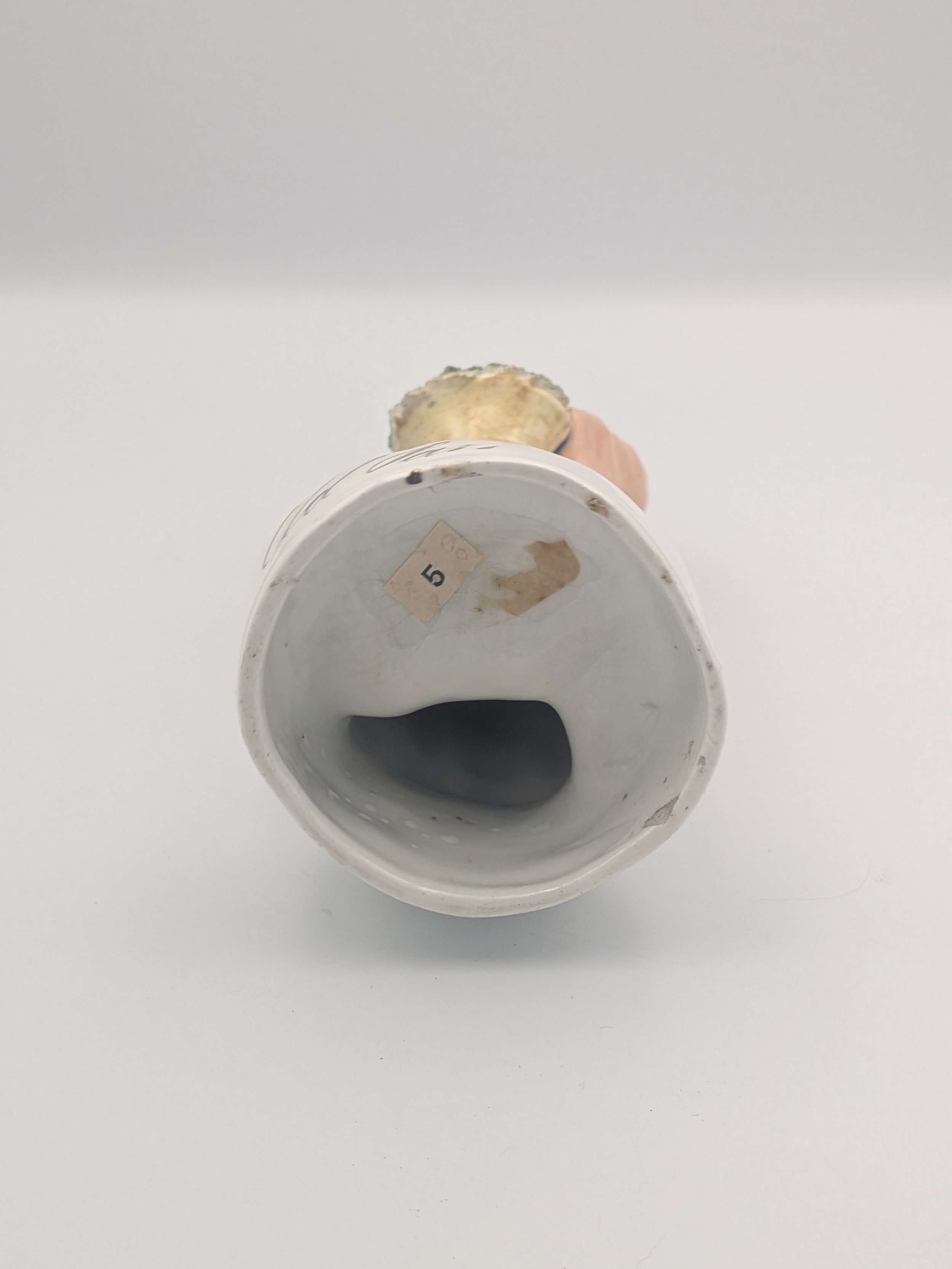 Image 21 of 23
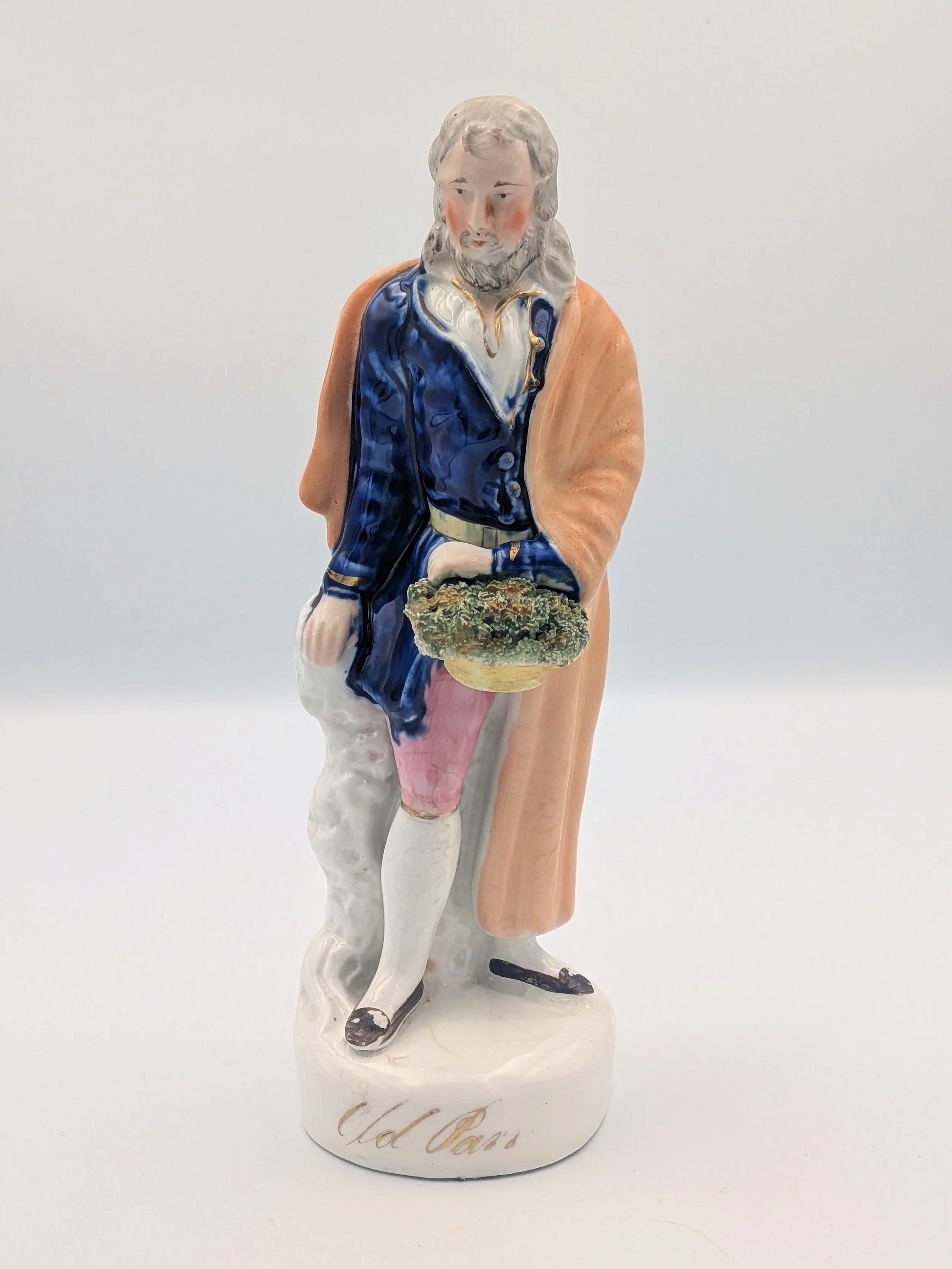 Image 23 of 23