A very imposing large figure said to depict King John signing the Magna Carta.
The King sits in a tent framed by flags. Two young attendants stand by the entrance, one holding a large helmet. The king is in the process of signing a manuscript atop a coloured table.
It is thought that this figure is not intended to be a historically accurate depiction of the event (King John would not have used a quill to sign the document and would, instead, have used a wax seal) but is perhaps a depiction of a theatrical tableaux or ‘procession’ inserted by a producer into a production of a play - possibly Shakespeare’s King John. This was relatively common in the 19th century if theatrical producers felt the play itself was too slow or insufficiently spectacular to hold the attention of an audience.
The figure makes for a lovely display and is in generally good condition. There is no loss but there is some flaking (such as to the finial on top of the tent, the King’s shoes, the foot rest, the flag poles, and the characters’ hair). Some old and largely unsuccessful attempts to retouch this flaking is apparent. The figure is visibly crazed, particularly on the reverse where some cracks in the glaze are unusually deep. Nevertheless, the figure remains in complete and stable condition.
Reference: P. D. Gordon Pugh, Staffordshire Portrait Figures, p. E420, pl. 1, fig. 1(a)
Height: 13”
Date: c. 1860
A very imposing large figure said to depict King John signing the Magna Carta.
The King sits in a tent framed by flags. Two young attendants stand by the entrance, one holding a large helmet. The king is in the process of signing a manuscript atop a coloured table.
It is thought that this figure is not intended to be a historically accurate depiction of the event (King John would not have used a quill to sign the document and would, instead, have used a wax seal) but is perhaps a depiction of a theatrical tableaux or ‘procession’ inserted by a producer into a production of a play - possibly Shakespeare’s King John. This was relatively common in the 19th century if theatrical producers felt the play itself was too slow or insufficiently spectacular to hold the attention of an audience.
The figure makes for a lovely display and is in generally good condition. There is no loss but there is some flaking (such as to the finial on top of the tent, the King’s shoes, the foot rest, the flag poles, and the characters’ hair). Some old and largely unsuccessful attempts to retouch this flaking is apparent. The figure is visibly crazed, particularly on the reverse where some cracks in the glaze are unusually deep. Nevertheless, the figure remains in complete and stable condition.
Reference: P. D. Gordon Pugh, Staffordshire Portrait Figures, p. E420, pl. 1, fig. 1(a)
Height: 13”
Date: c. 1860
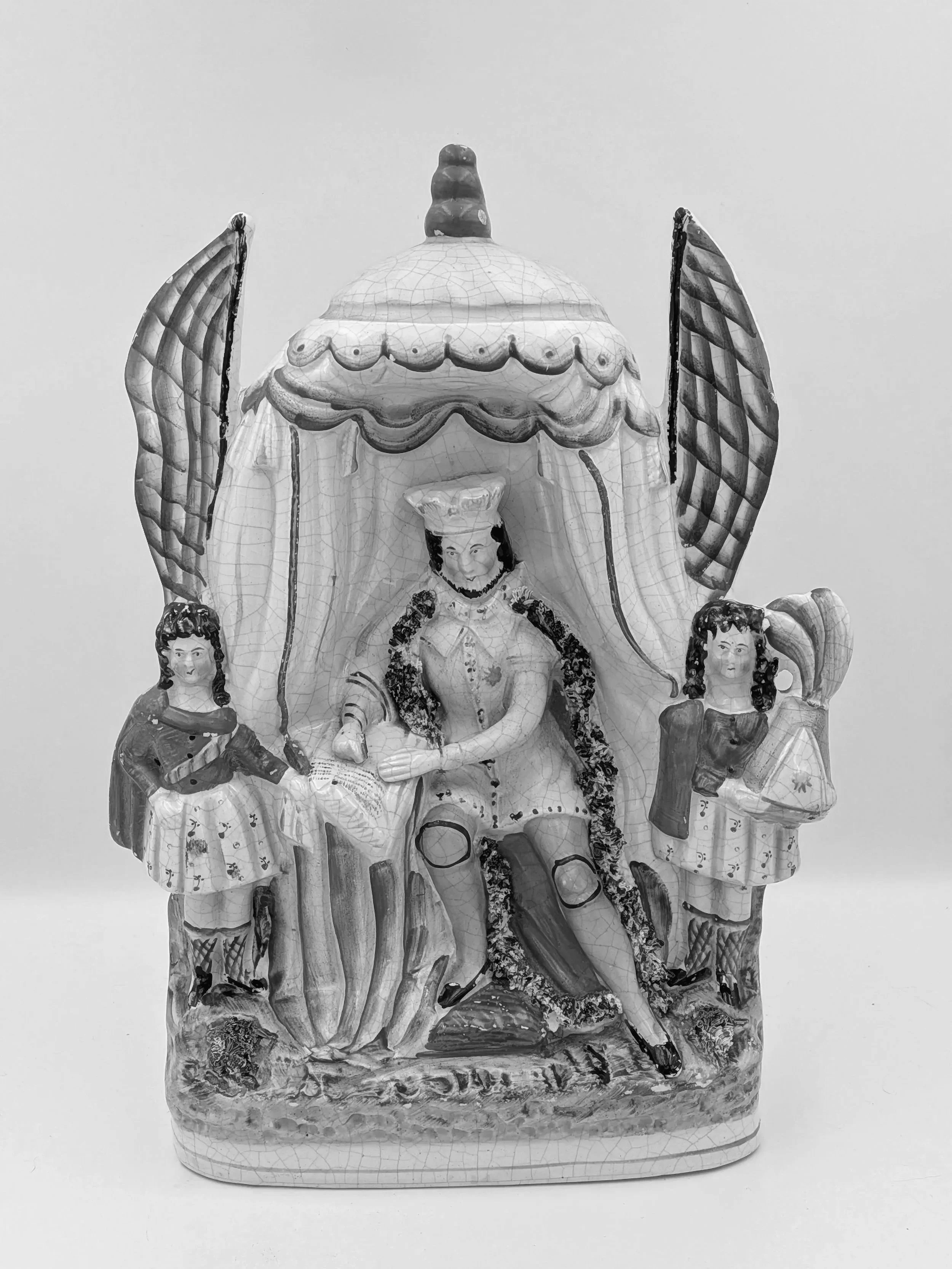 Image 1 of 22
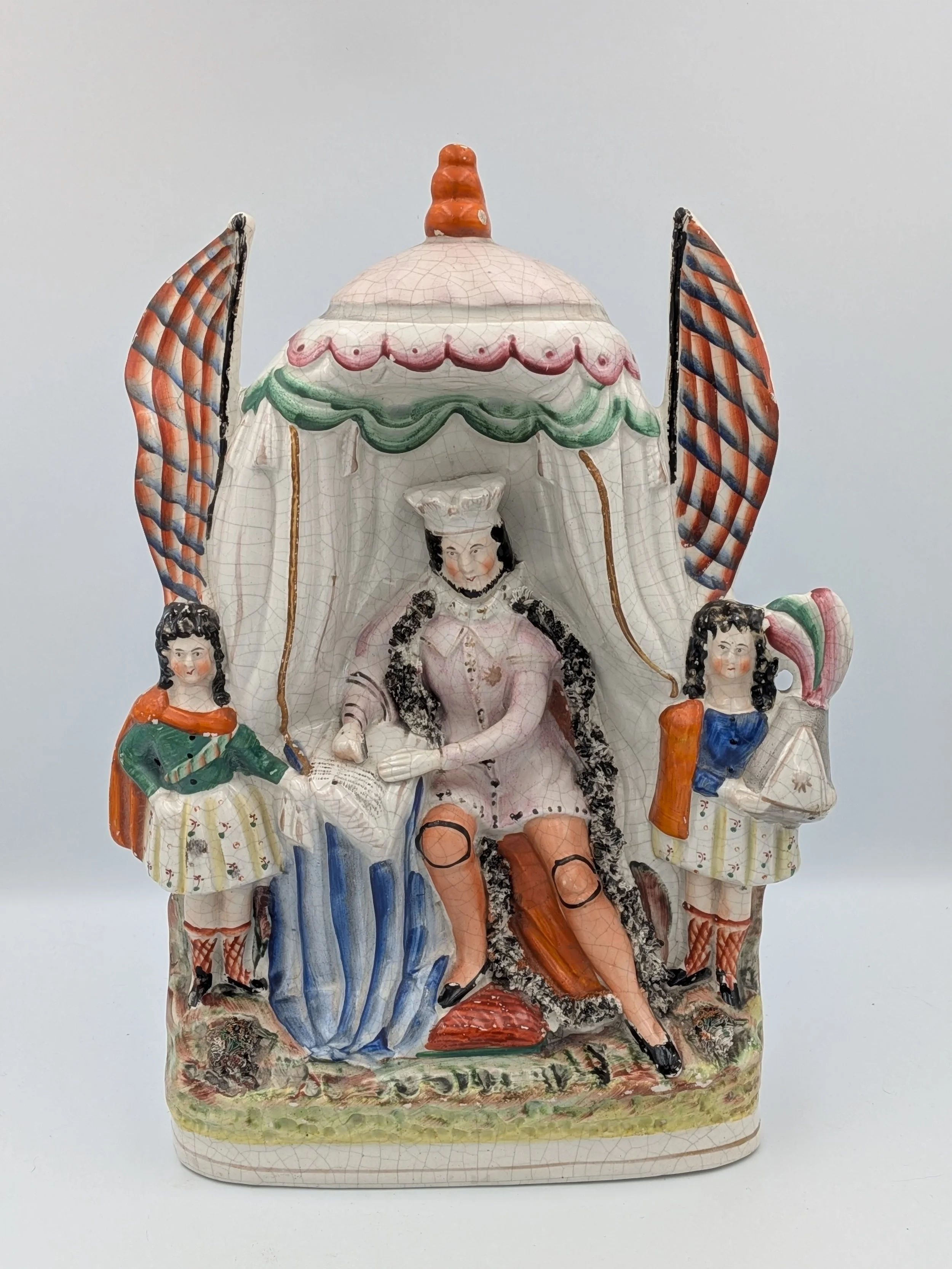 Image 2 of 22
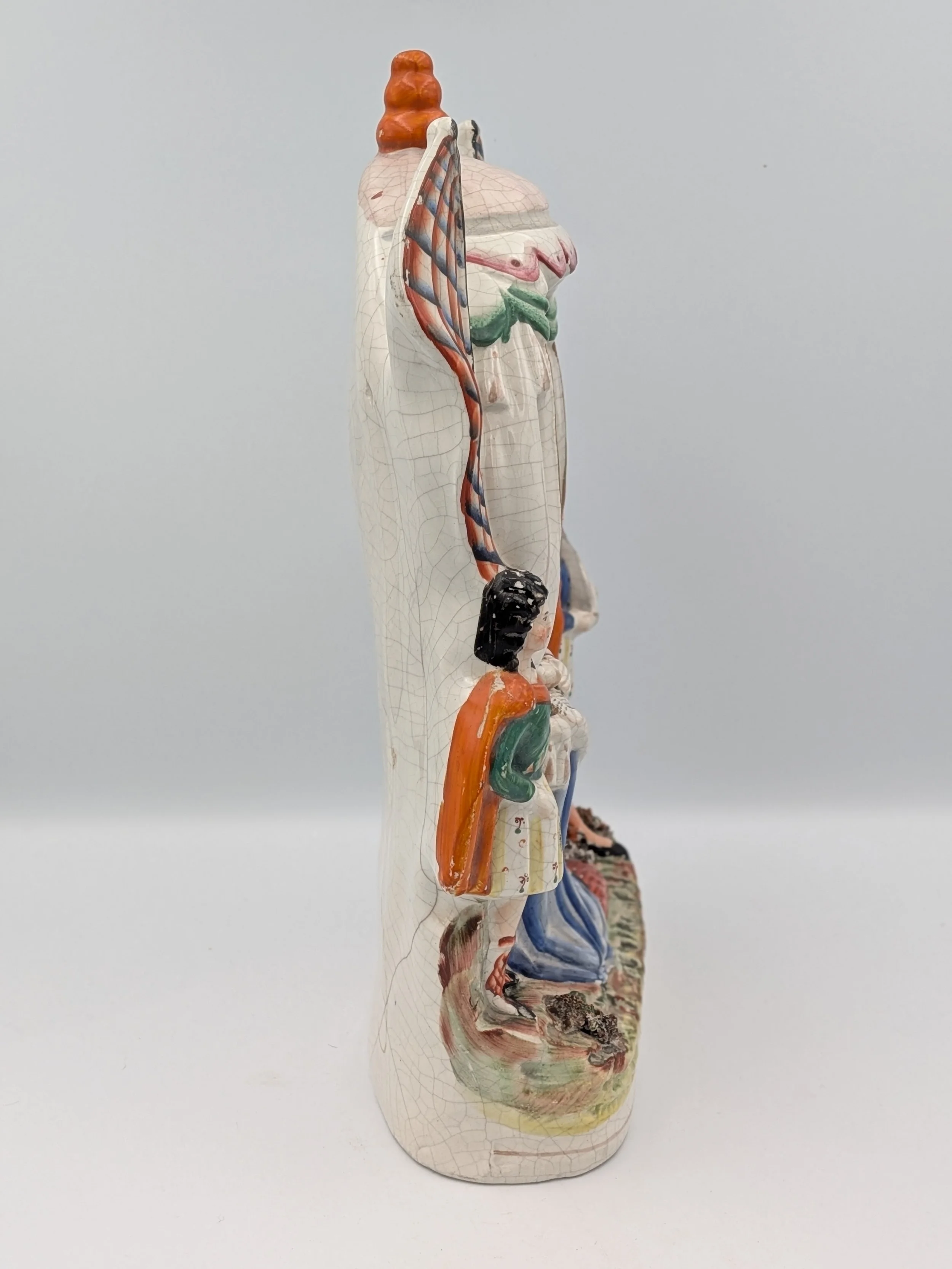 Image 3 of 22
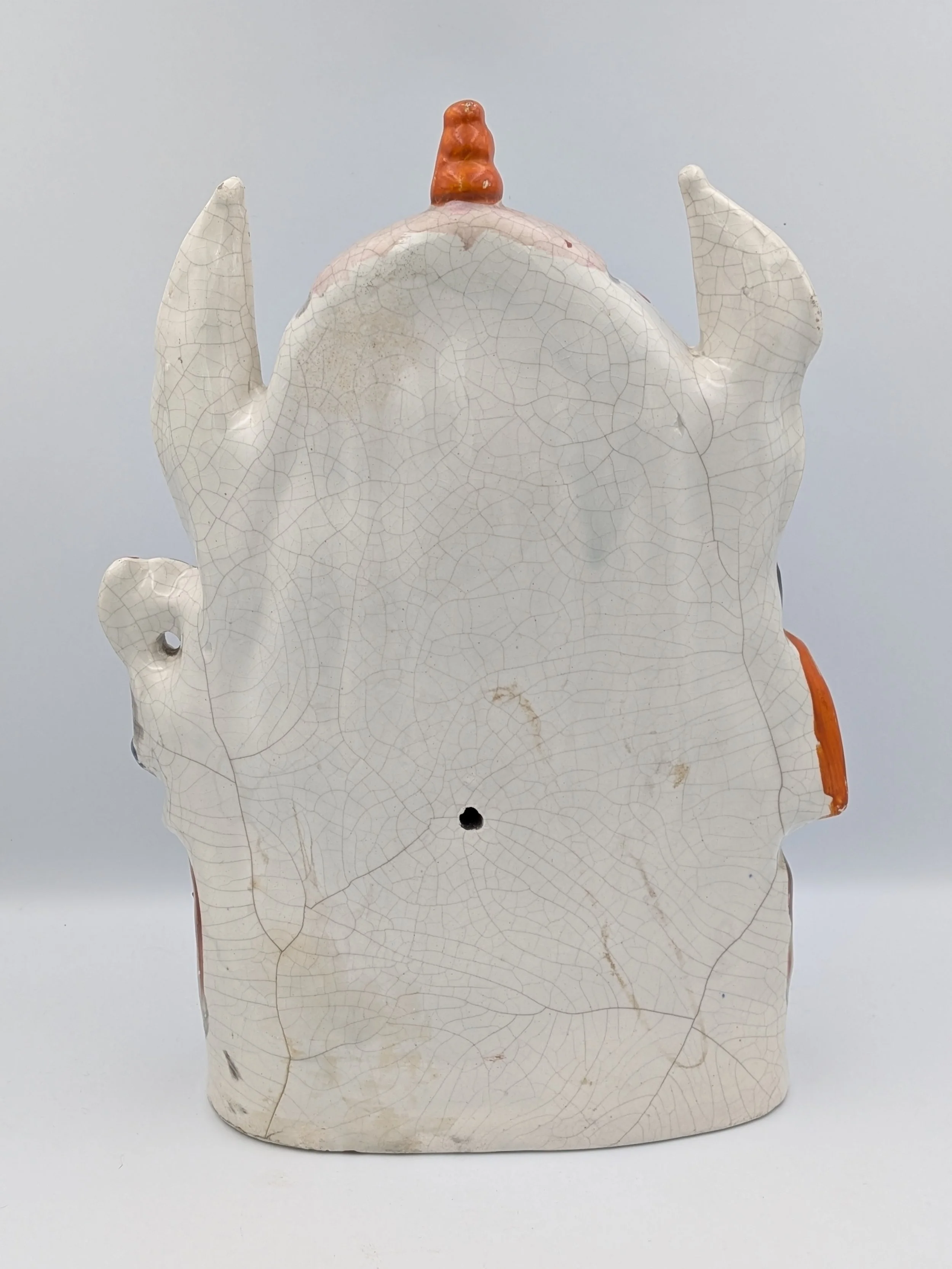 Image 4 of 22
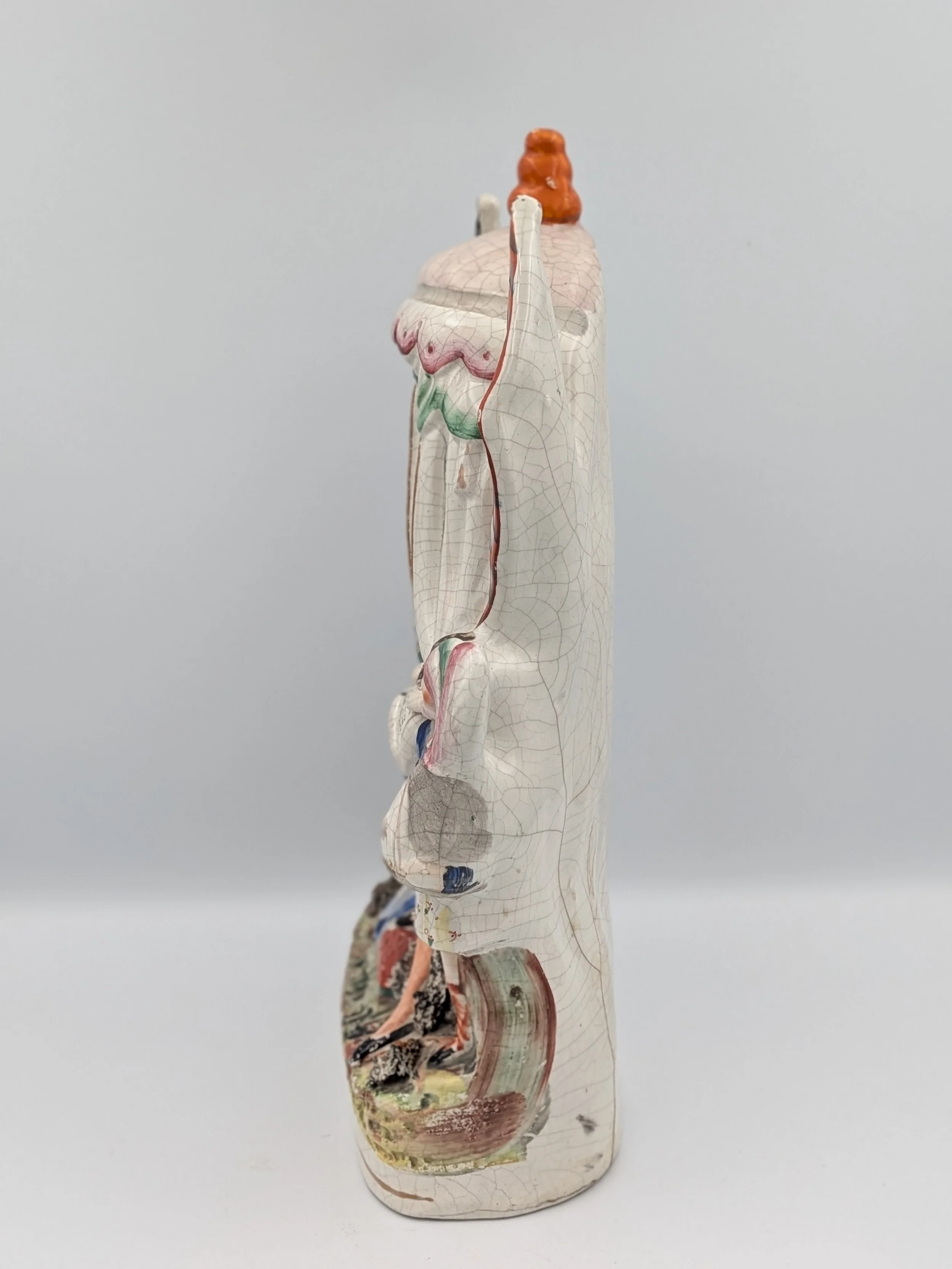 Image 5 of 22
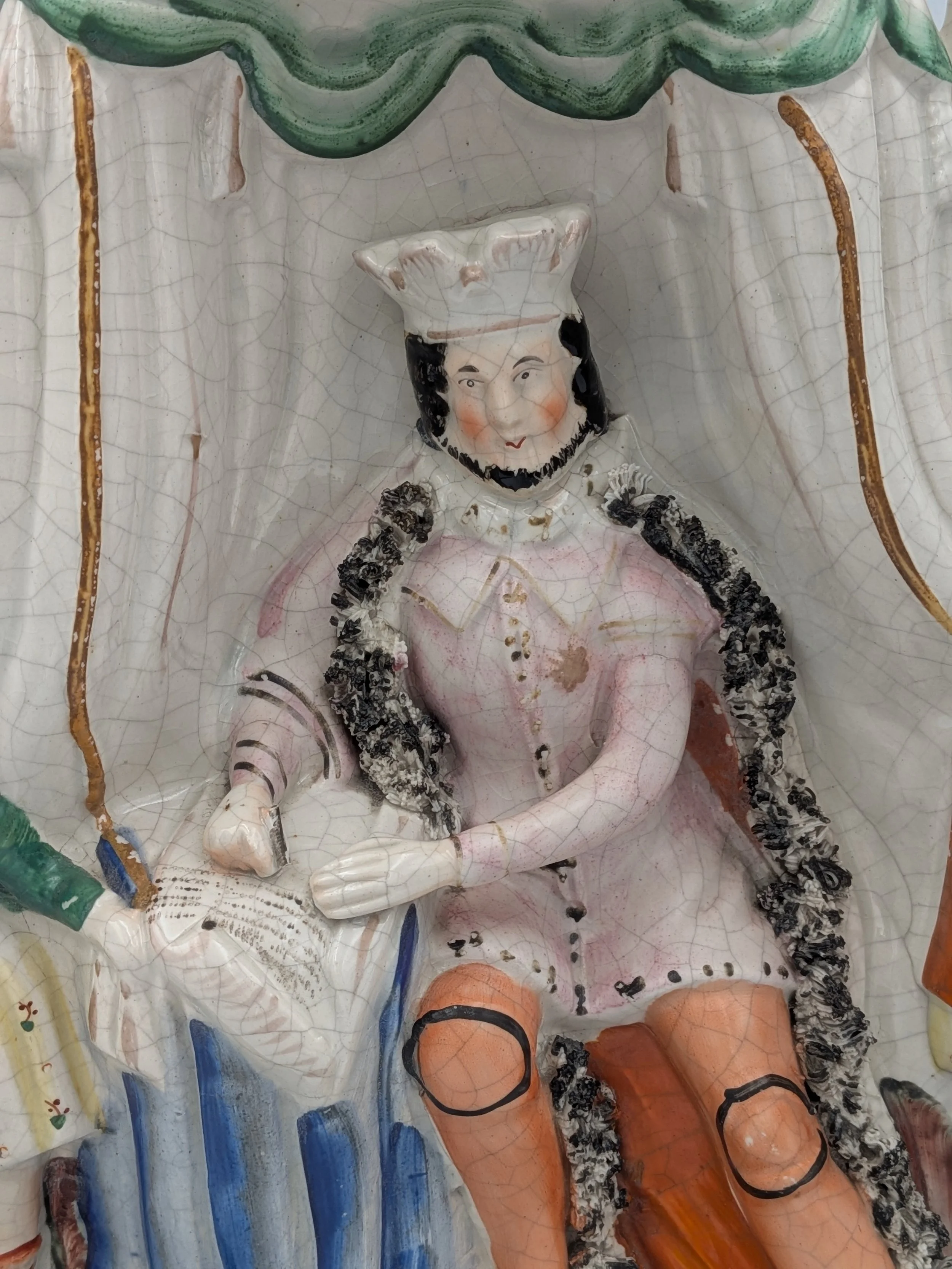 Image 6 of 22
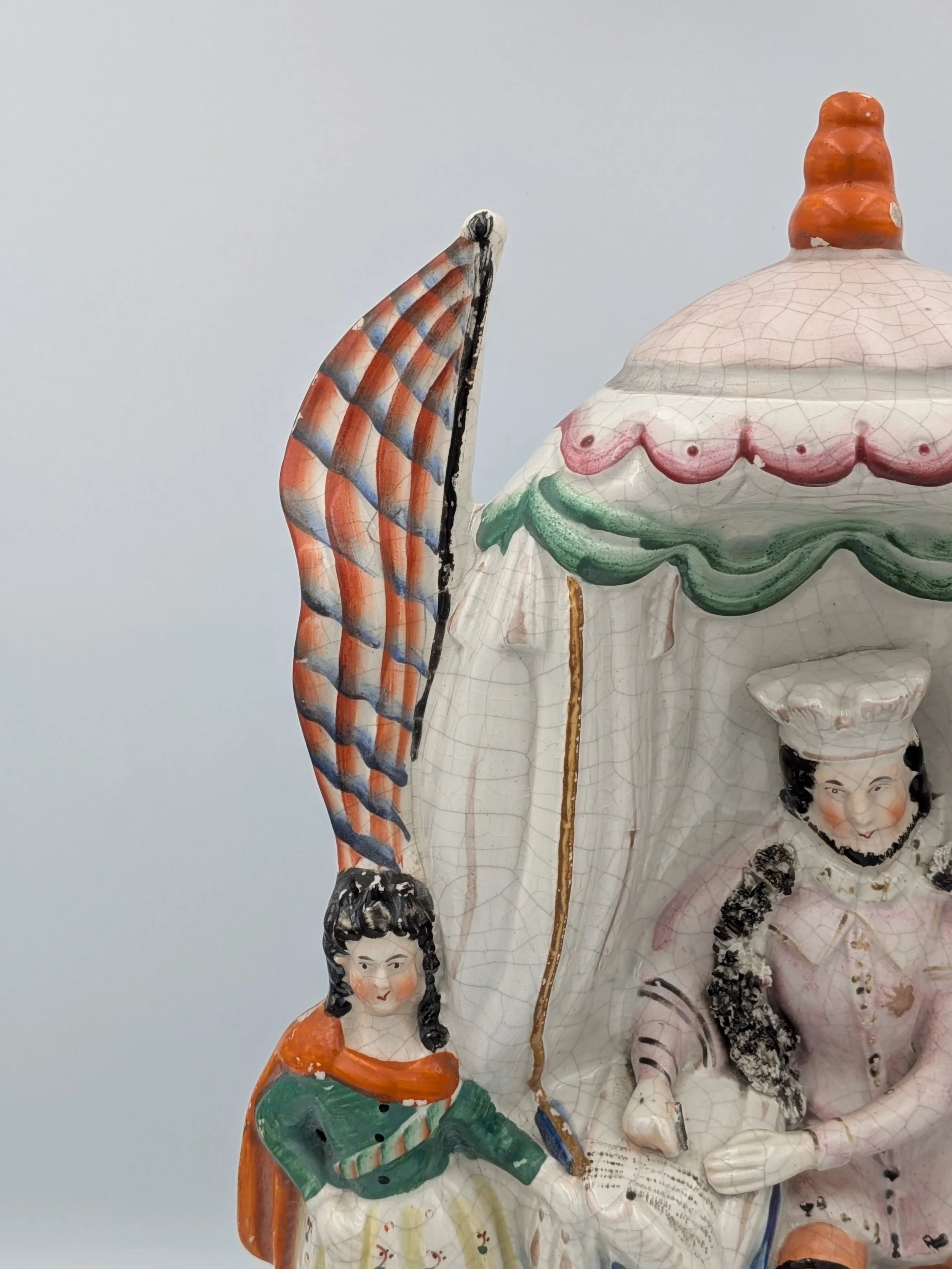 Image 7 of 22
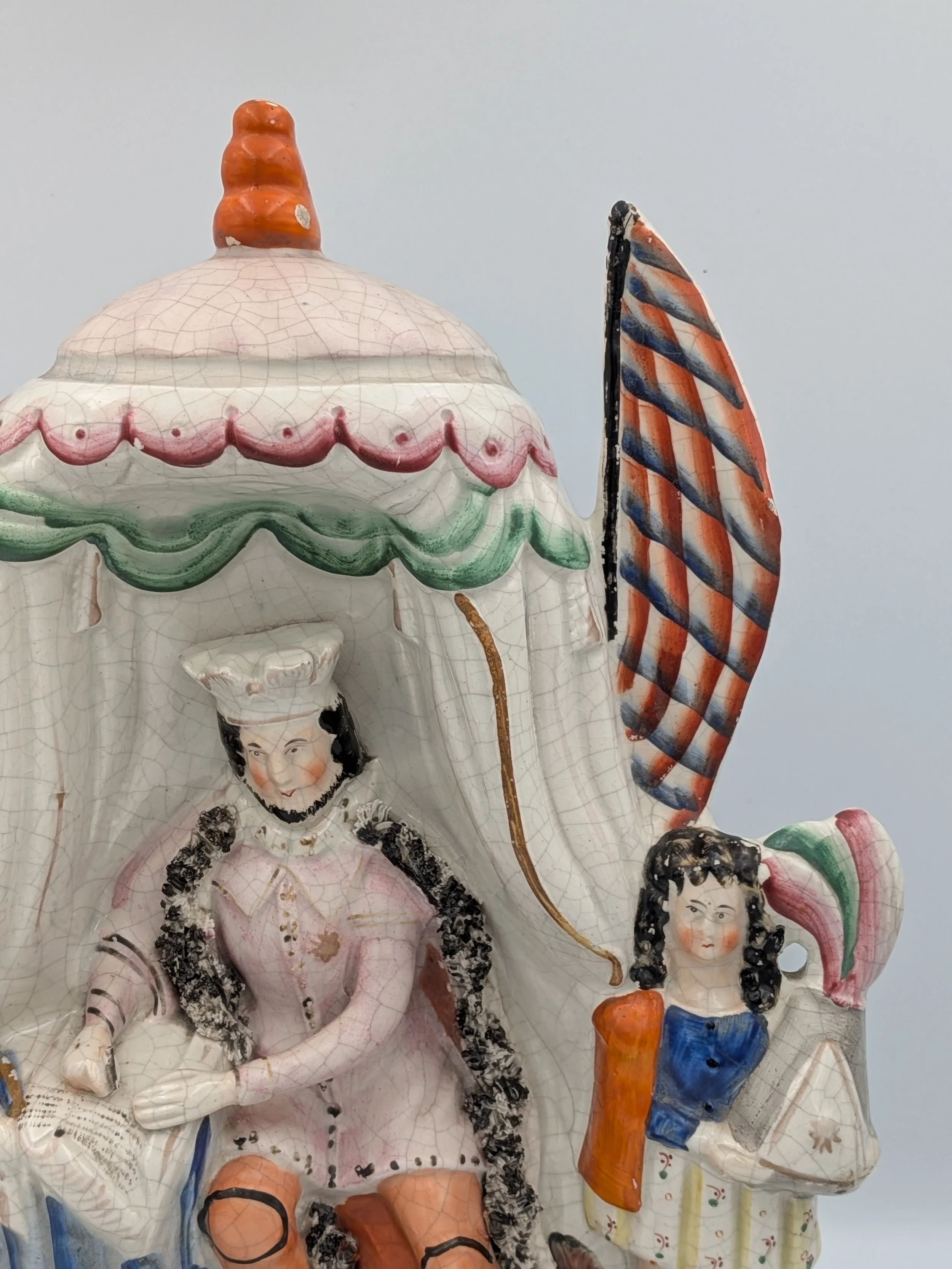 Image 8 of 22
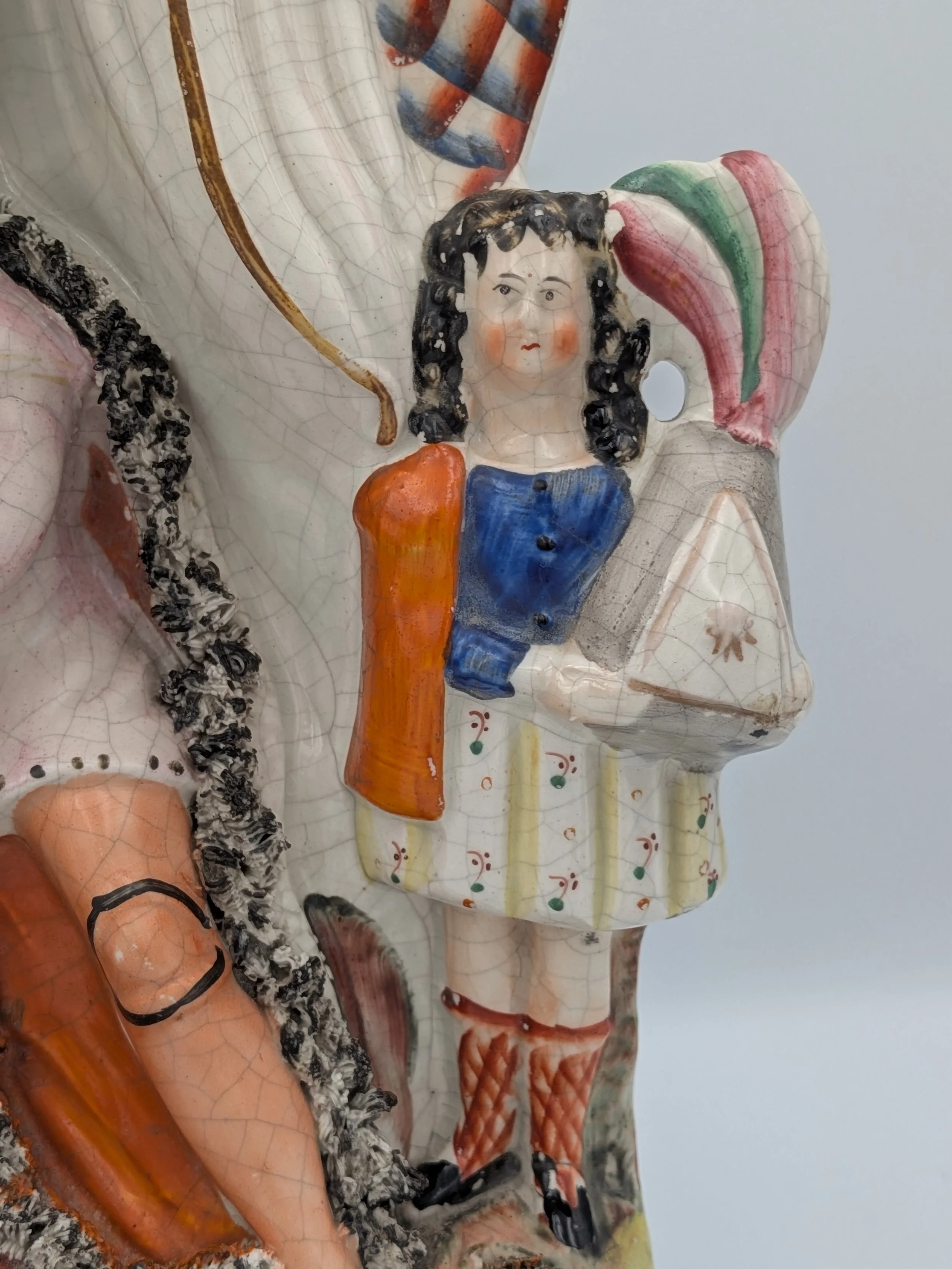 Image 9 of 22
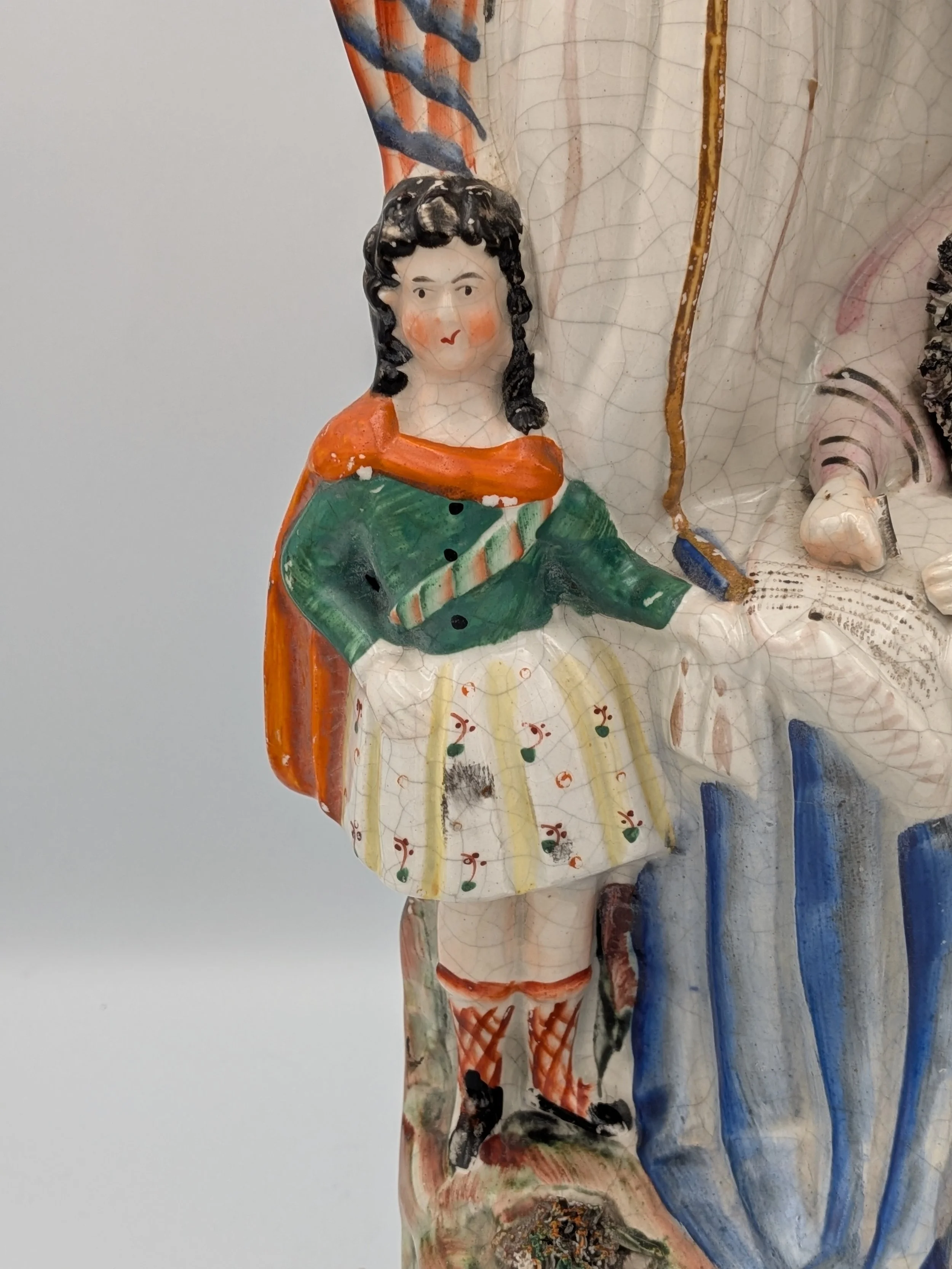 Image 10 of 22
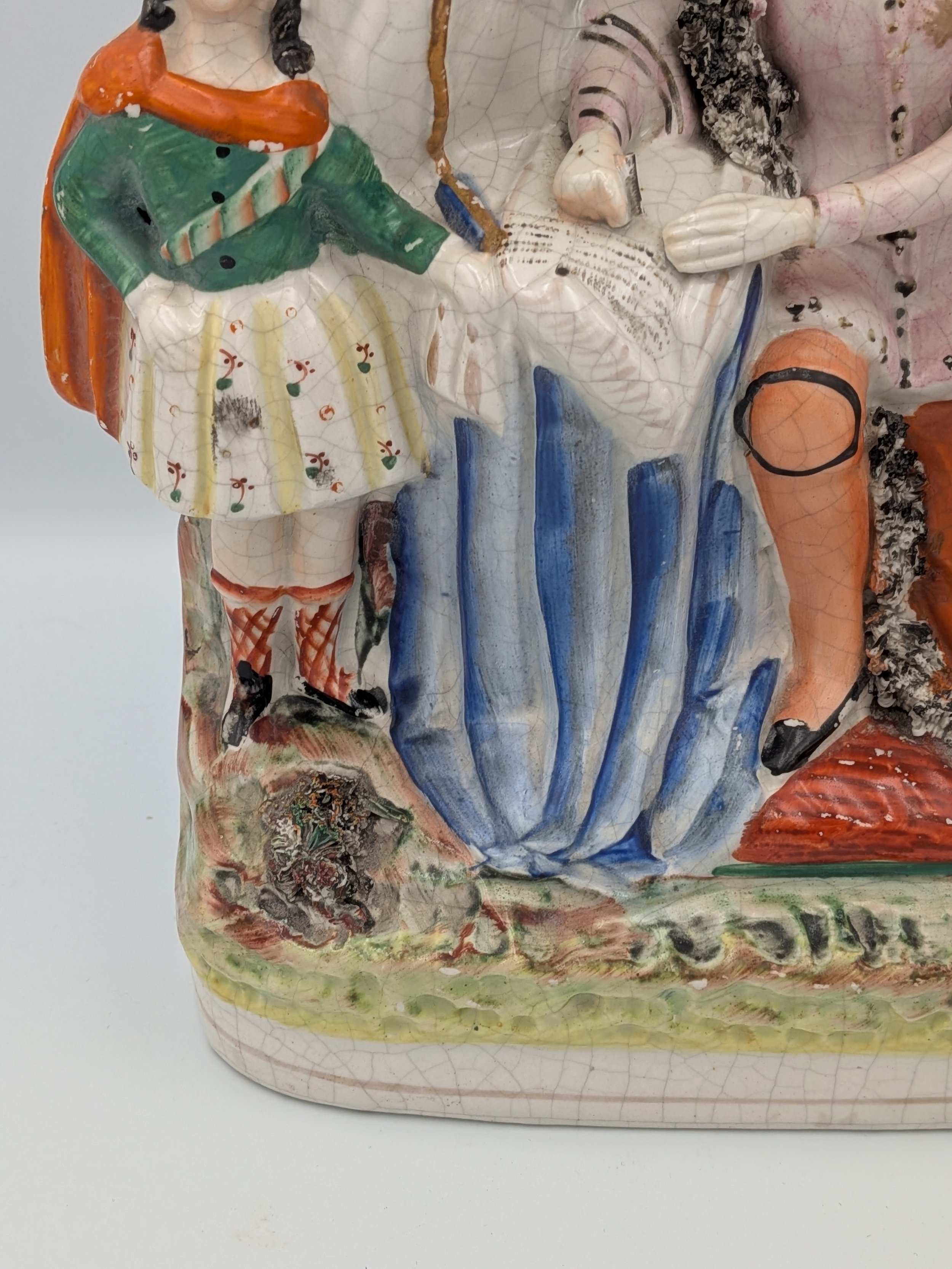 Image 11 of 22
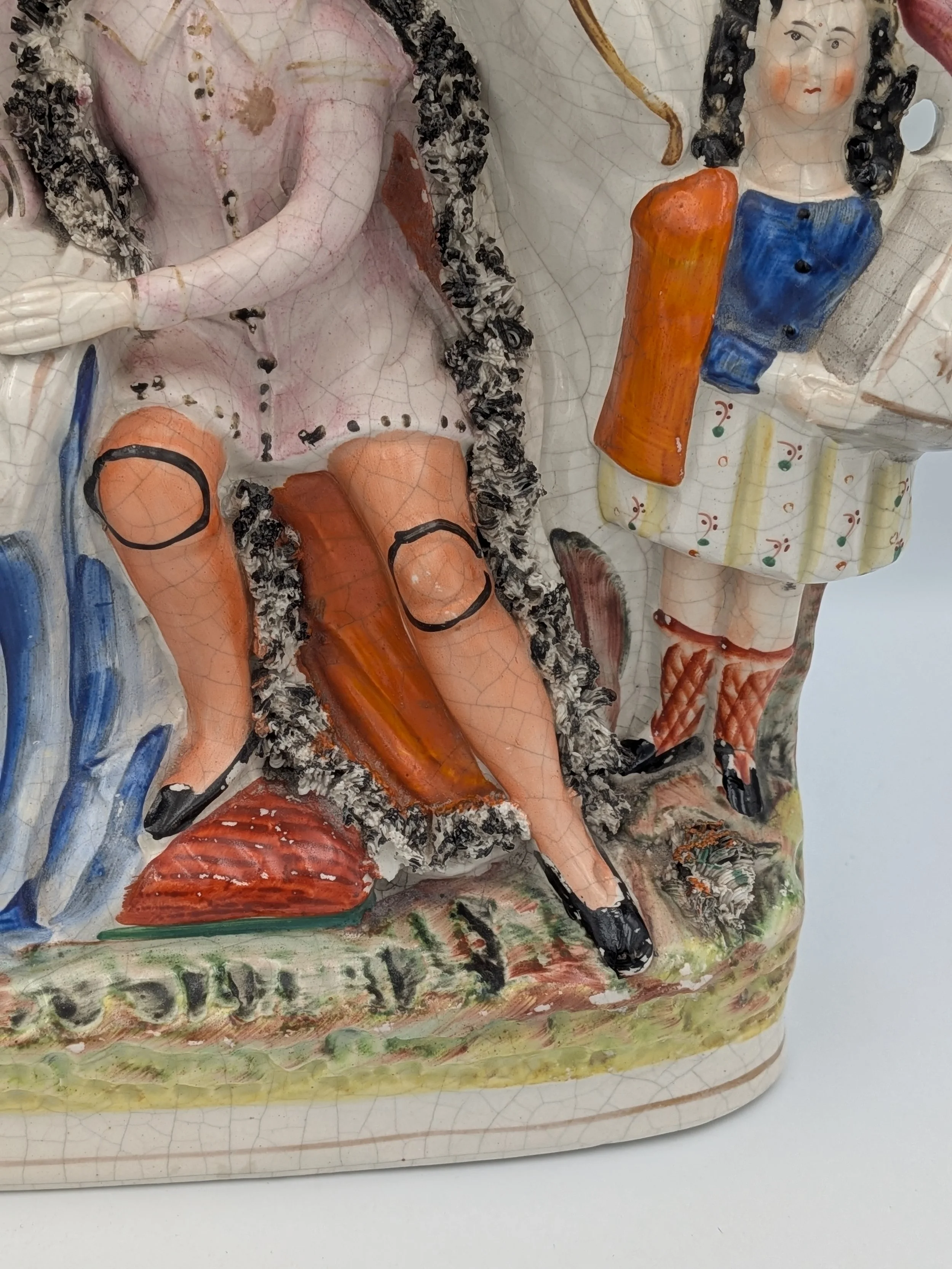 Image 12 of 22
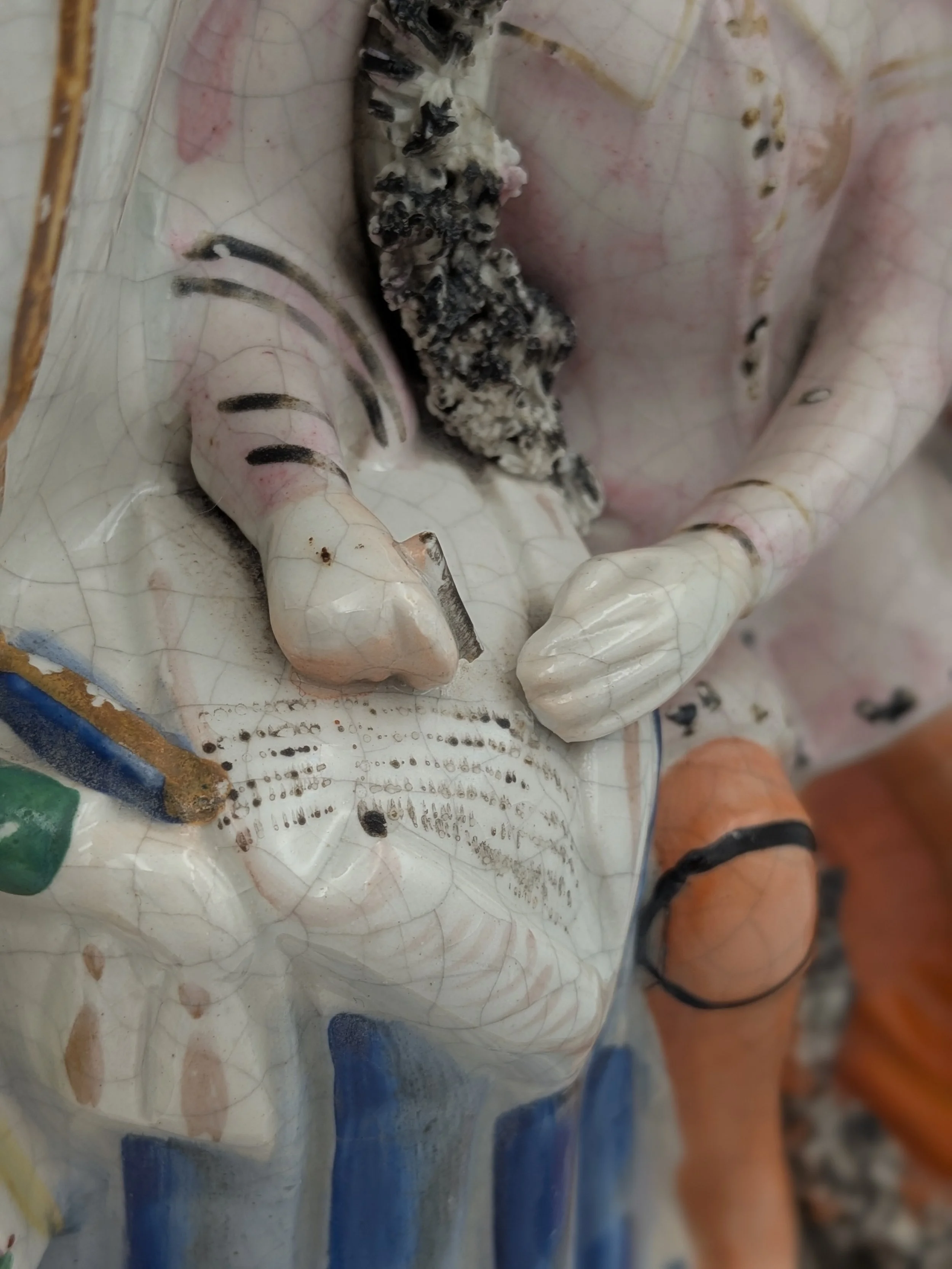 Image 13 of 22
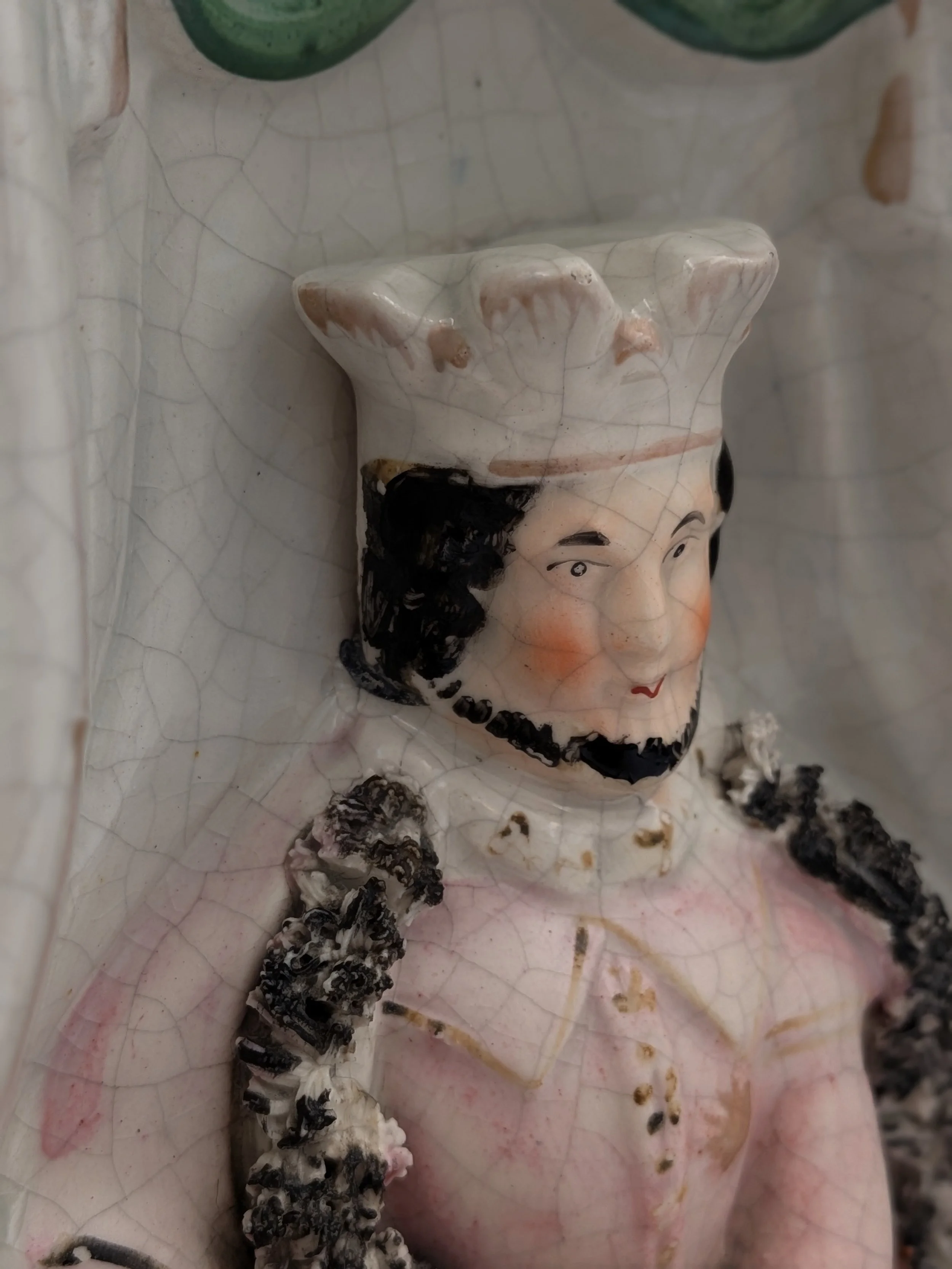 Image 14 of 22
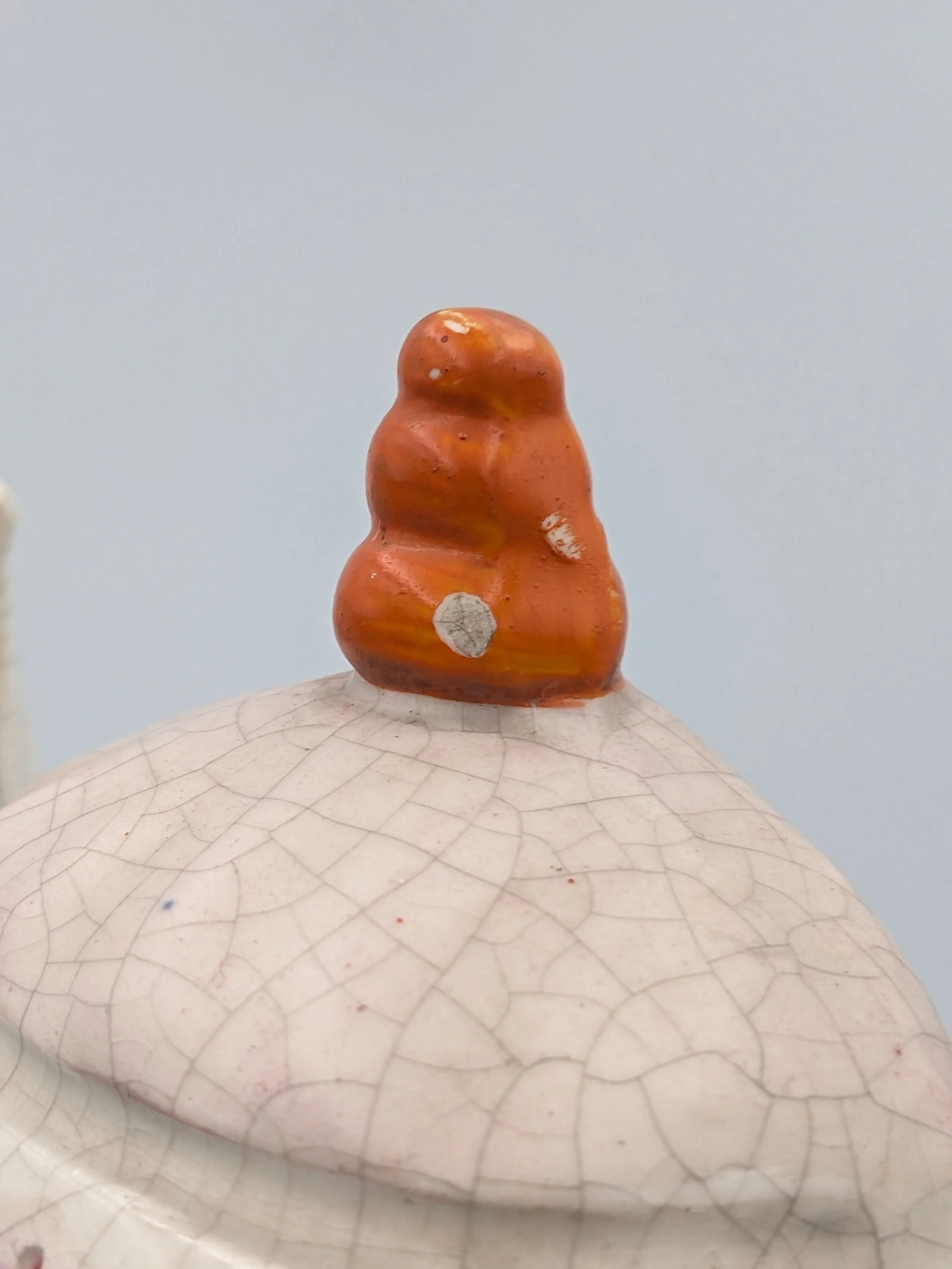 Image 15 of 22
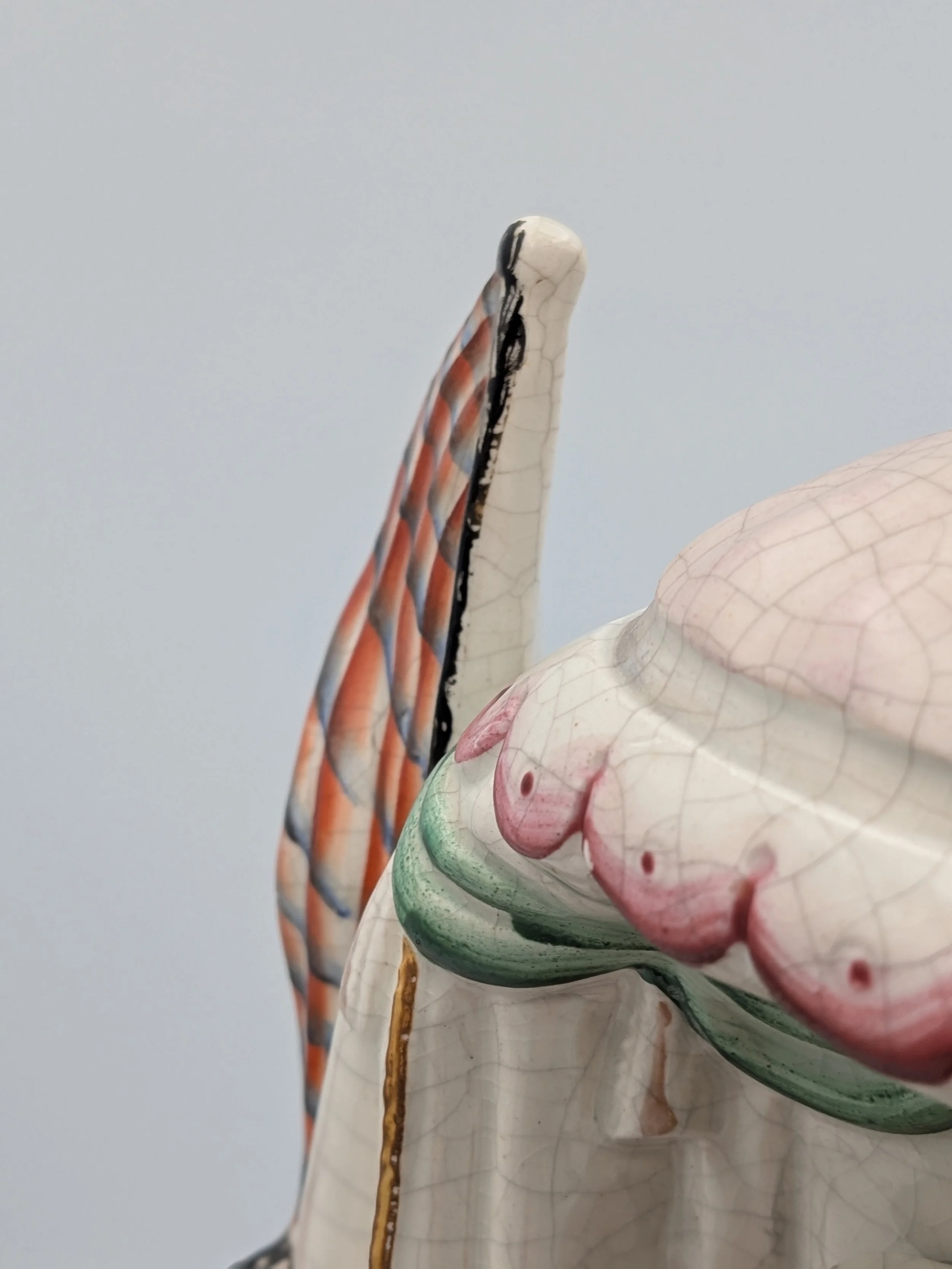 Image 16 of 22
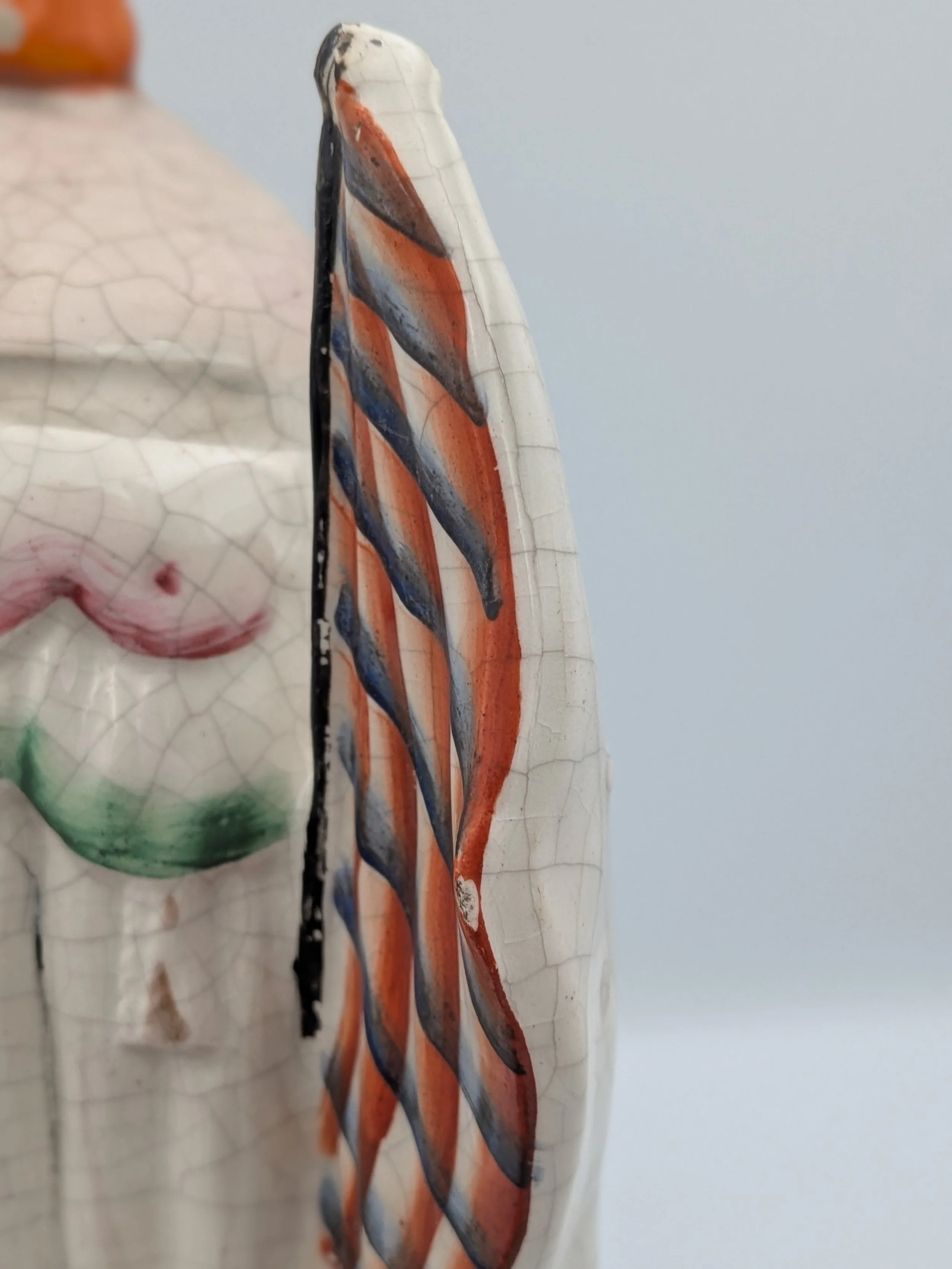 Image 17 of 22
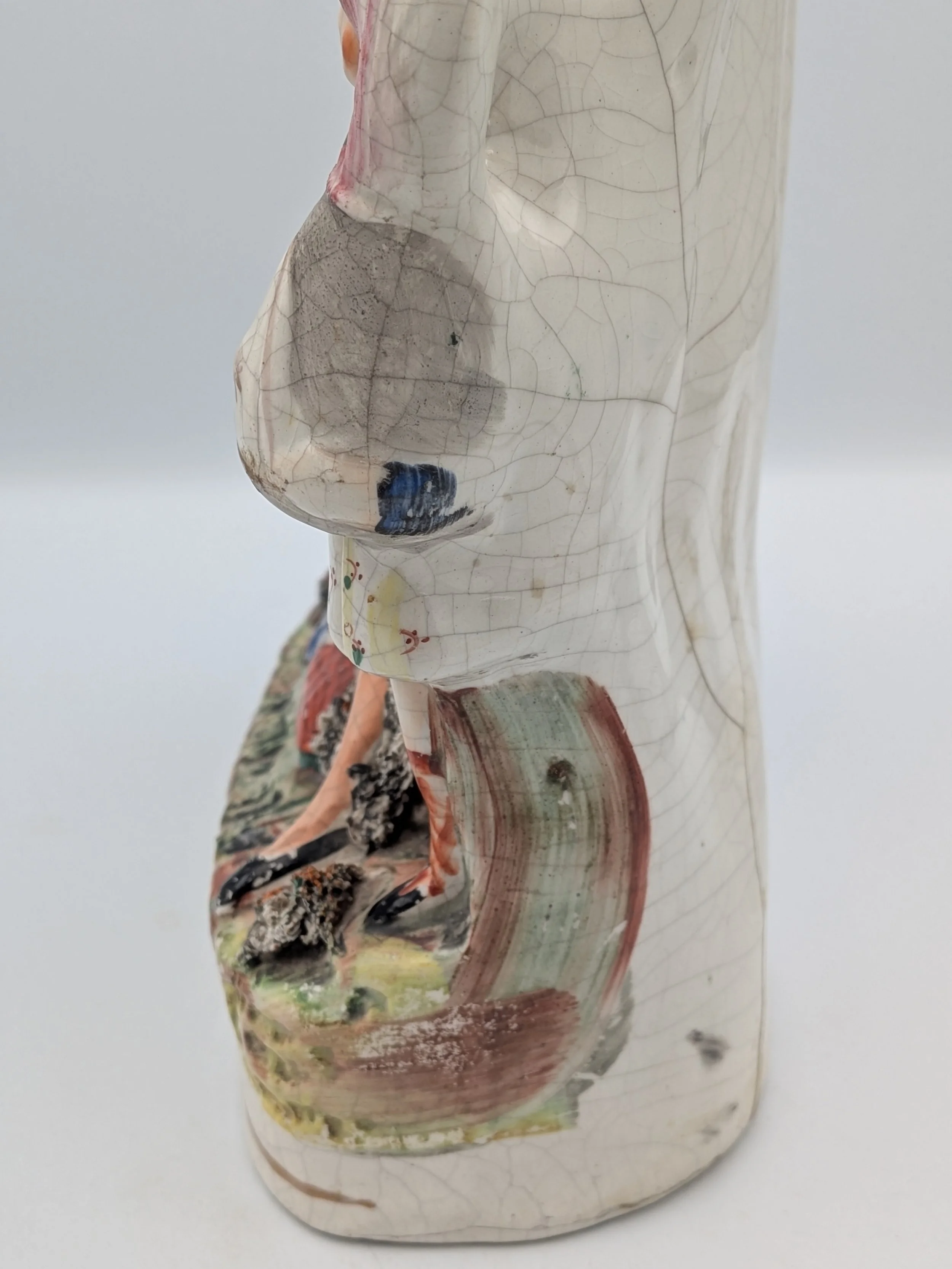 Image 18 of 22
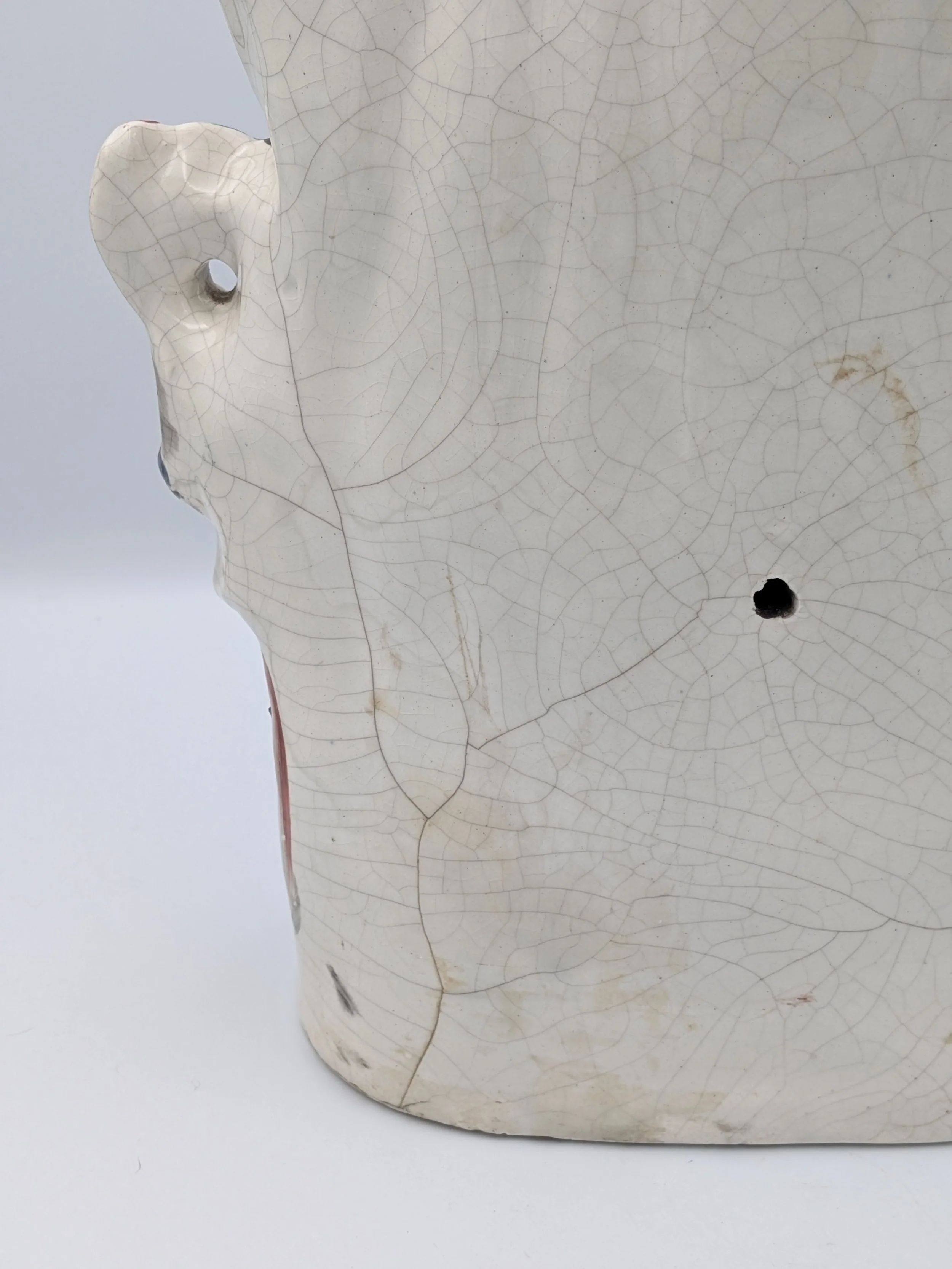 Image 19 of 22
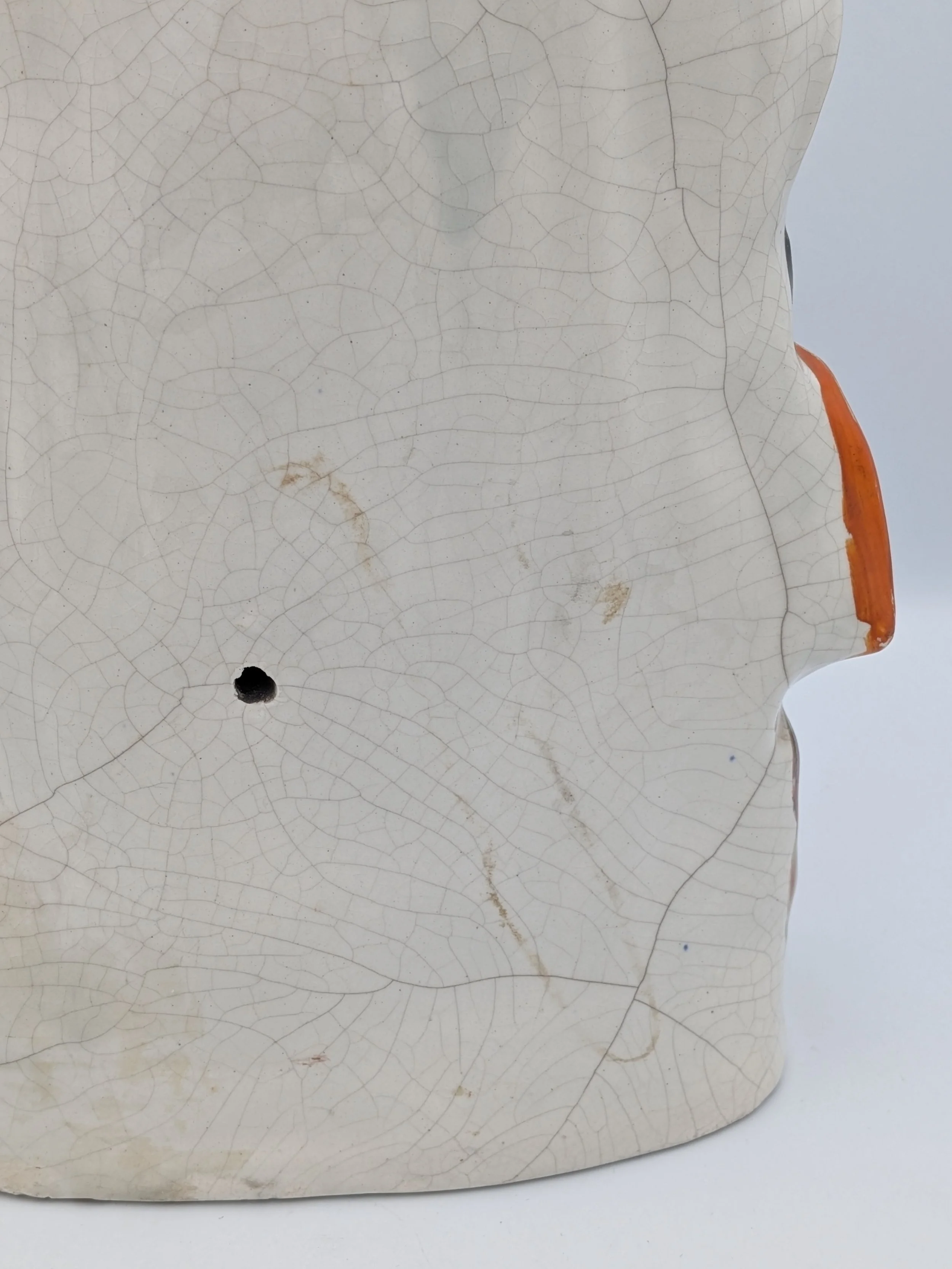 Image 20 of 22
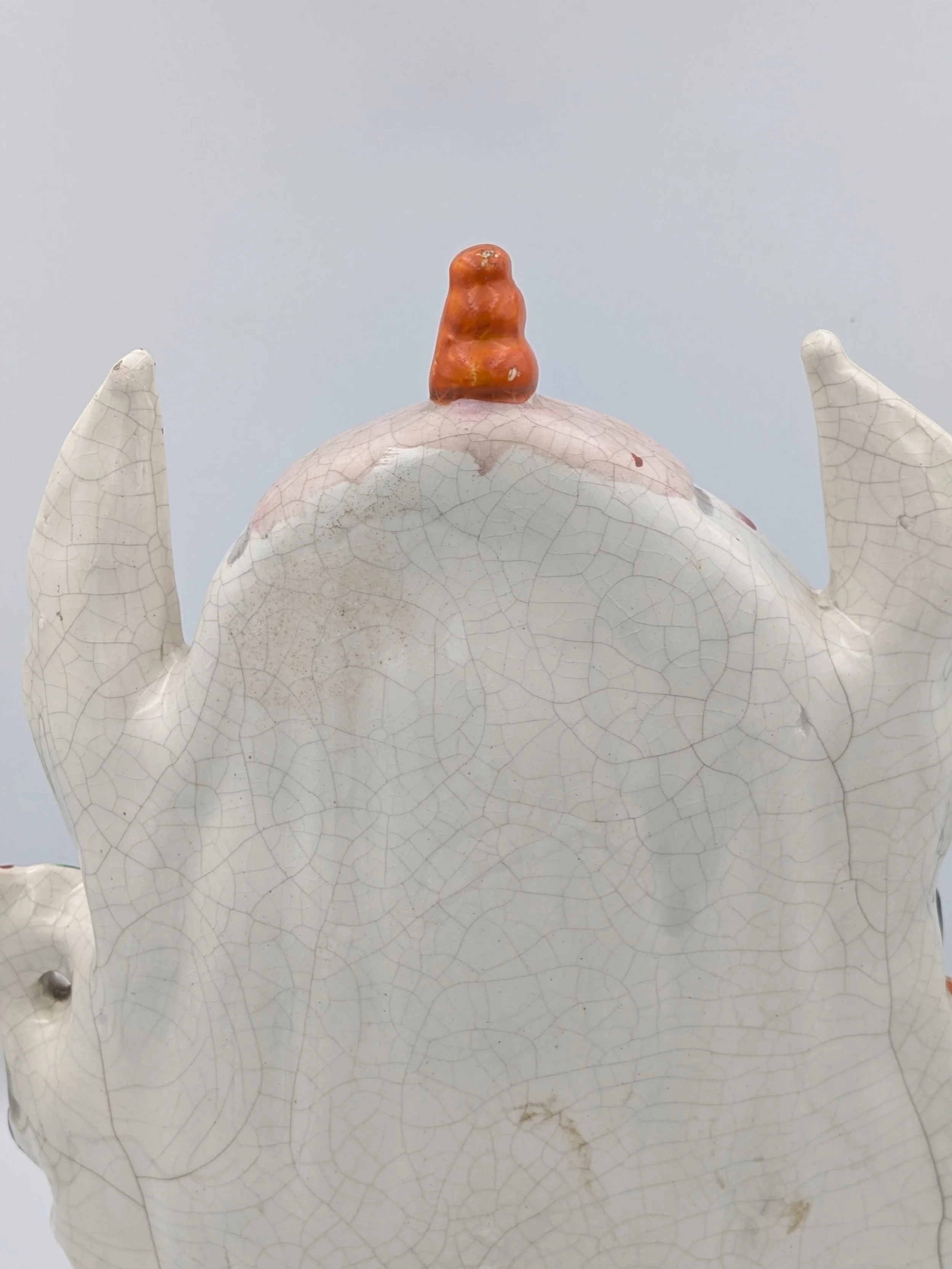 Image 21 of 22
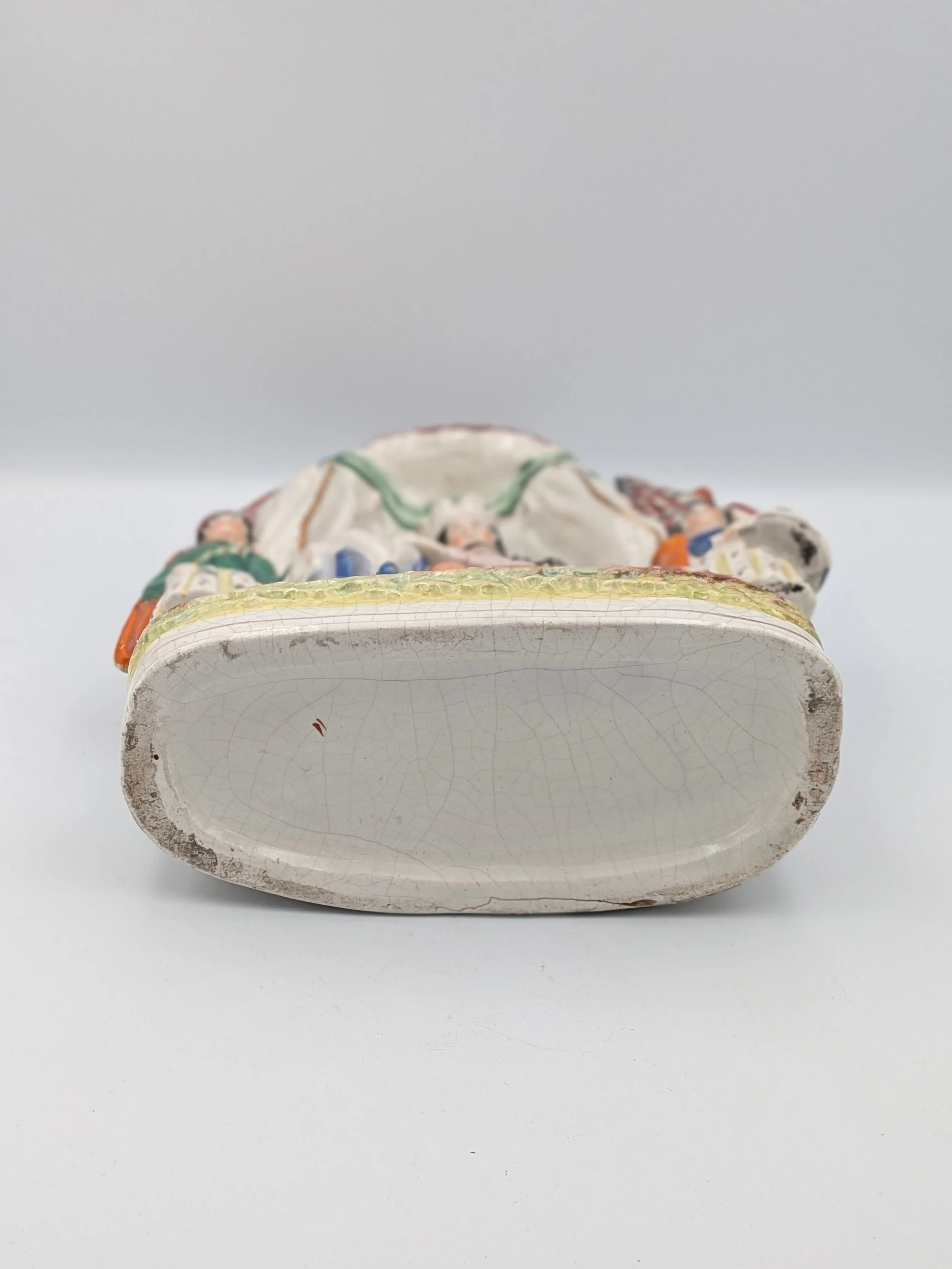 Image 22 of 22