A striking pair of figures depicting two persons riding horses.
The two riders are dressed in military-style clothing with plumed hats and capes. They ride on galloping piebald horses which are wearing very colourful and elaborate saddle cloths. Both are modelled on naturalistic green and black bases with green and russet shredded clay moss, and each with a cannon and pile of cannon balls.
The subject of this pair has been hotly debated. Pugh speculated that they depicted James II and William III, but there seems to be no evidence for this. They can be found described as Wellington and Napoleon which is certainly a viable theory. The Hardings, however, posit that the figures depict horseback performers from Philip Astley’s circus.
Astley was an equestrian who is known as the 'father of the modern circus'. He and his wife put on displays of horse riding as well as sabre work and warlike weapon sparring (which might explain the presence of the cannons) in the late 18th century. There is something slightly feminine in the right facing figure.
Both present nicely and these figures make a very attractive and eye-catching pair, but the following condition observations must be noted:
The left hand (right facing) figure has been repaired across the neck. I would not describe the repair as ‘professional’ or ‘invisible’ but it has been reasonably well concealed with over-painting for display purposes (see images for an idea of the repair quality). There is a very small, negligible chip to the tip of the horse’s front-left hoof which is only visible when looking at the figure eye-to-eye with the horse (i.e. not as displayed). There is is fairly extensive flaking to the base and also to the saddle cloth, plumed hat, horse’s black patches, and cape. Some old efforts at retouching remain, particularly on the horse, but this is scarcely noticeable.
The right hand (left facing) figure is in excellent condition with no repairs, only a very small chip to the back of the hat (not visible when displayed). There is fairly extensive flaking to the base and also to the saddle cloth, plumed hat, horse’s black patches, and cape. Some old efforts at retouching remain, particularly on the horse, but this is scarcely noticeable.
Finding these figures together as a good pair is rare. The imperfections are reflected in the price, but the merit of this lovely pair greatly exceeds the cost.
Reference: A. & N. Harding, Victorian Staffordshire Figures 1835 - 1875: Book Three, p. 118 (379), figs a1463 and a1464
Height: 9.5
Date: c. 1850s
A striking pair of figures depicting two persons riding horses.
The two riders are dressed in military-style clothing with plumed hats and capes. They ride on galloping piebald horses which are wearing very colourful and elaborate saddle cloths. Both are modelled on naturalistic green and black bases with green and russet shredded clay moss, and each with a cannon and pile of cannon balls.
The subject of this pair has been hotly debated. Pugh speculated that they depicted James II and William III, but there seems to be no evidence for this. They can be found described as Wellington and Napoleon which is certainly a viable theory. The Hardings, however, posit that the figures depict horseback performers from Philip Astley’s circus.
Astley was an equestrian who is known as the 'father of the modern circus'. He and his wife put on displays of horse riding as well as sabre work and warlike weapon sparring (which might explain the presence of the cannons) in the late 18th century. There is something slightly feminine in the right facing figure.
Both present nicely and these figures make a very attractive and eye-catching pair, but the following condition observations must be noted:
The left hand (right facing) figure has been repaired across the neck. I would not describe the repair as ‘professional’ or ‘invisible’ but it has been reasonably well concealed with over-painting for display purposes (see images for an idea of the repair quality). There is a very small, negligible chip to the tip of the horse’s front-left hoof which is only visible when looking at the figure eye-to-eye with the horse (i.e. not as displayed). There is is fairly extensive flaking to the base and also to the saddle cloth, plumed hat, horse’s black patches, and cape. Some old efforts at retouching remain, particularly on the horse, but this is scarcely noticeable.
The right hand (left facing) figure is in excellent condition with no repairs, only a very small chip to the back of the hat (not visible when displayed). There is fairly extensive flaking to the base and also to the saddle cloth, plumed hat, horse’s black patches, and cape. Some old efforts at retouching remain, particularly on the horse, but this is scarcely noticeable.
Finding these figures together as a good pair is rare. The imperfections are reflected in the price, but the merit of this lovely pair greatly exceeds the cost.
Reference: A. & N. Harding, Victorian Staffordshire Figures 1835 - 1875: Book Three, p. 118 (379), figs a1463 and a1464
Height: 9.5
Date: c. 1850s
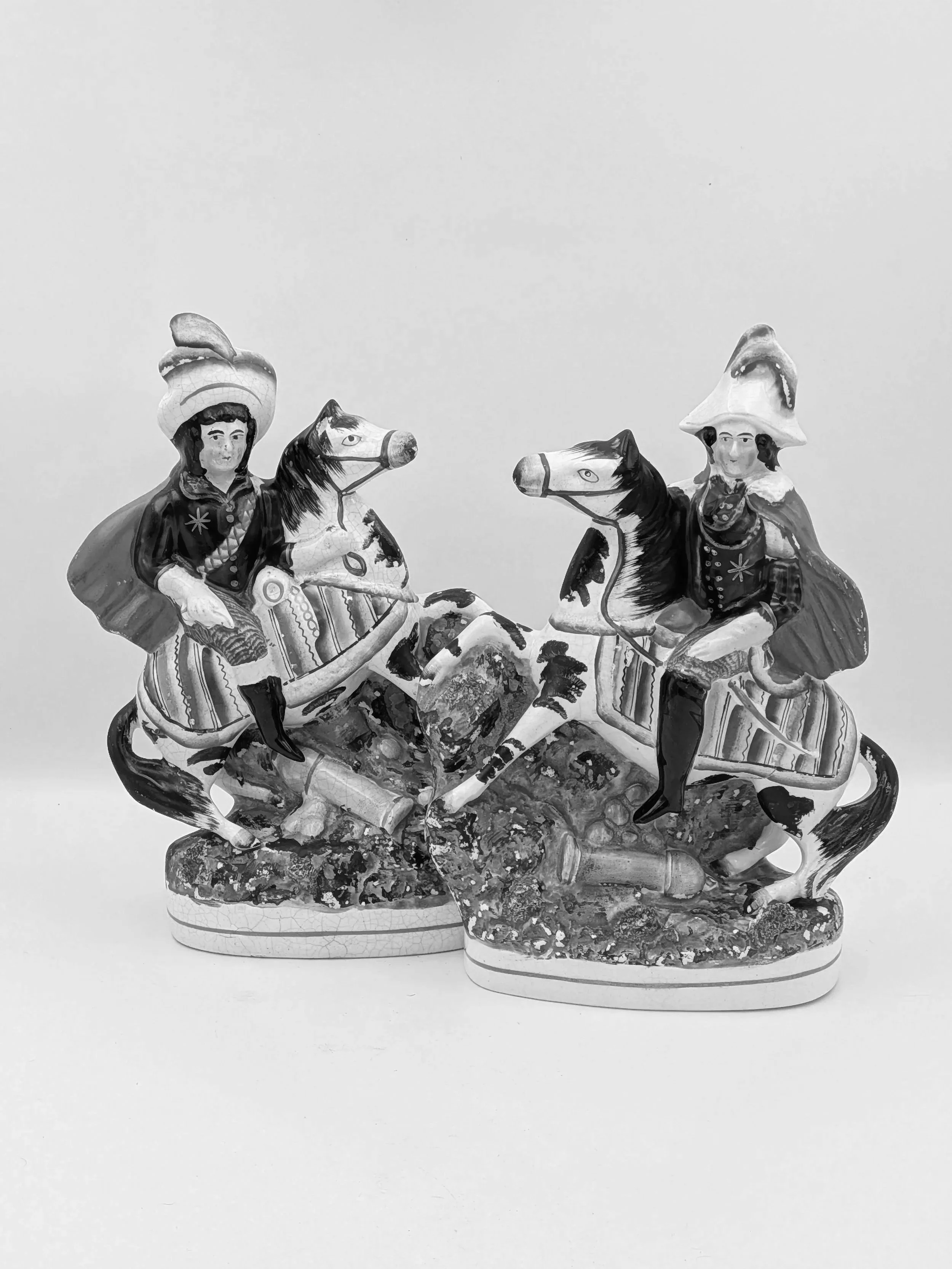 Image 1 of 37
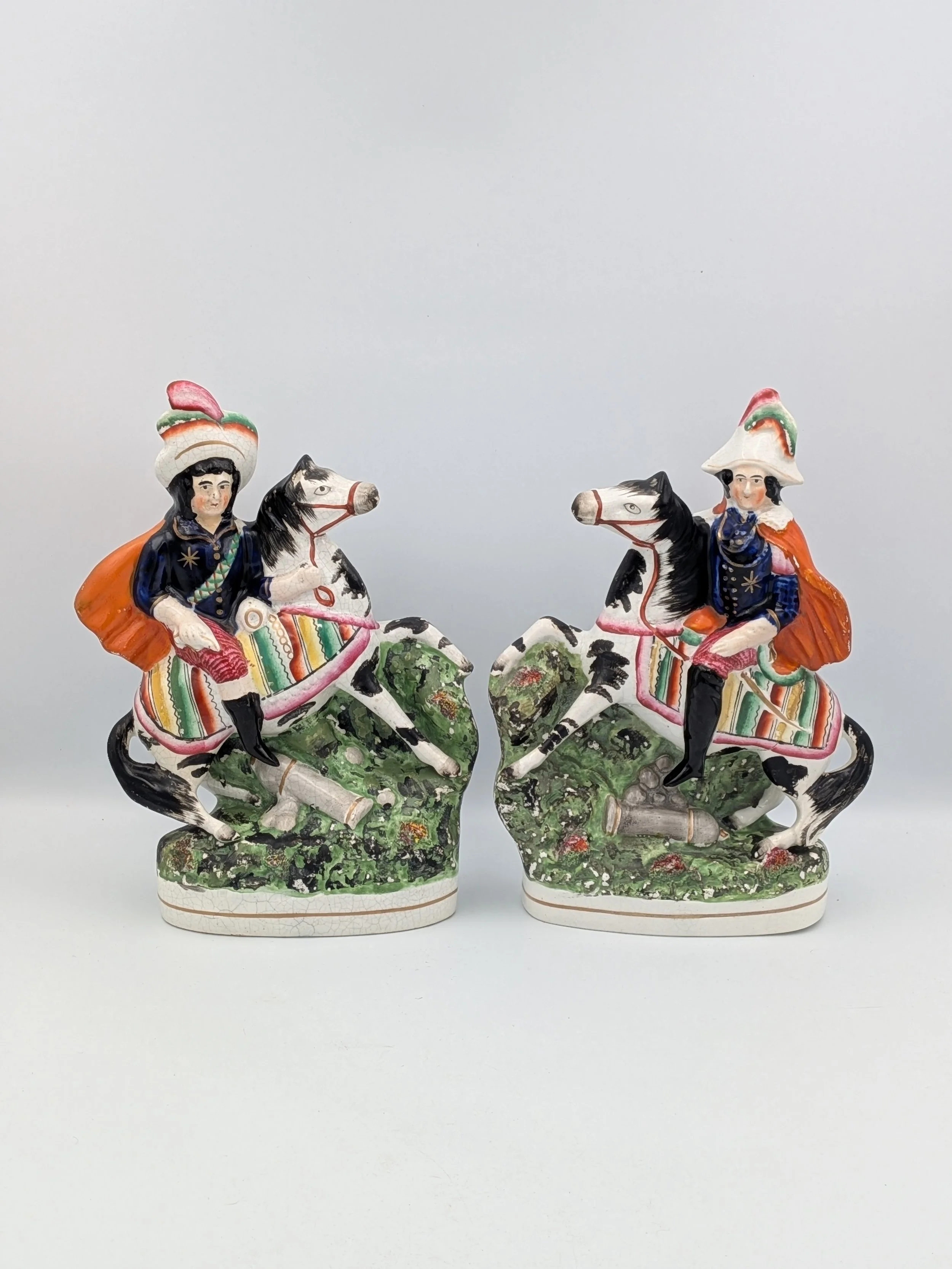 Image 2 of 37
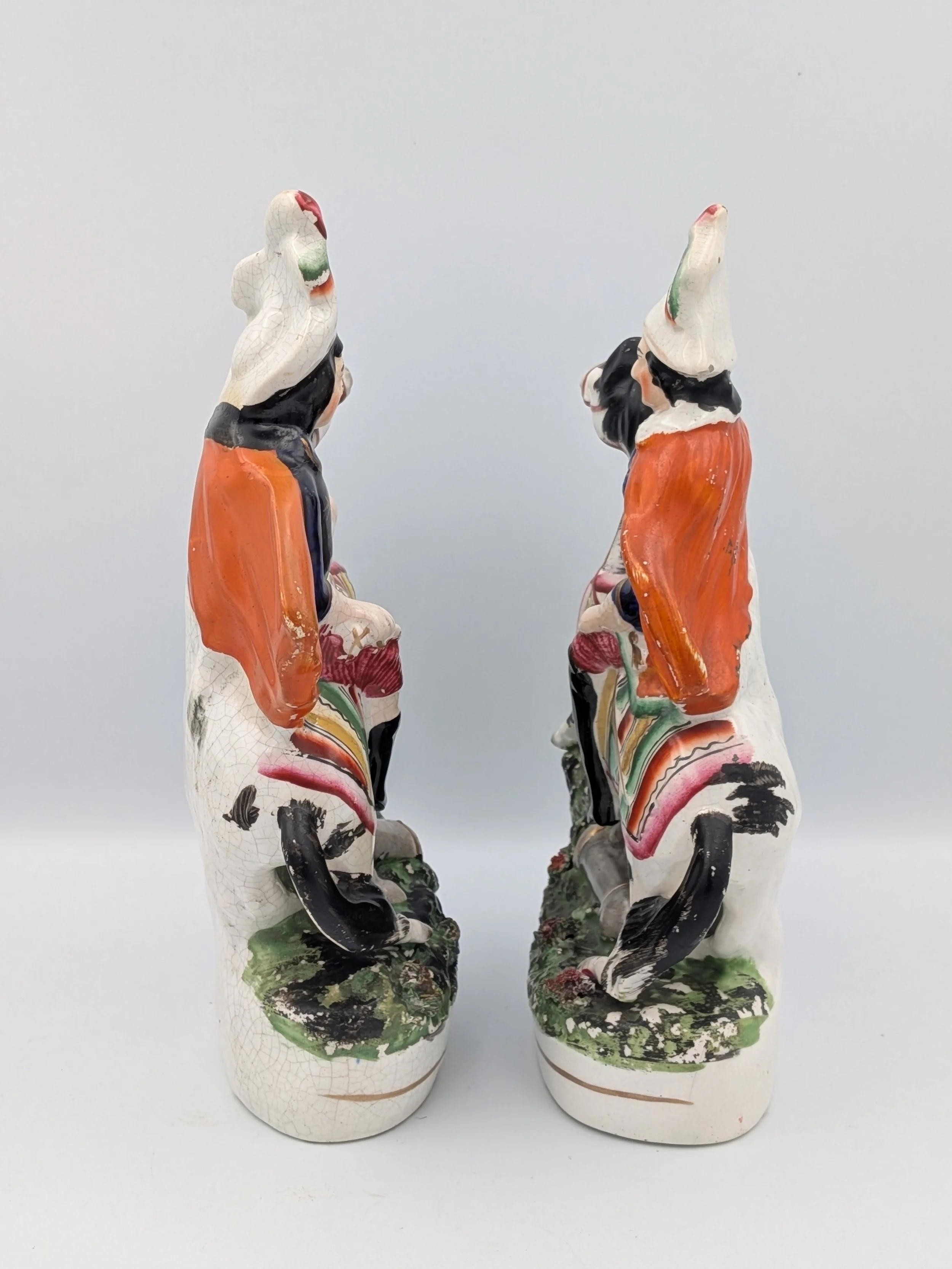 Image 3 of 37
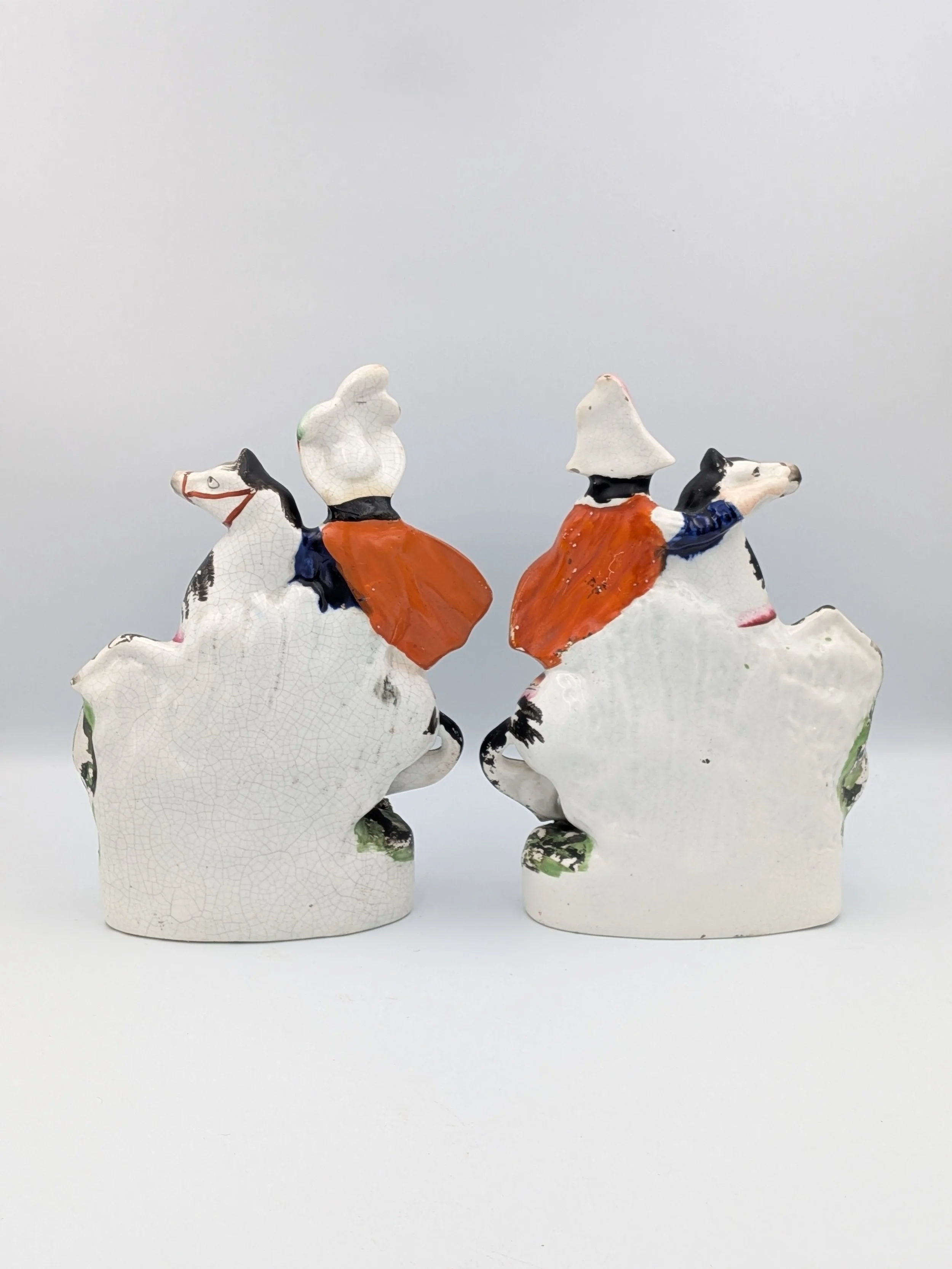 Image 4 of 37
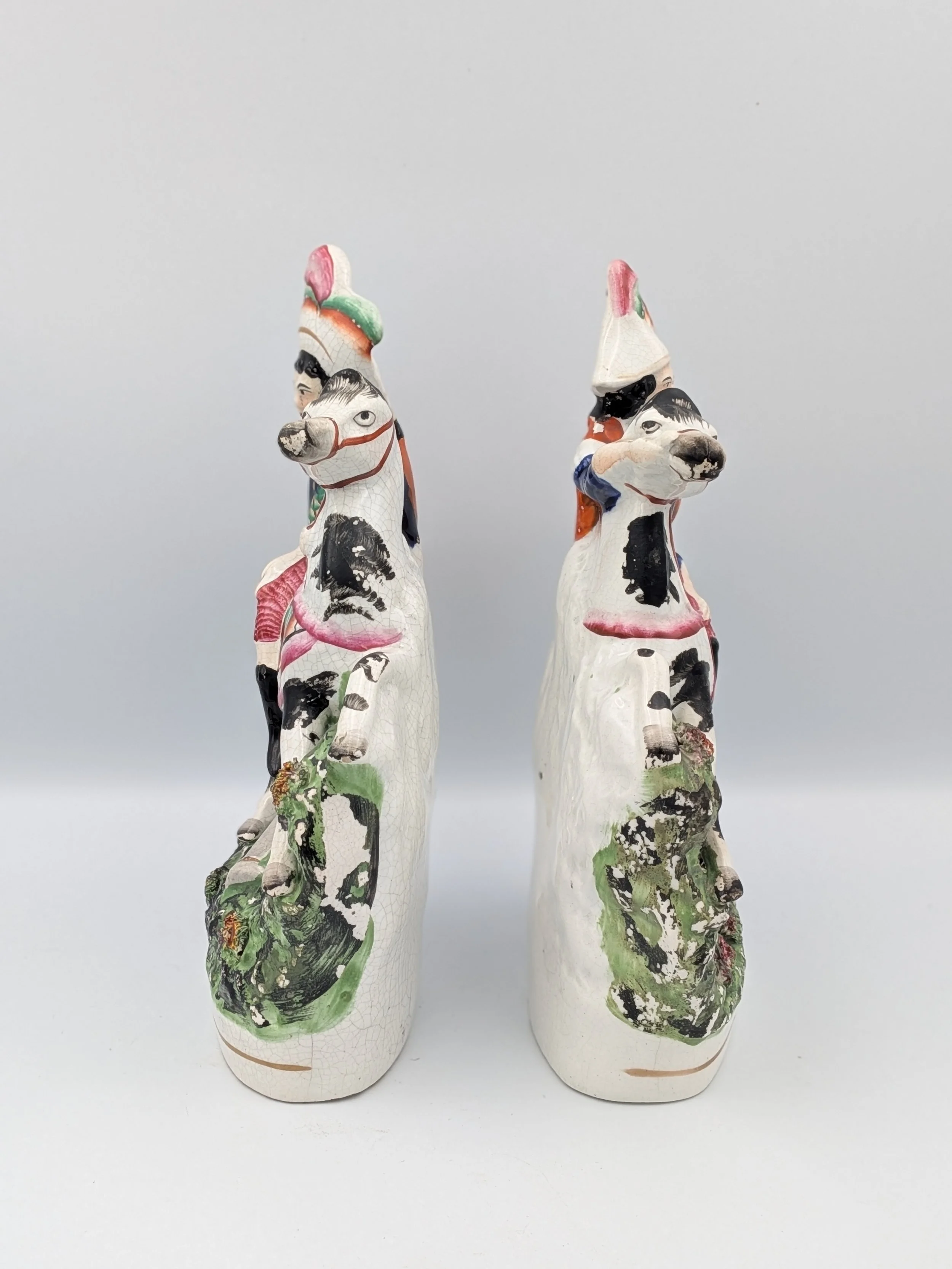 Image 5 of 37
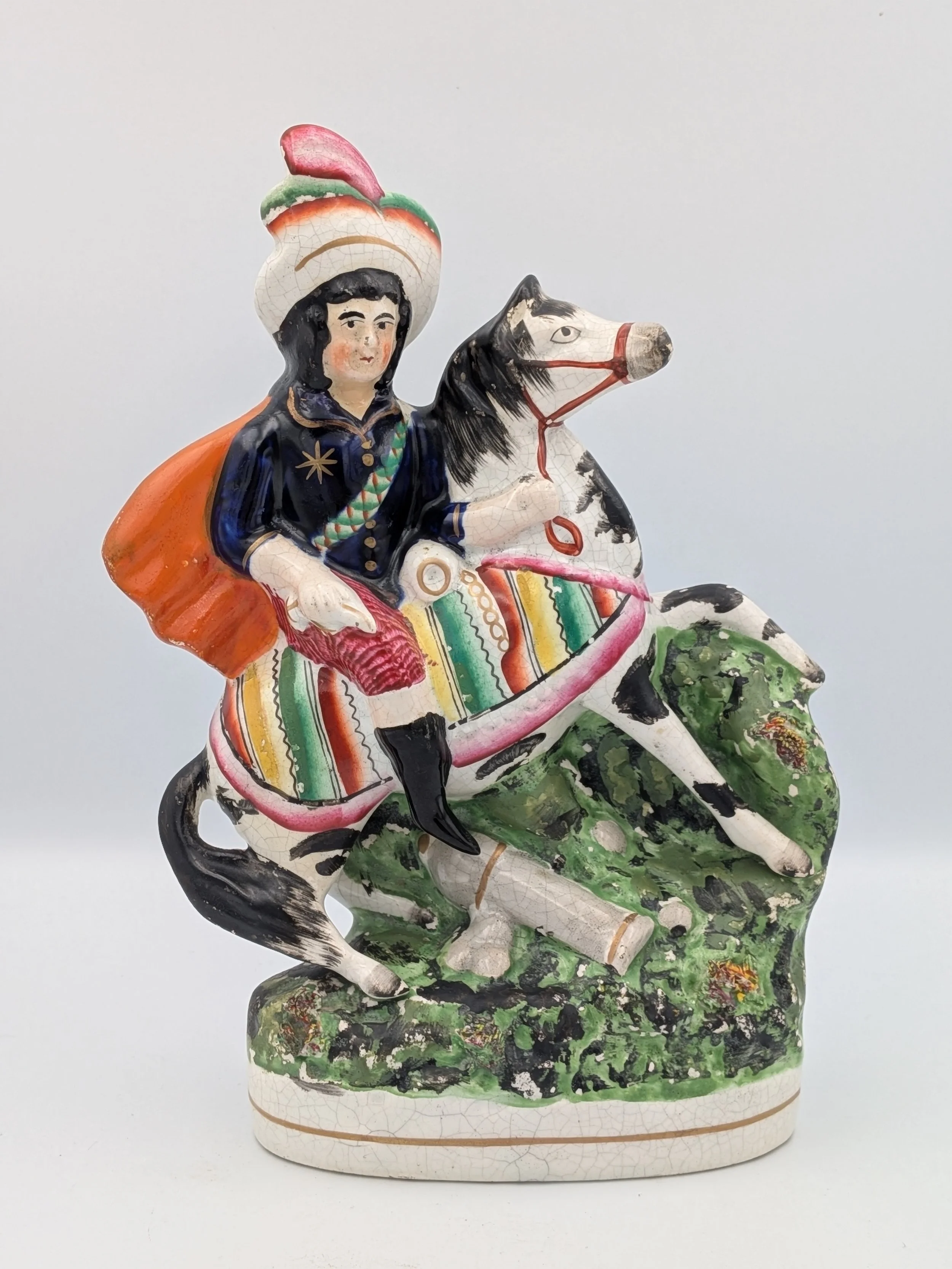 Image 6 of 37
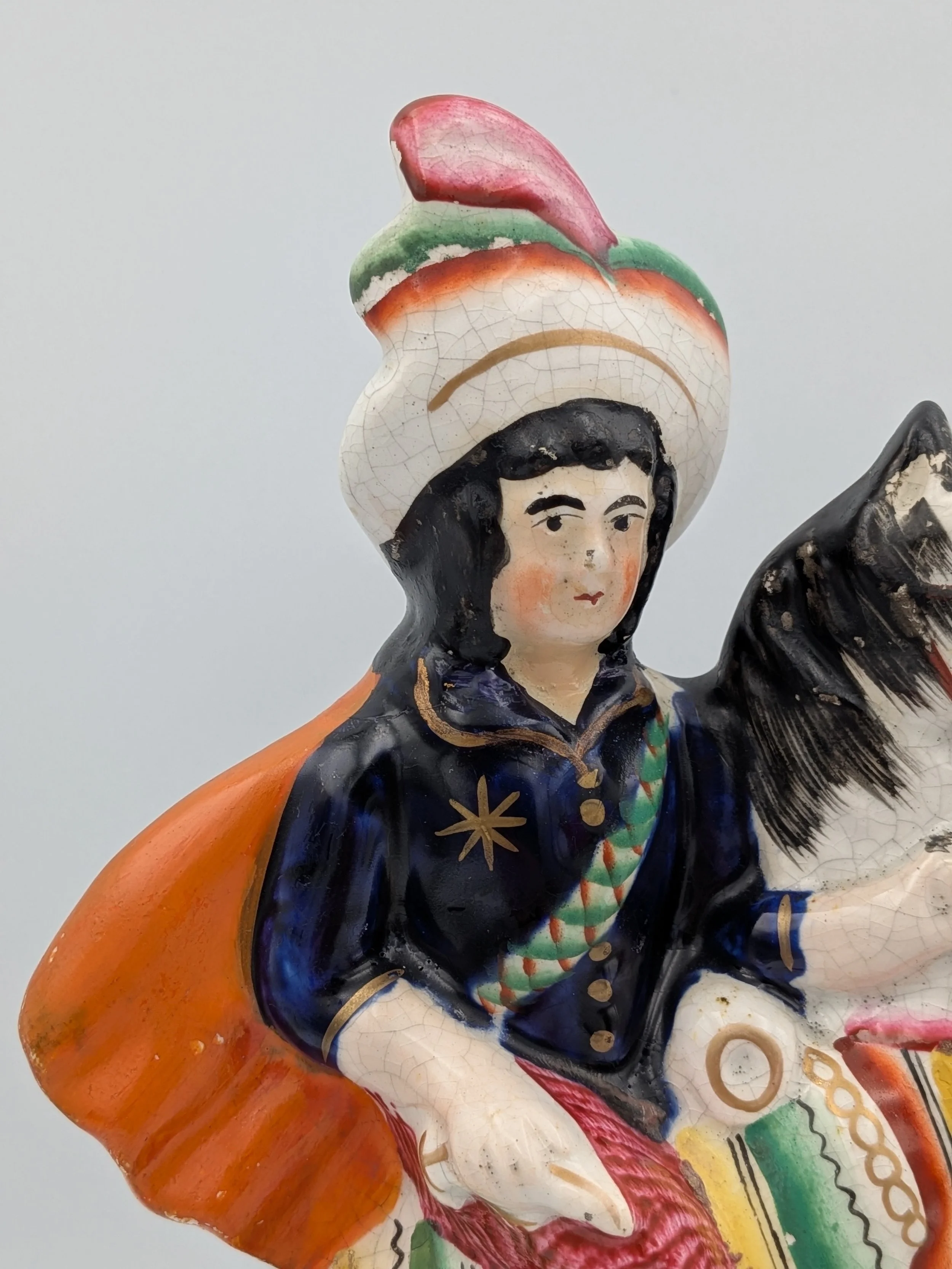 Image 7 of 37
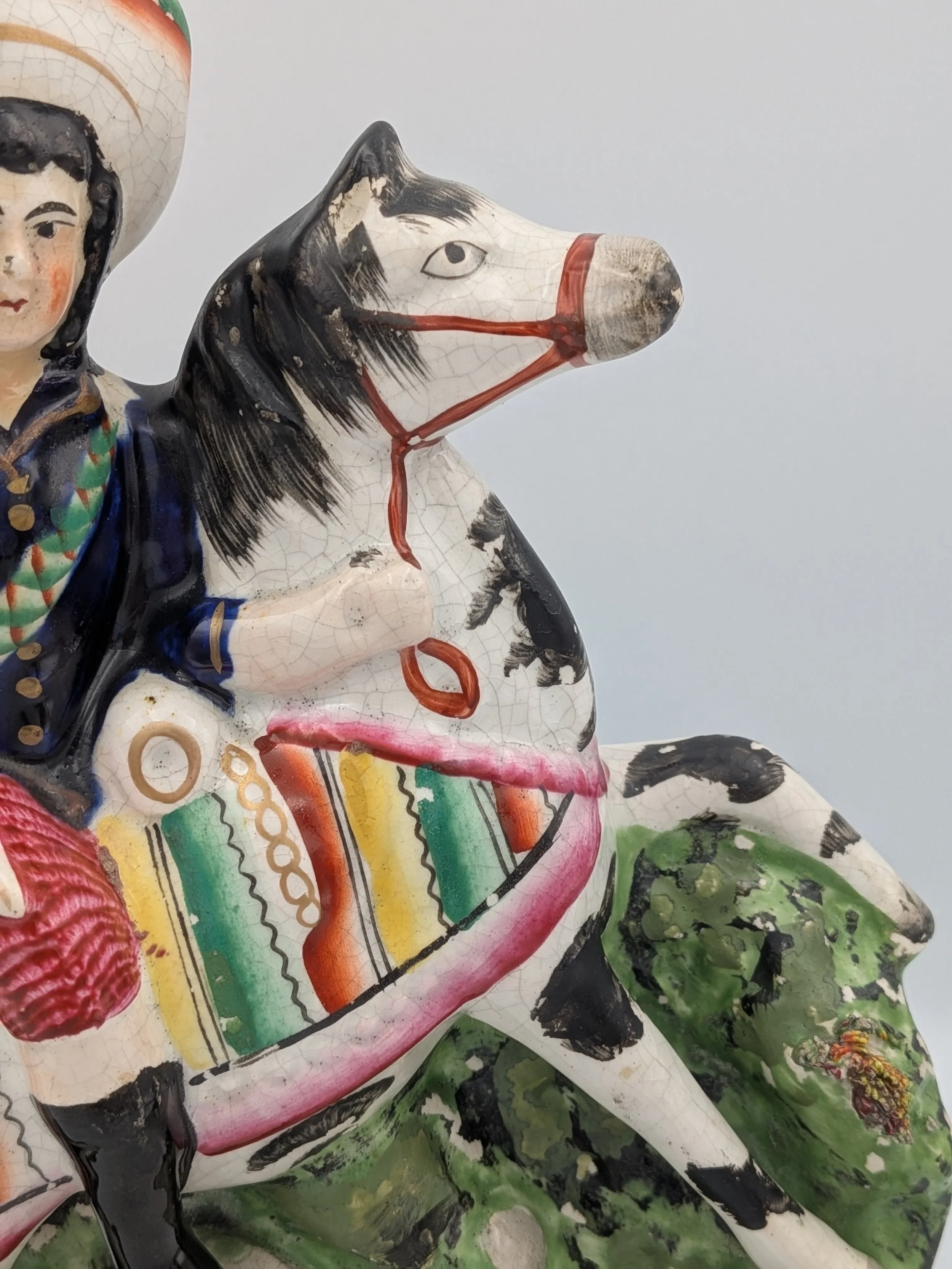 Image 8 of 37
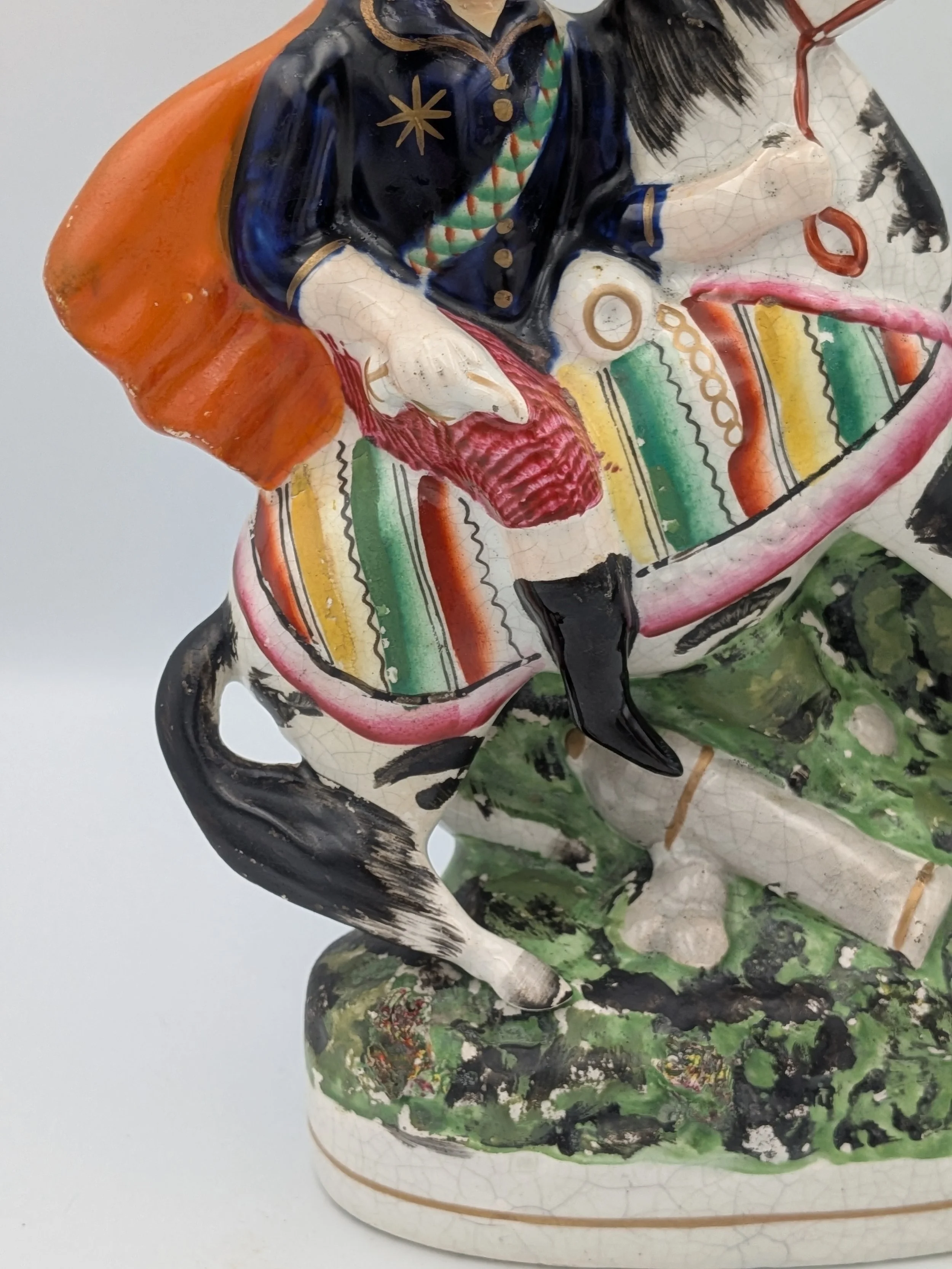 Image 9 of 37
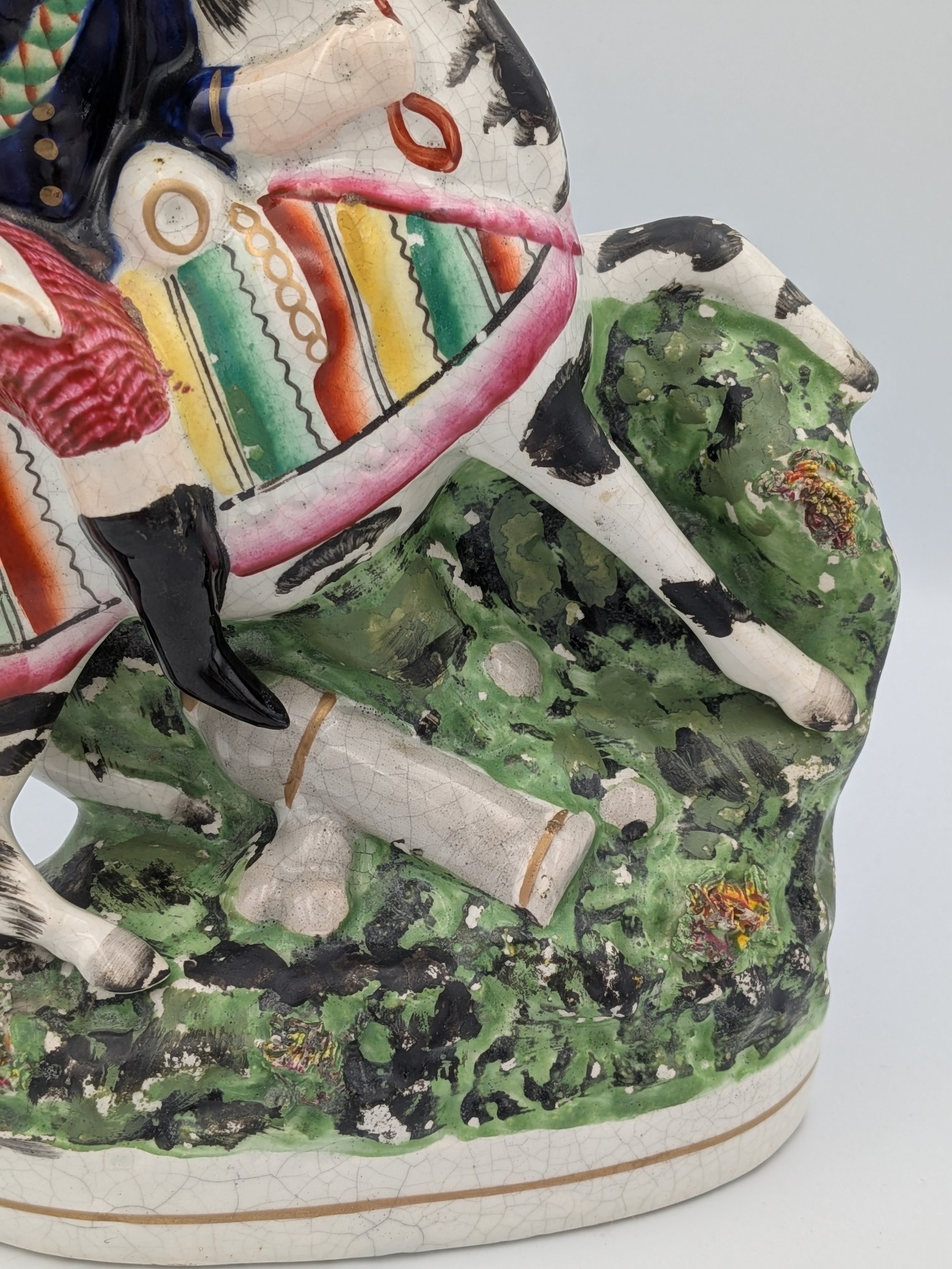 Image 10 of 37
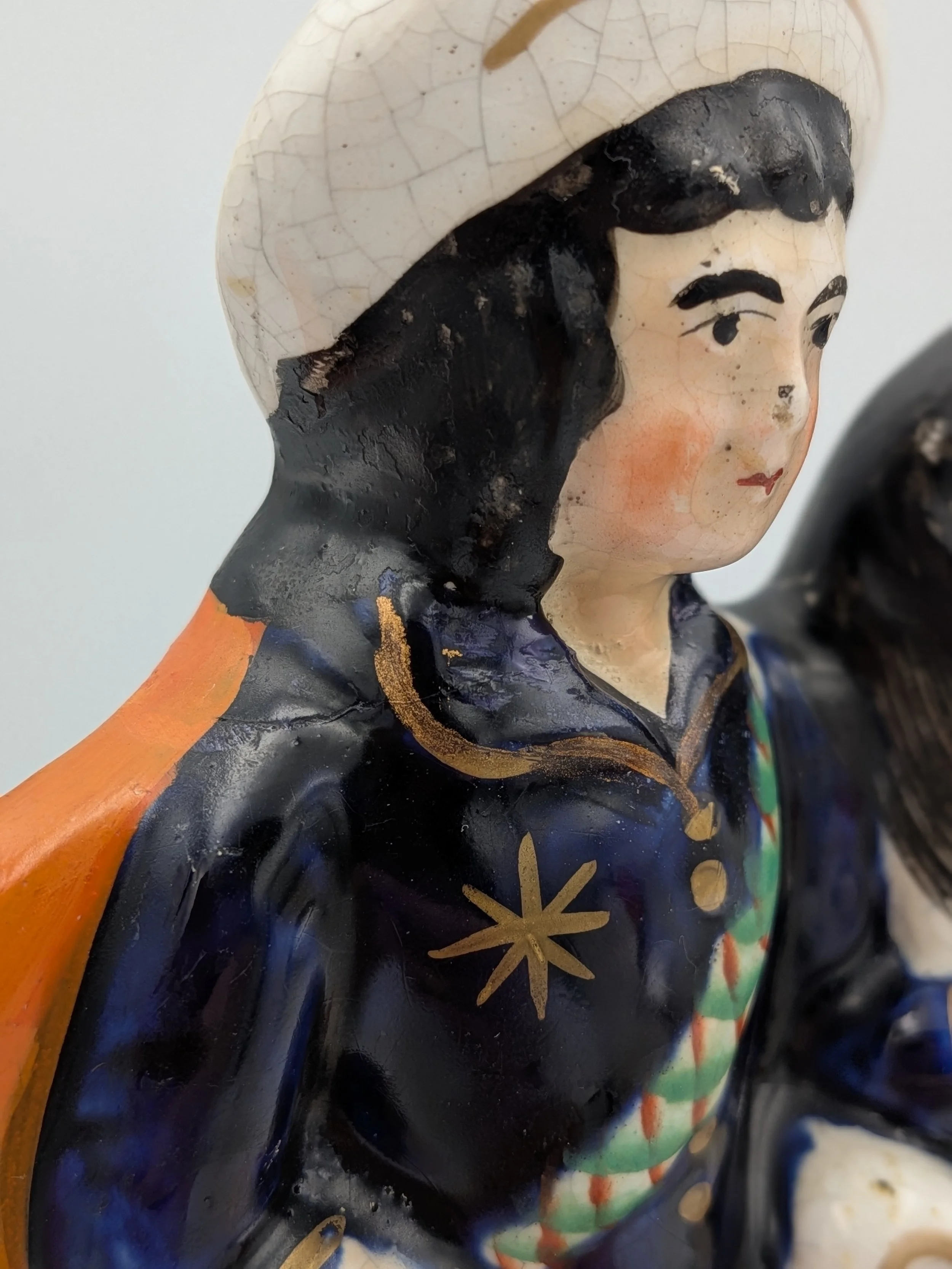 Image 11 of 37
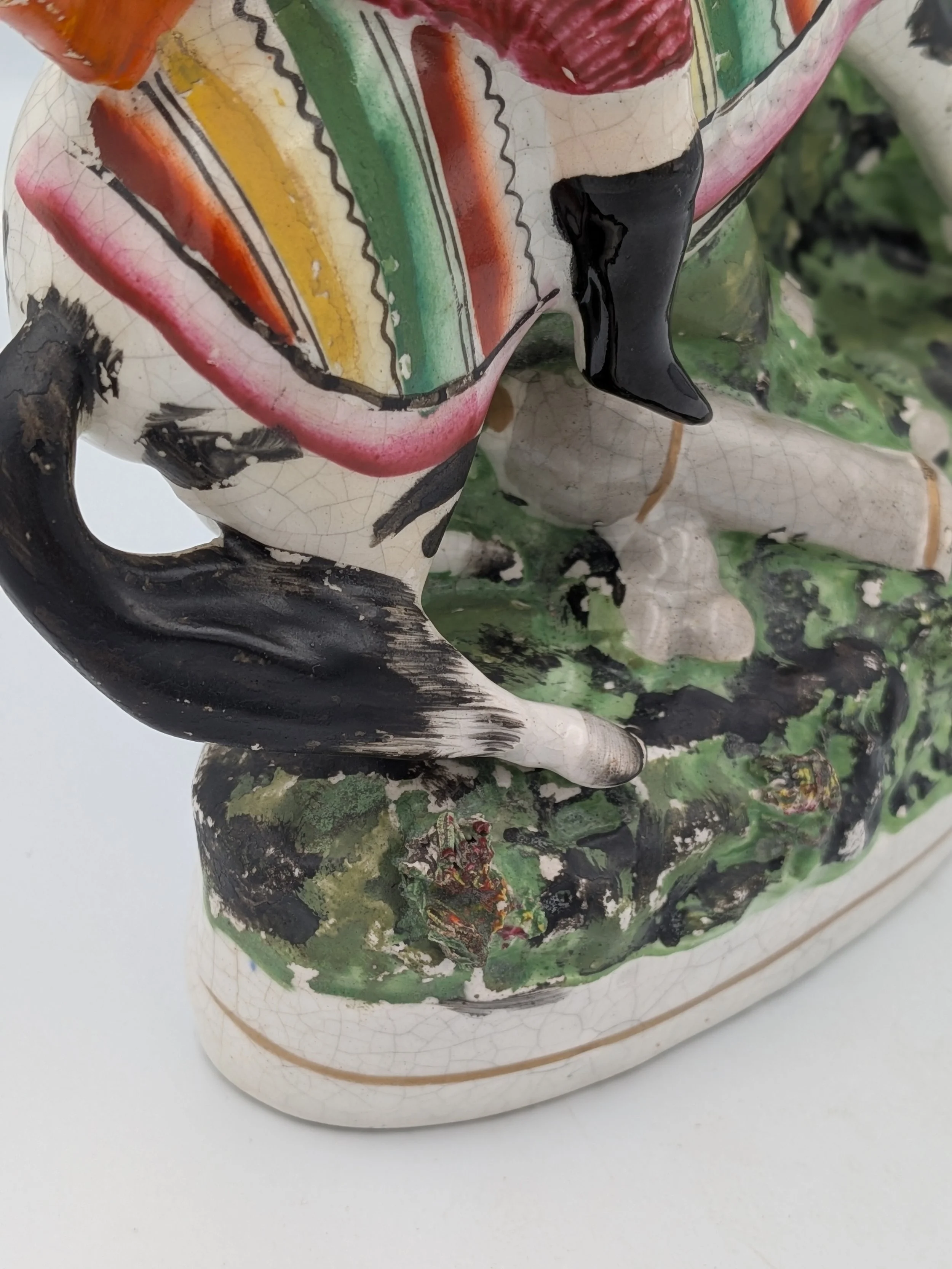 Image 12 of 37
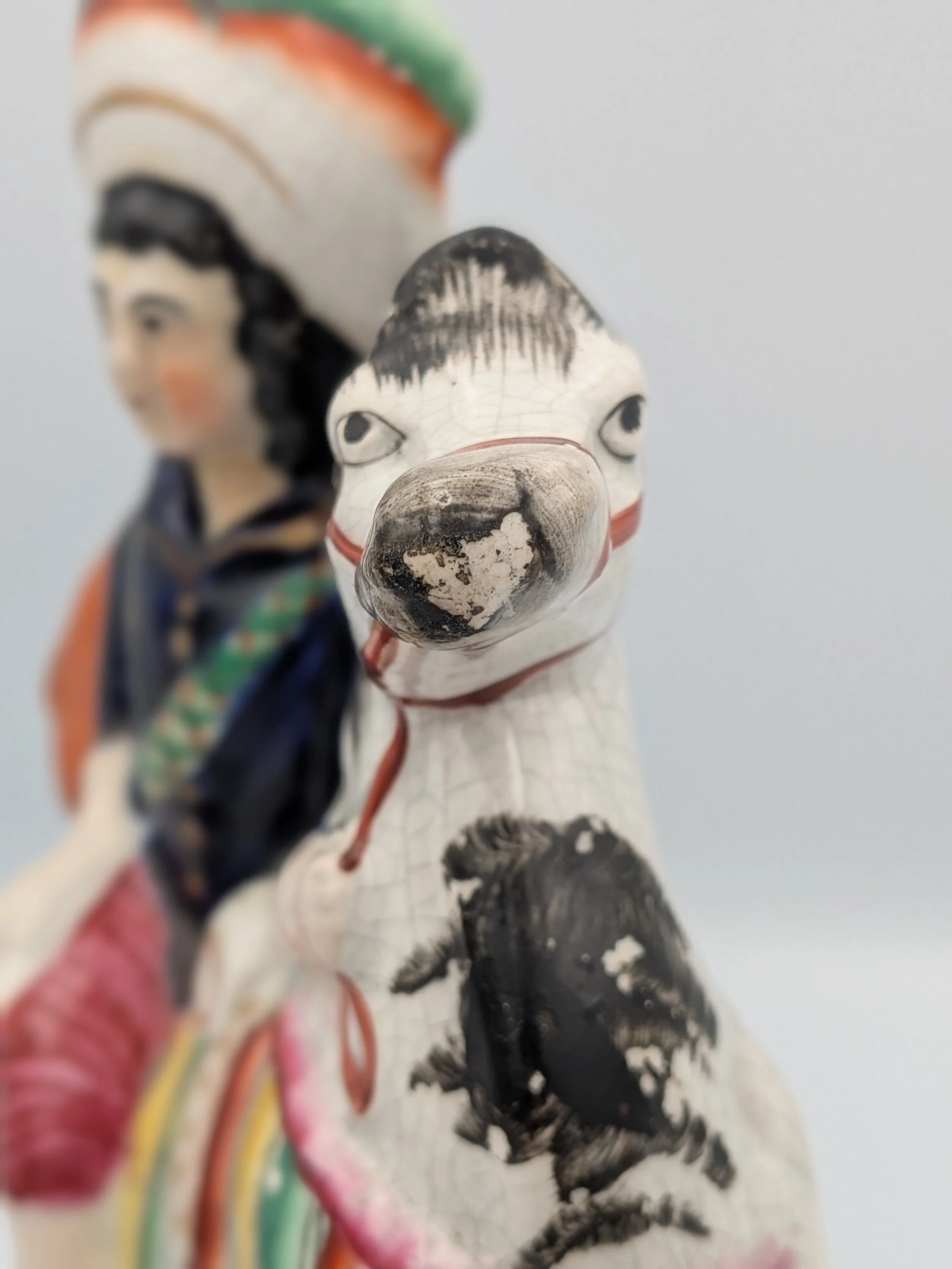 Image 13 of 37
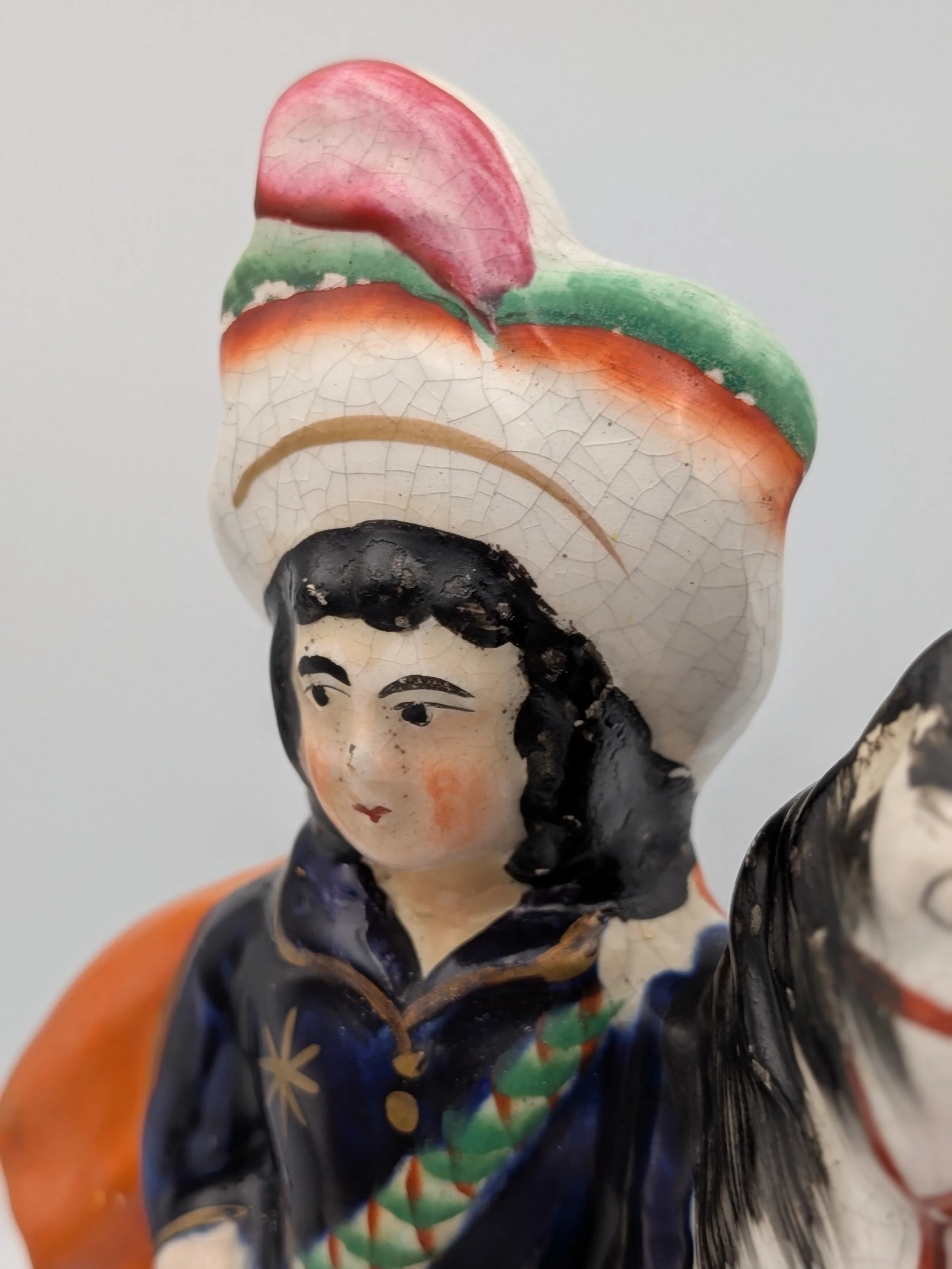 Image 14 of 37
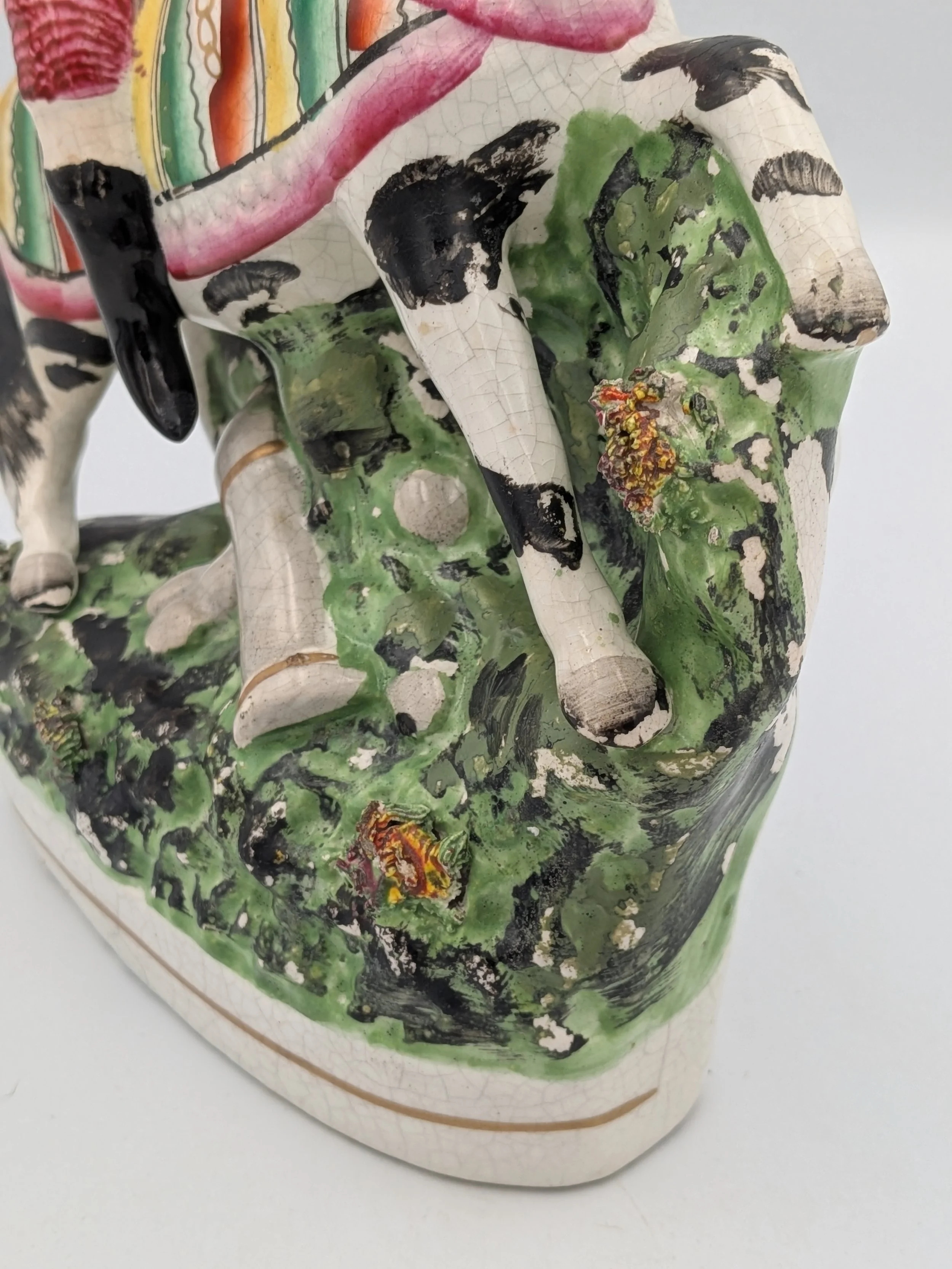 Image 15 of 37
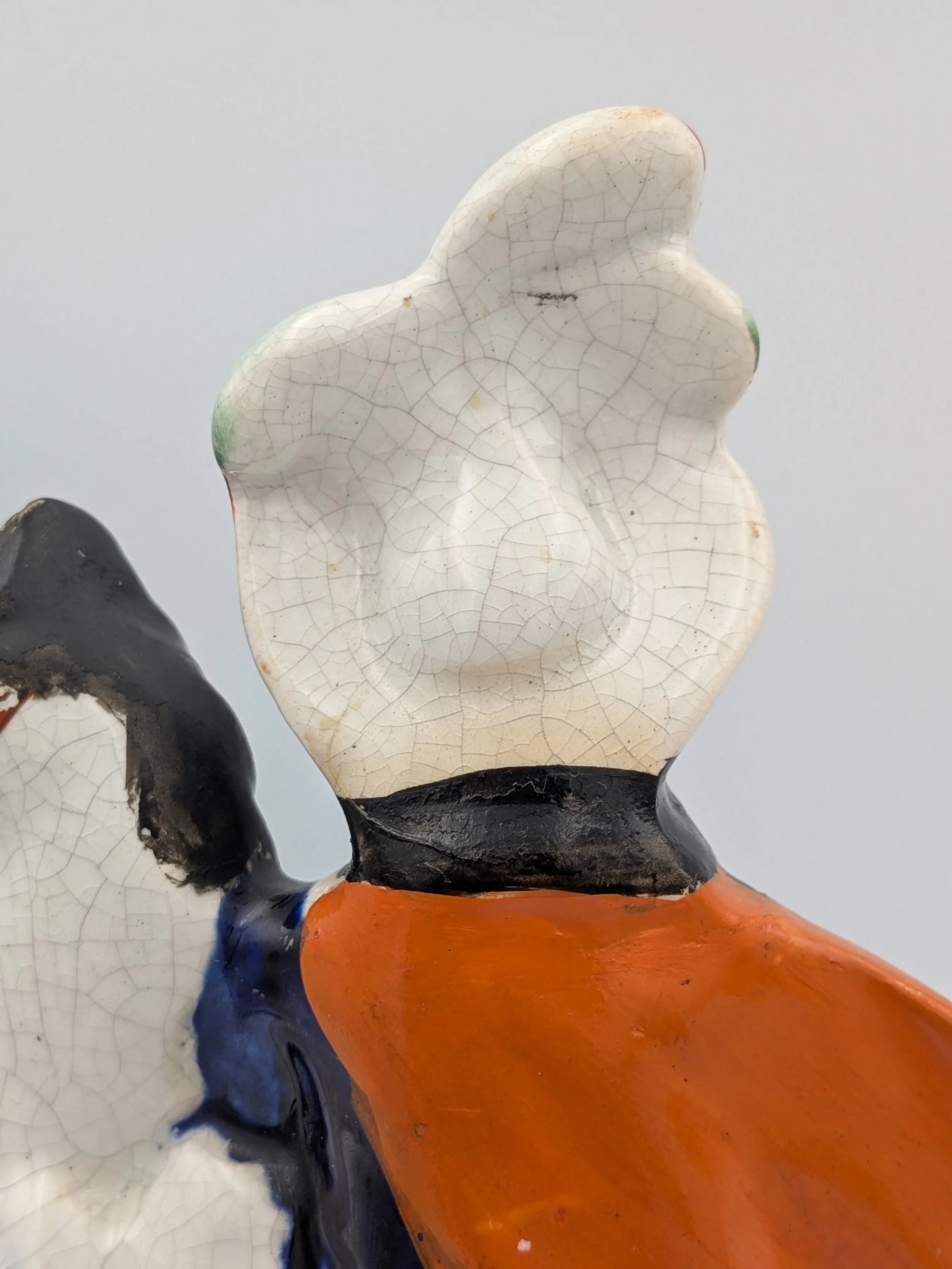 Image 16 of 37
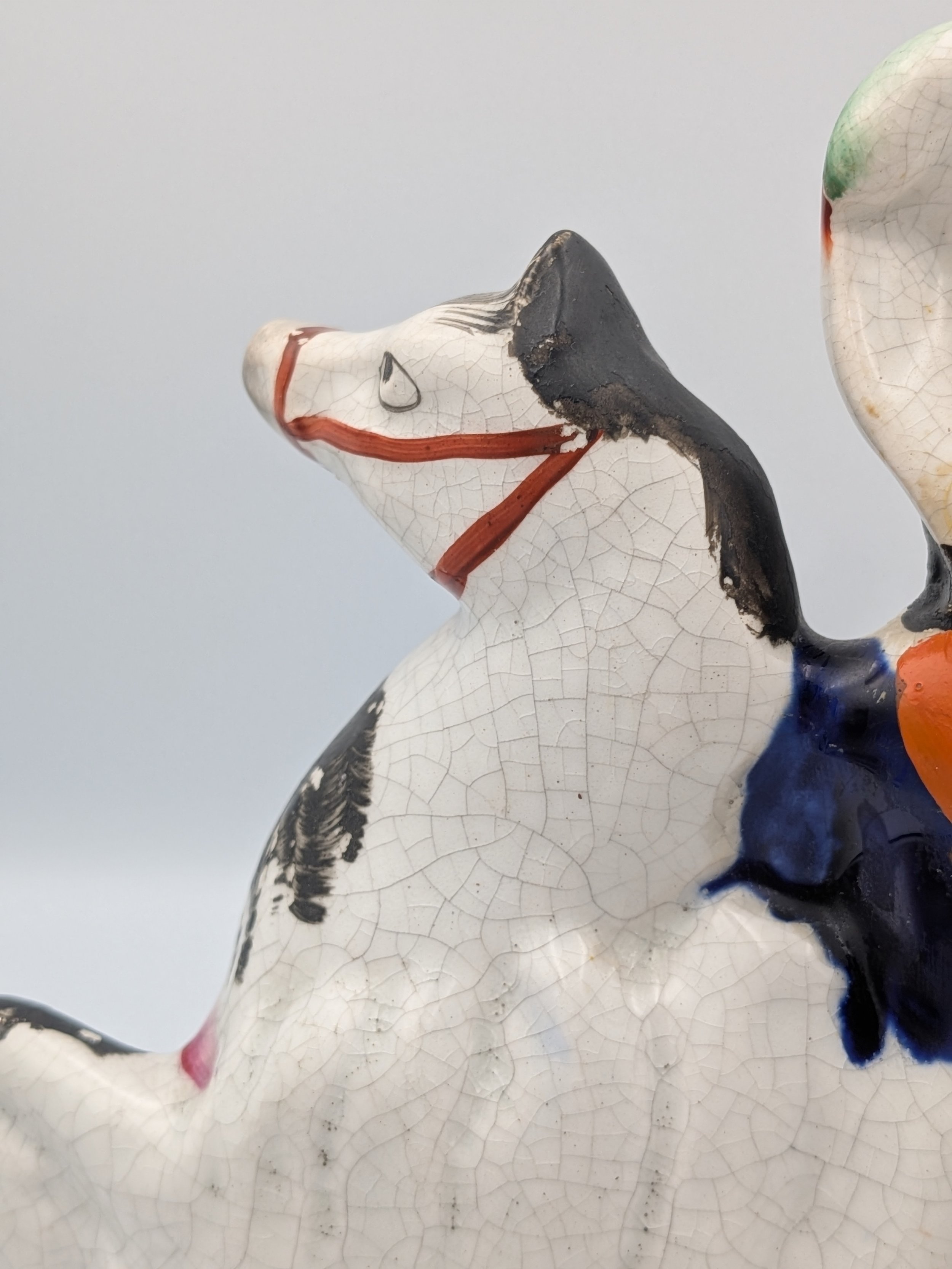 Image 17 of 37
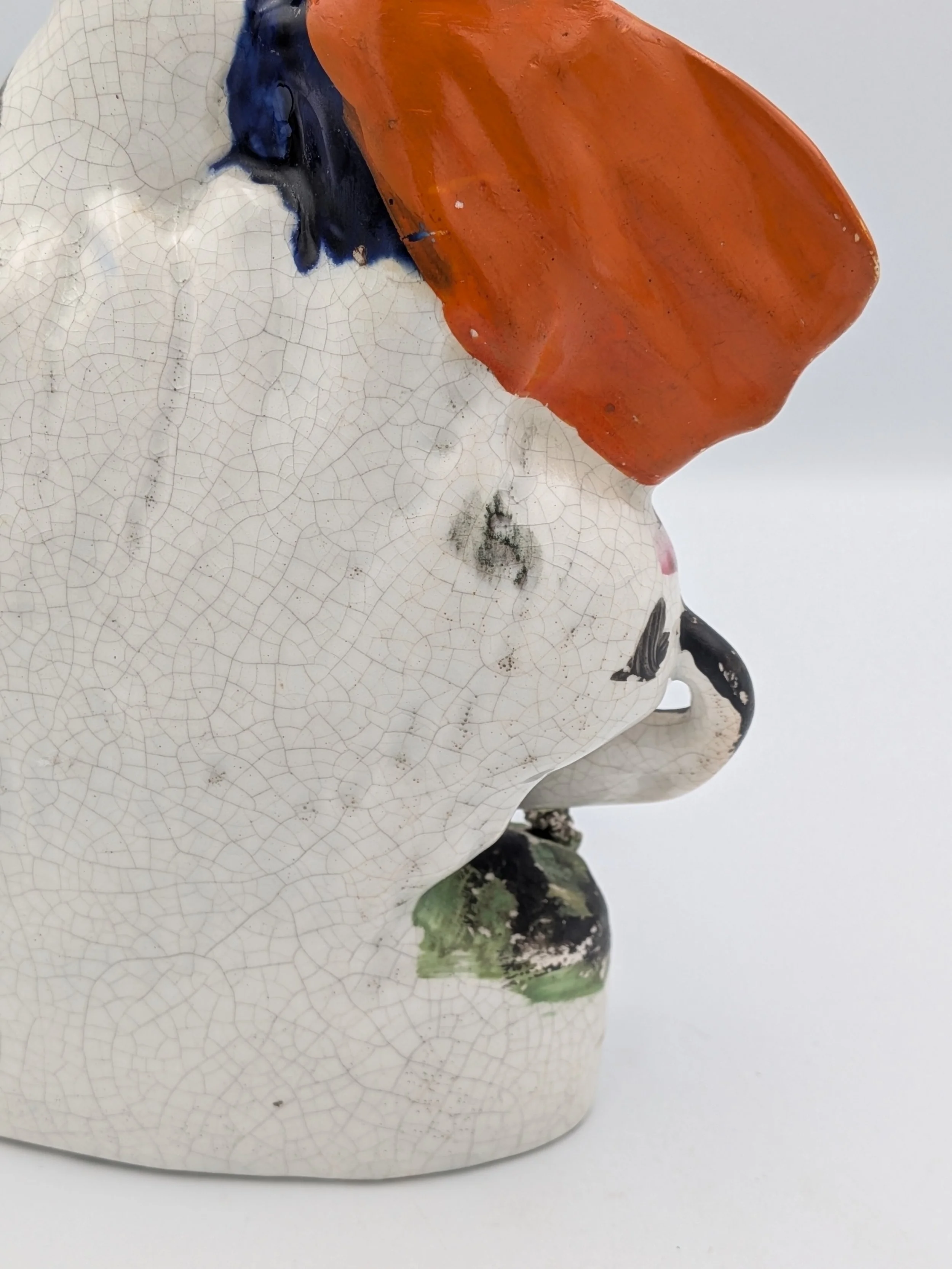 Image 18 of 37
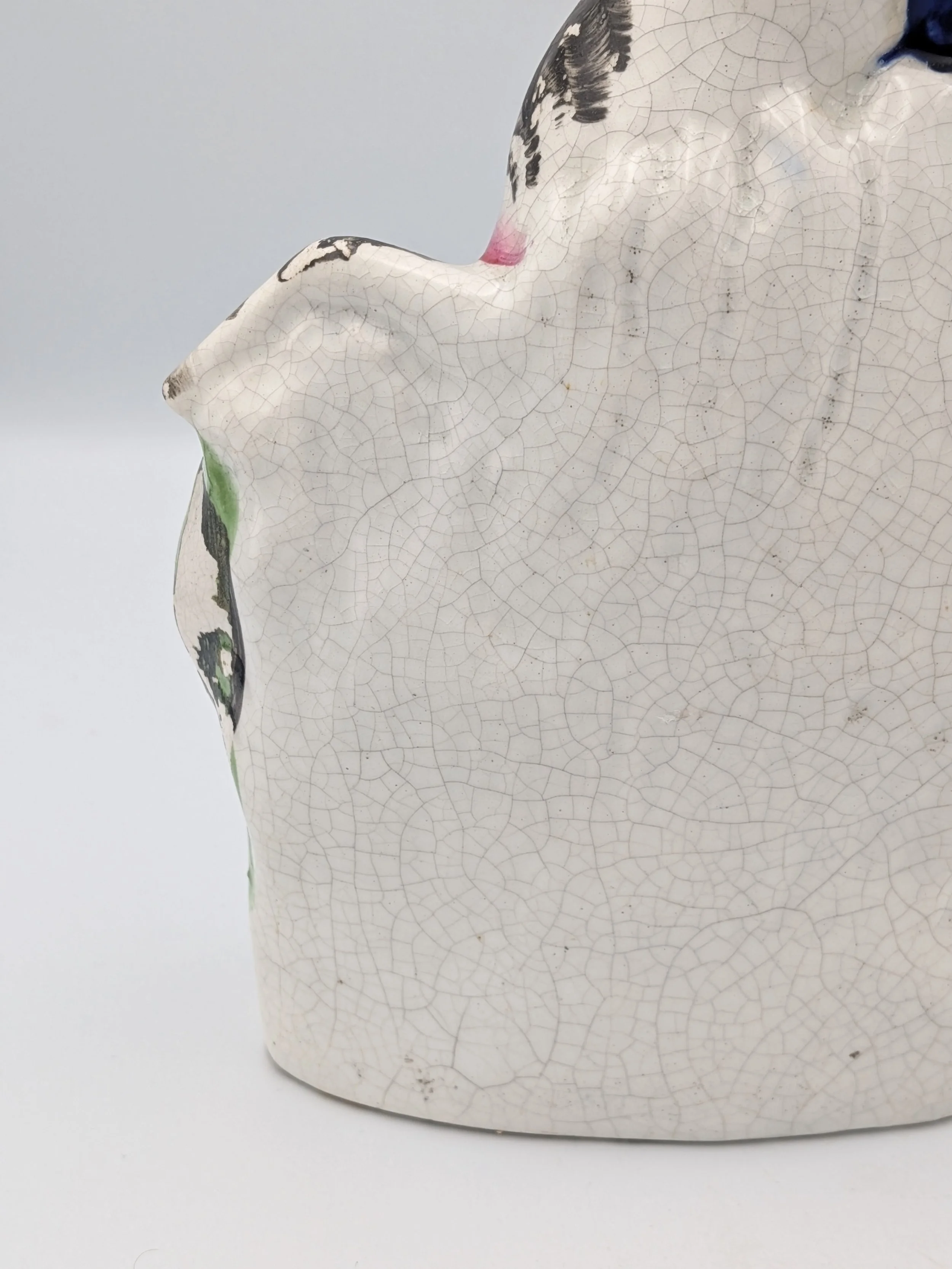 Image 19 of 37
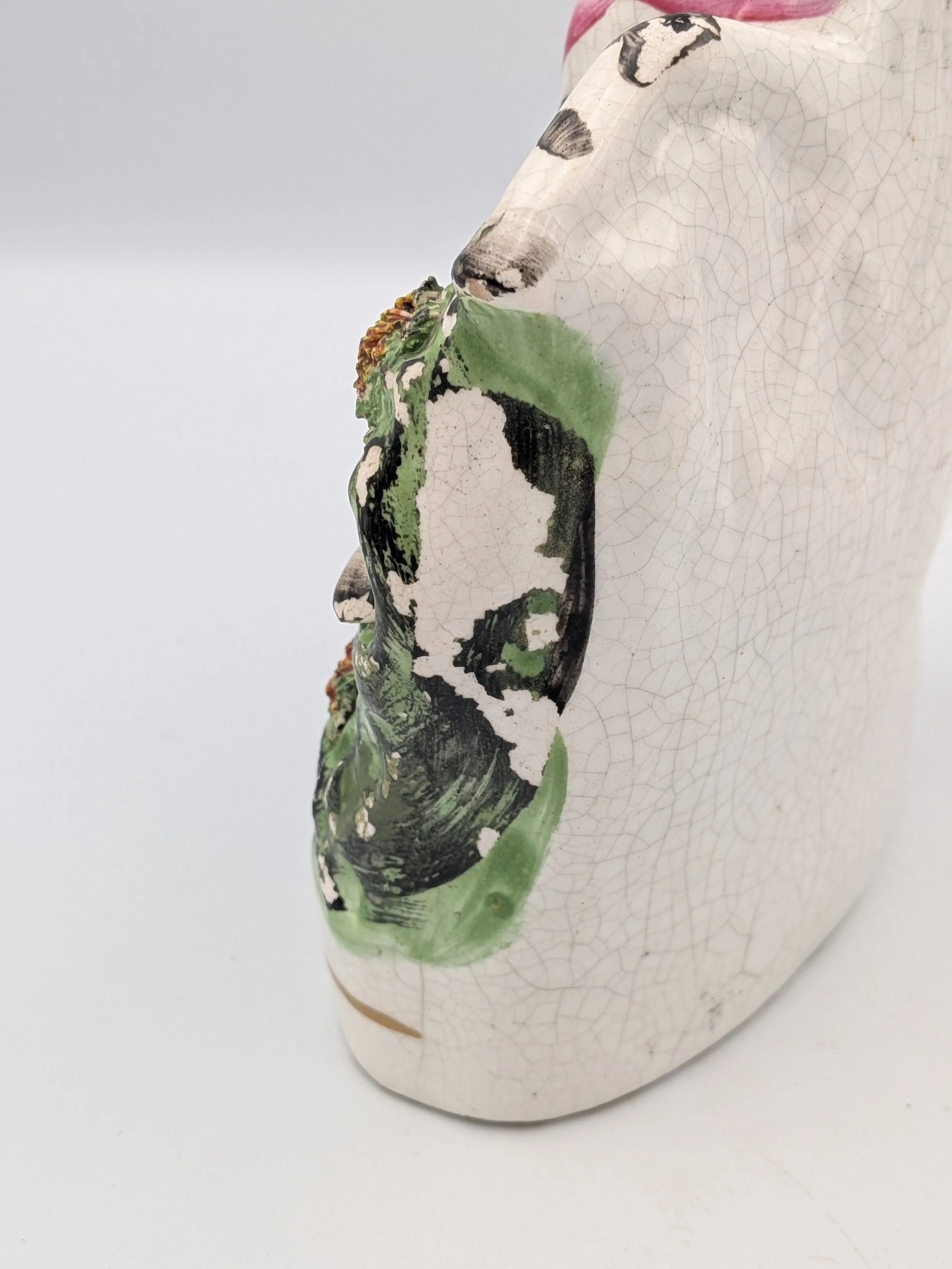 Image 20 of 37
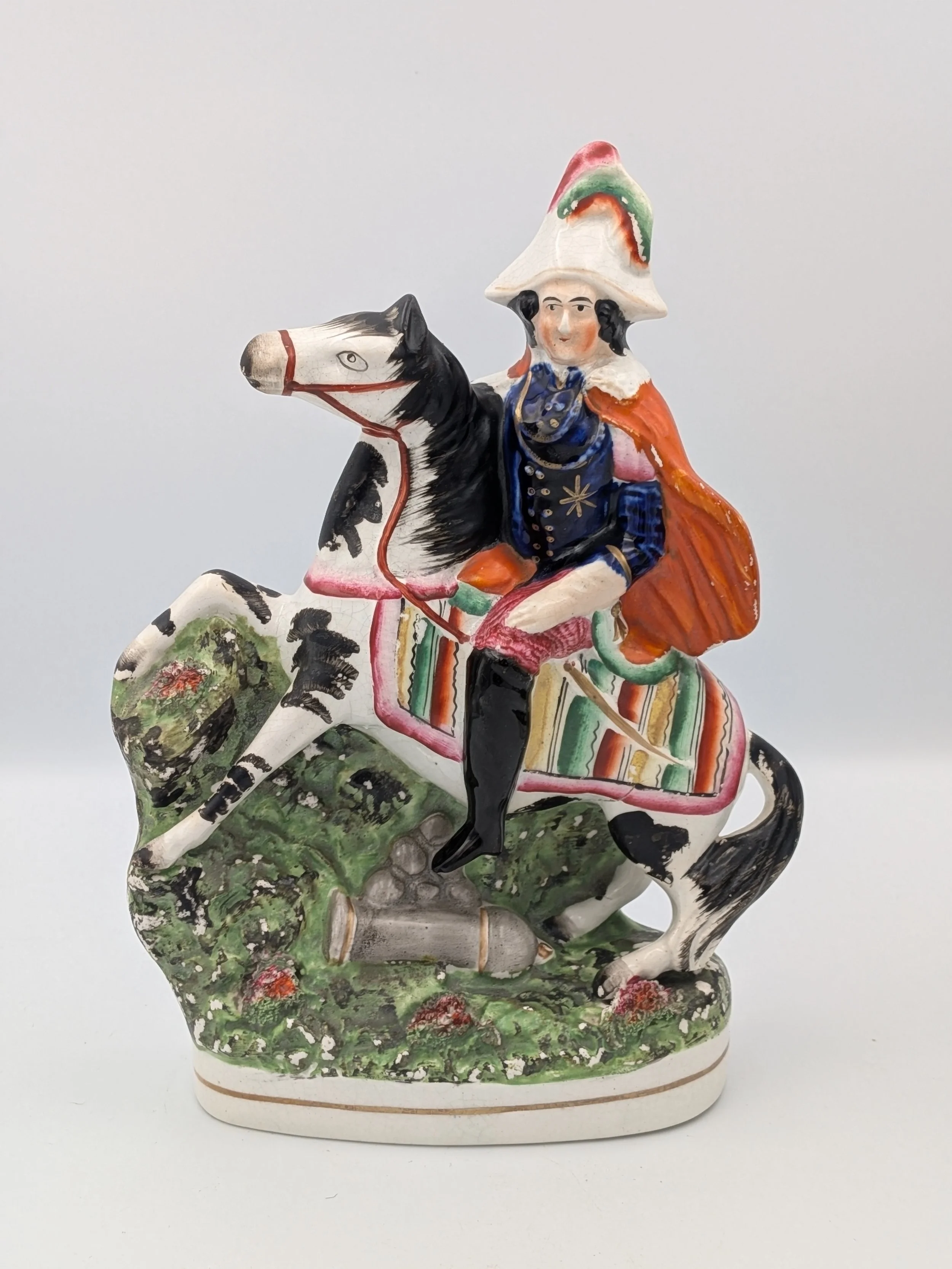 Image 21 of 37
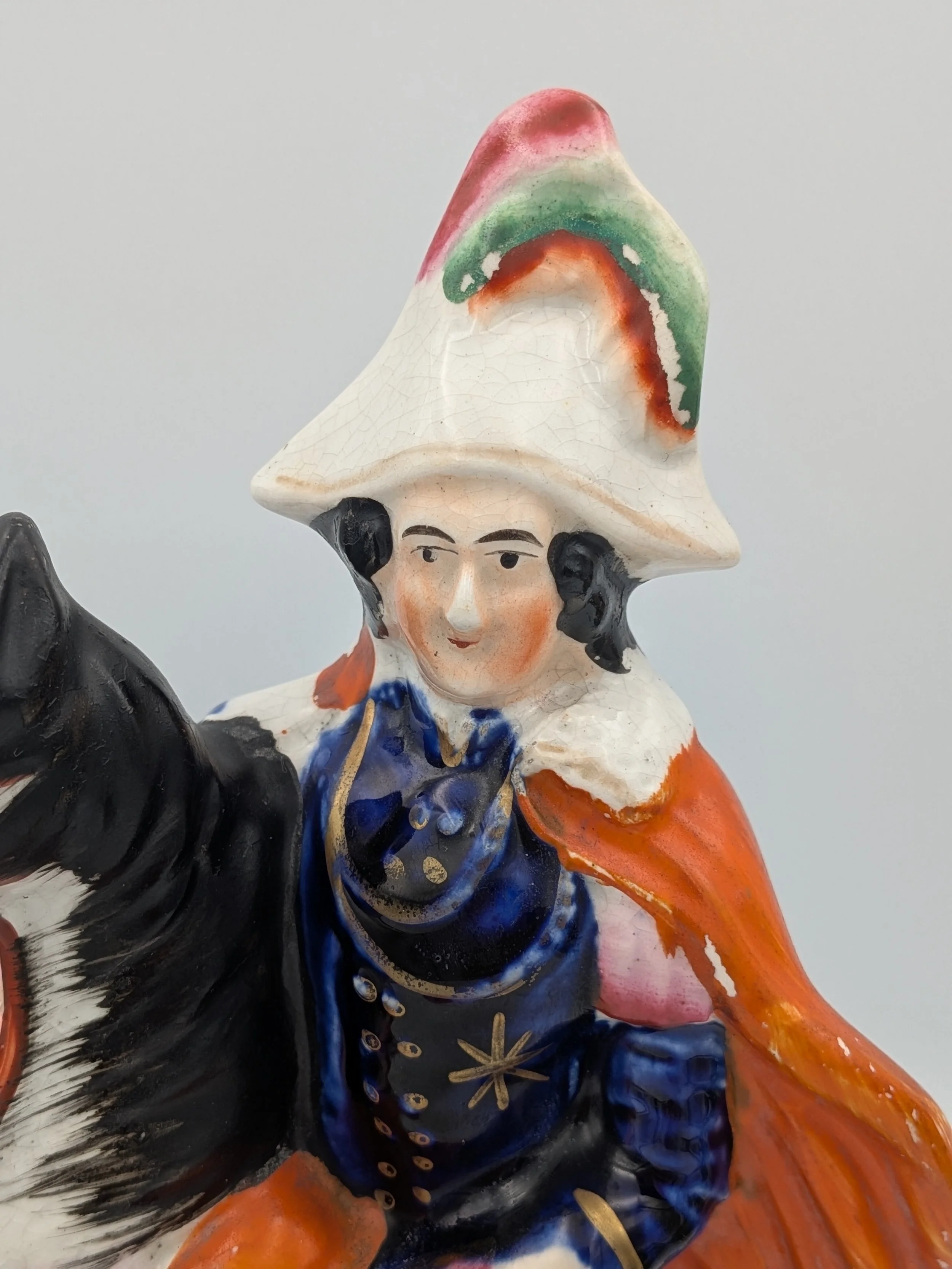 Image 22 of 37
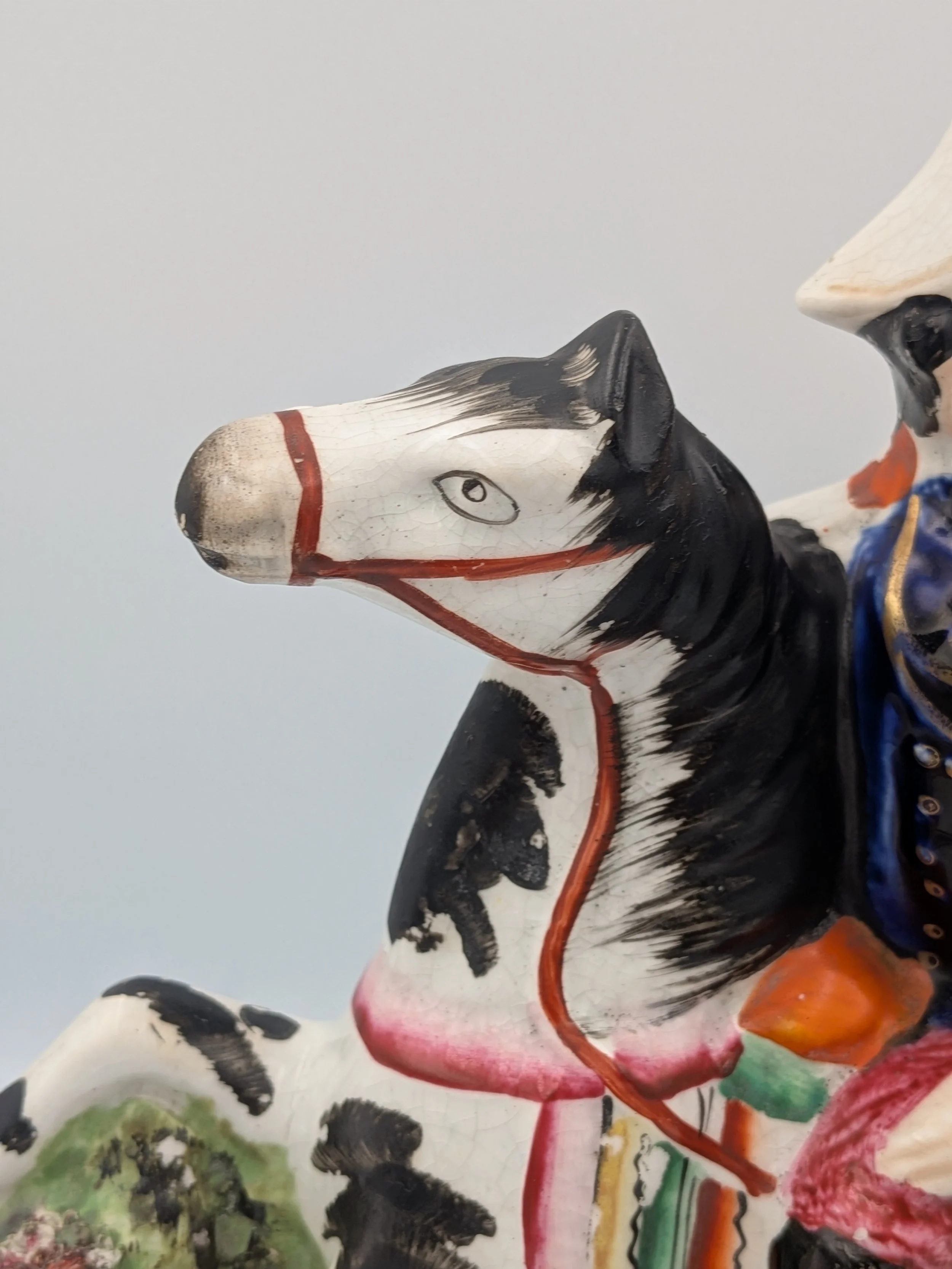 Image 23 of 37
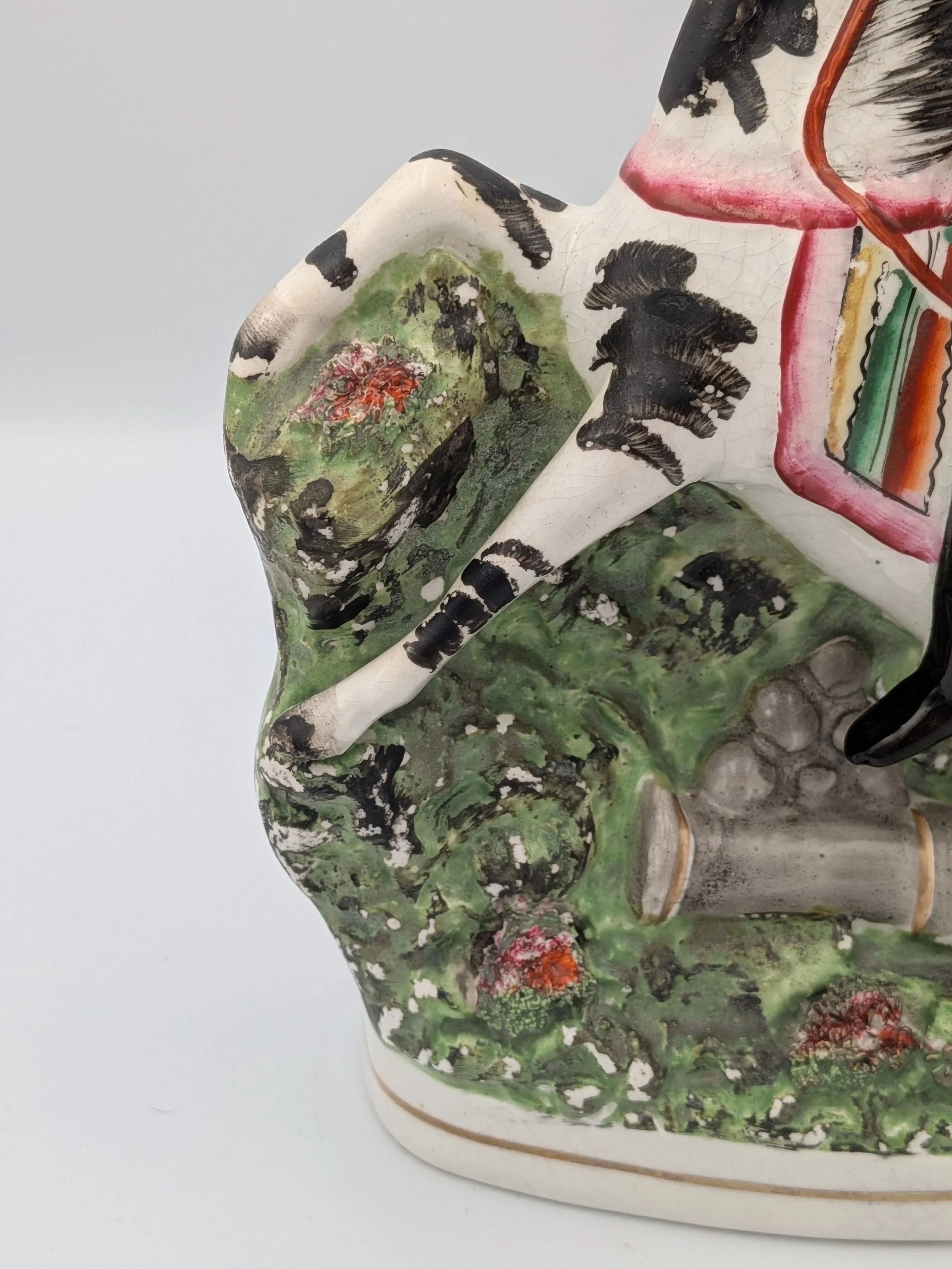 Image 24 of 37
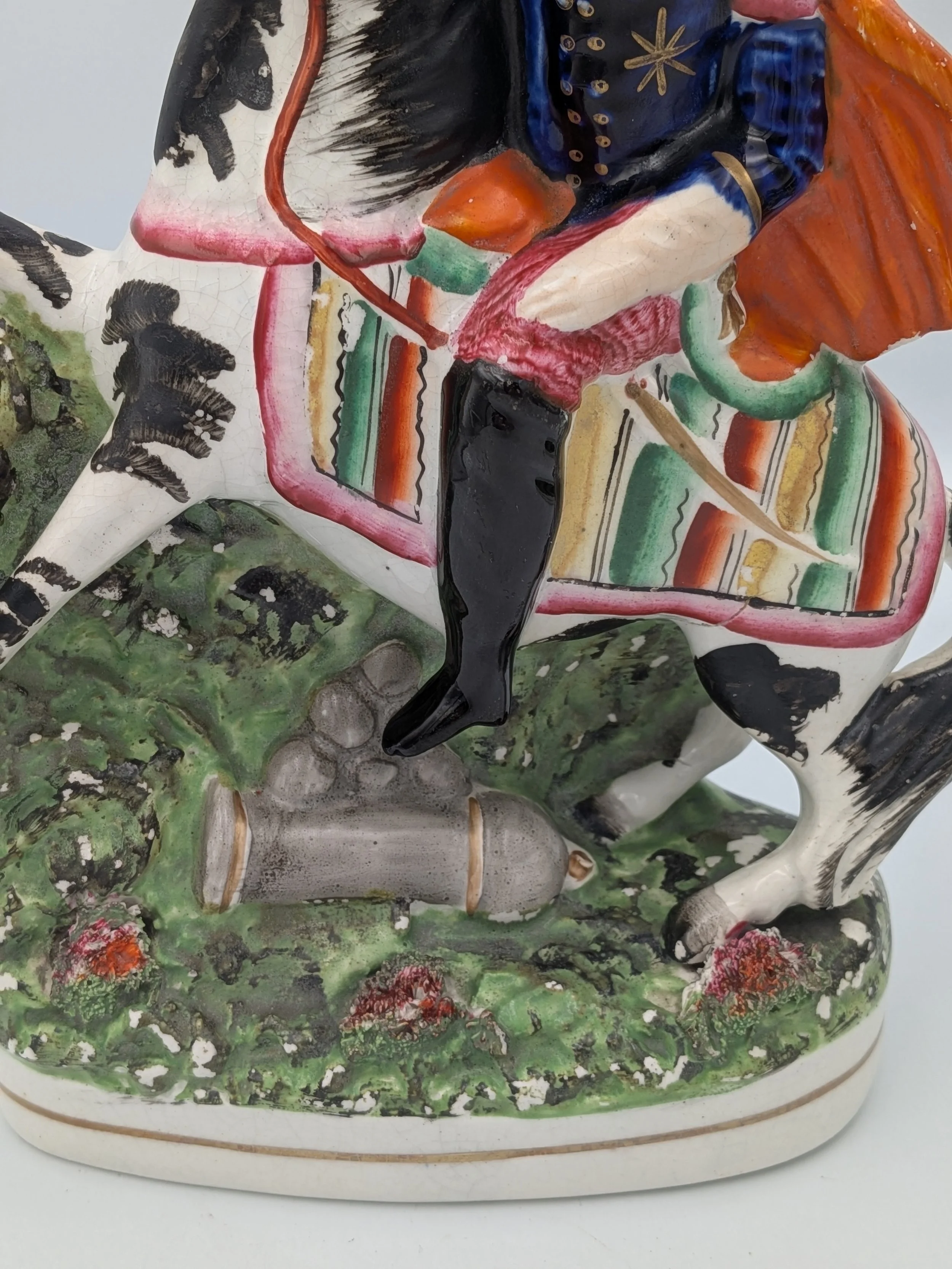 Image 25 of 37
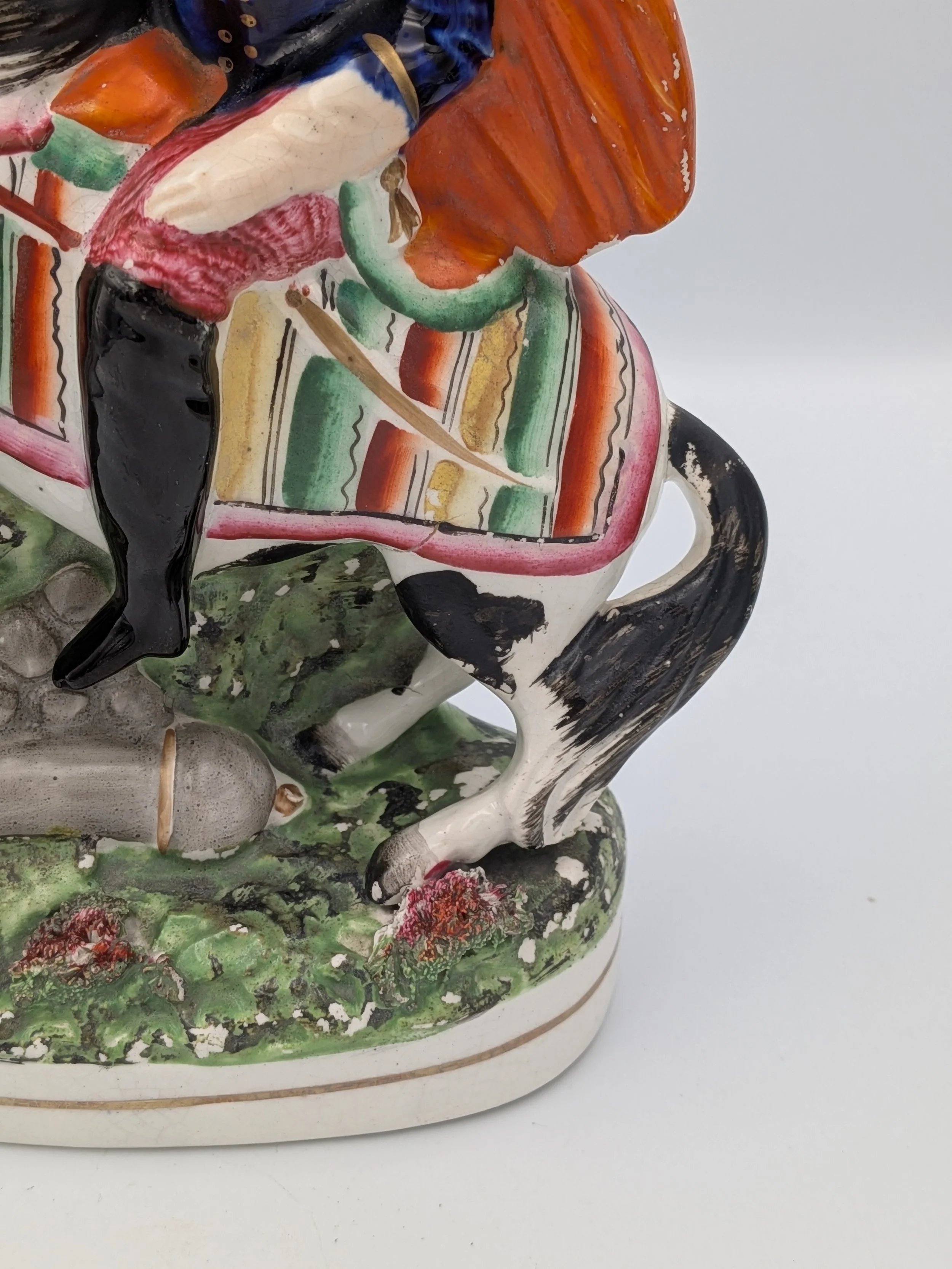 Image 26 of 37
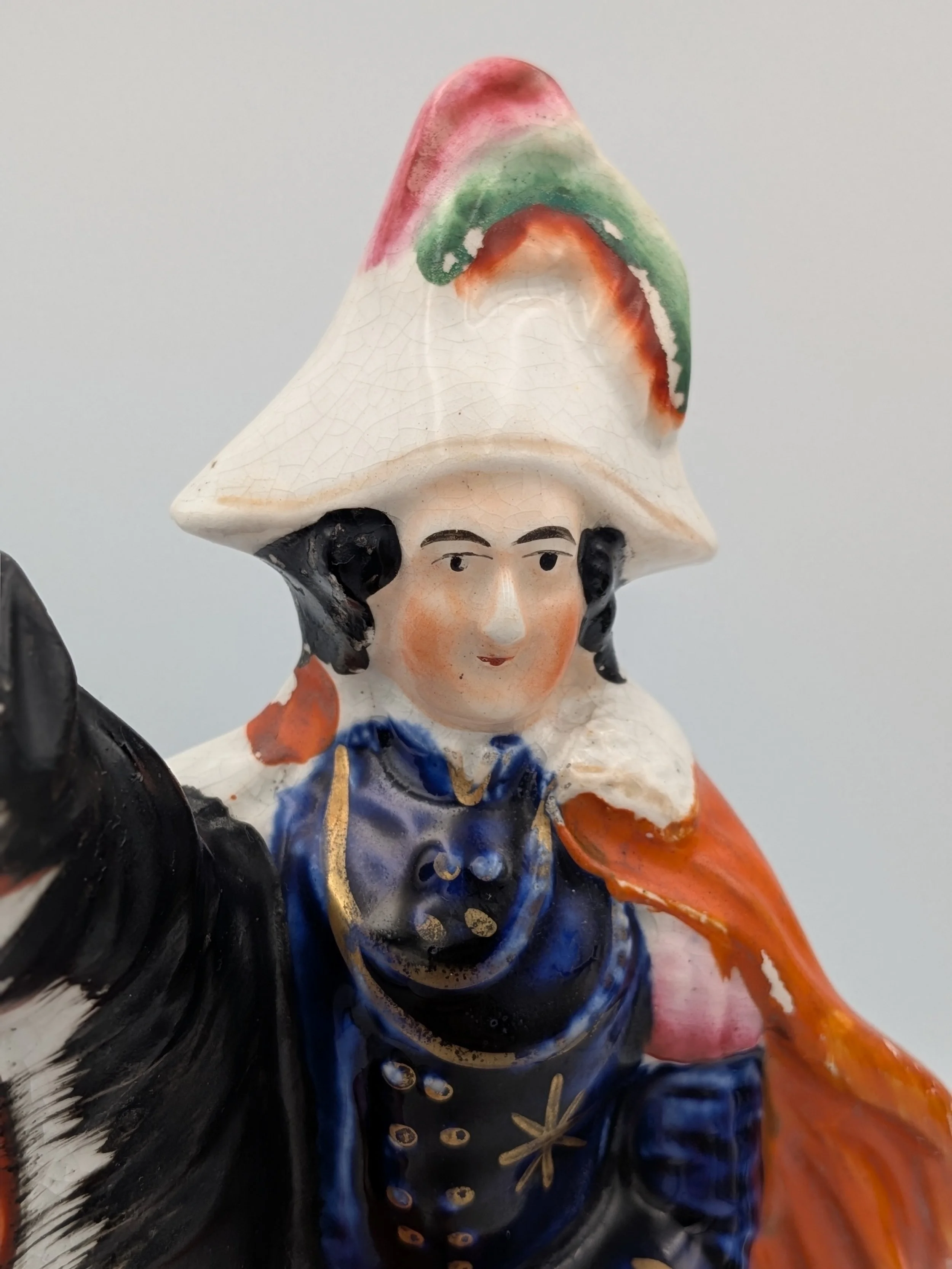 Image 27 of 37
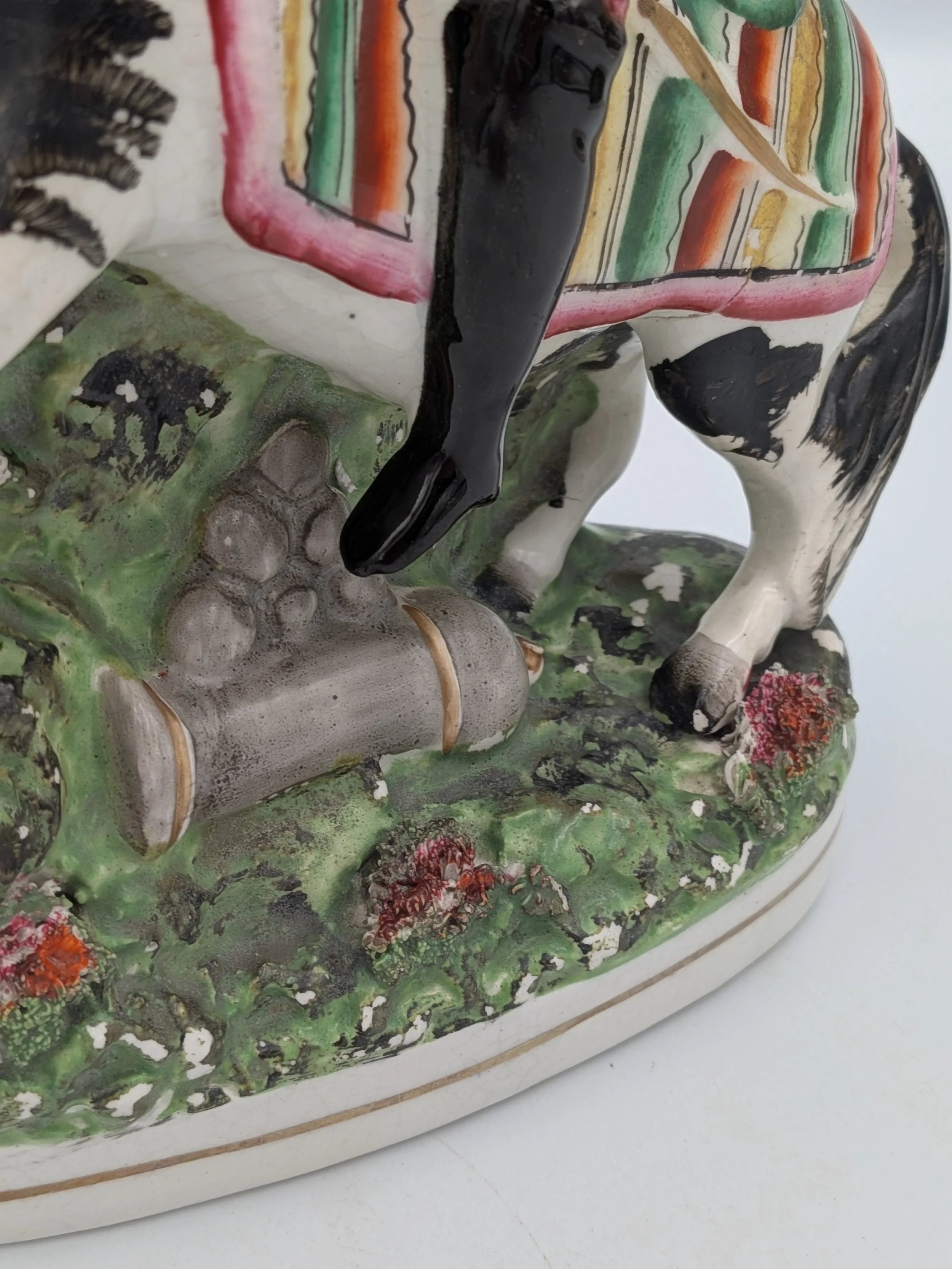 Image 28 of 37
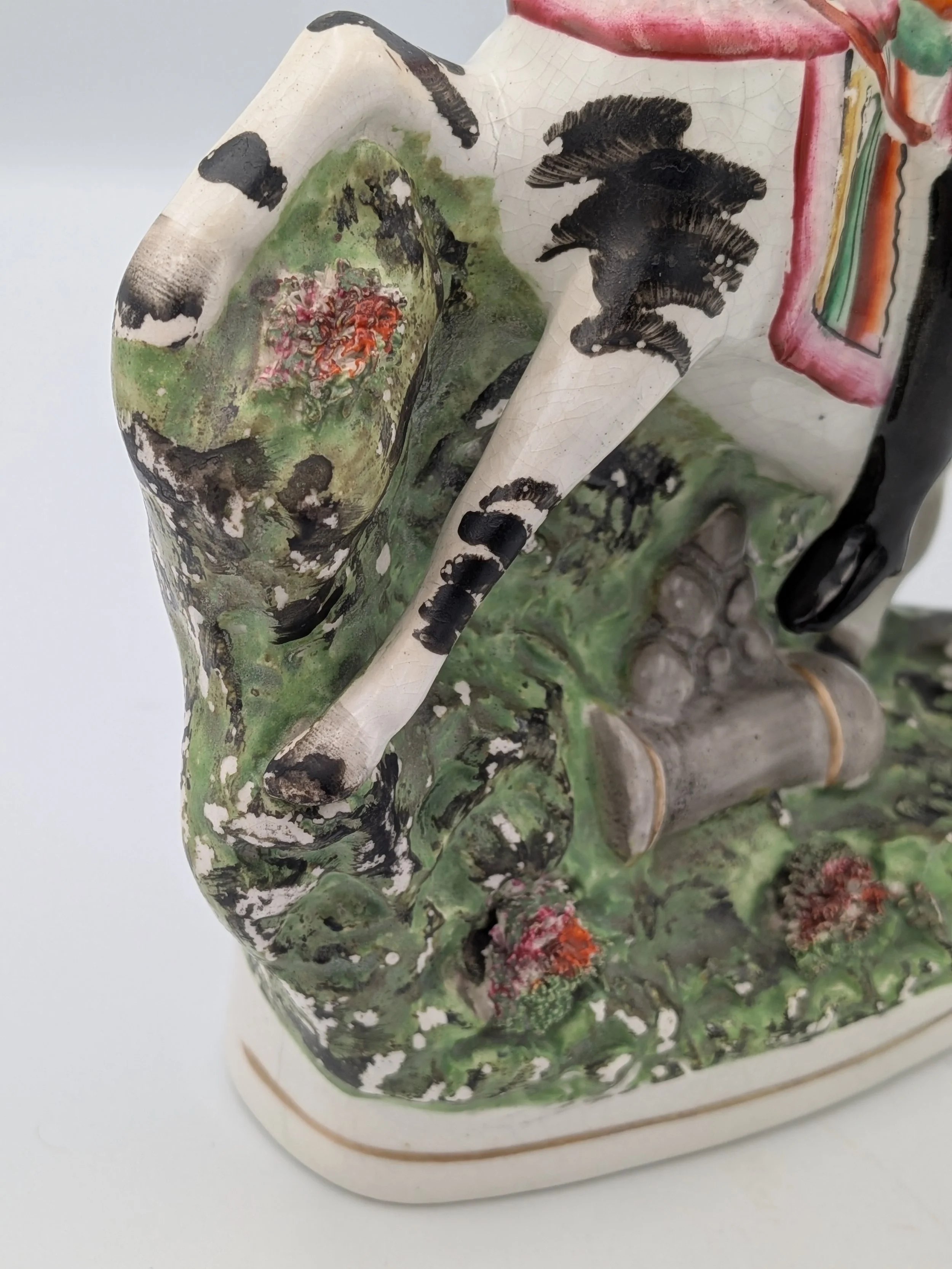 Image 29 of 37
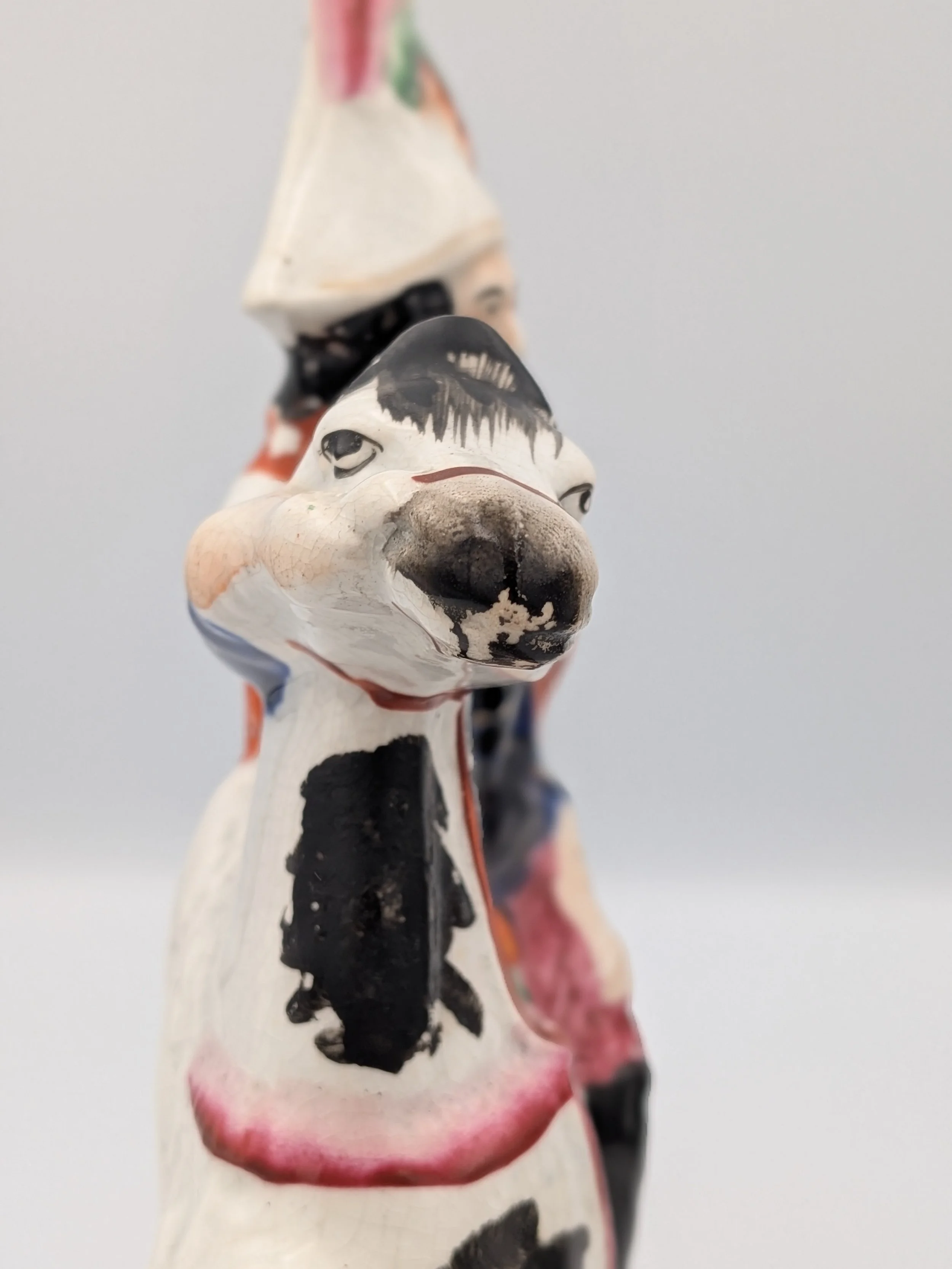 Image 30 of 37
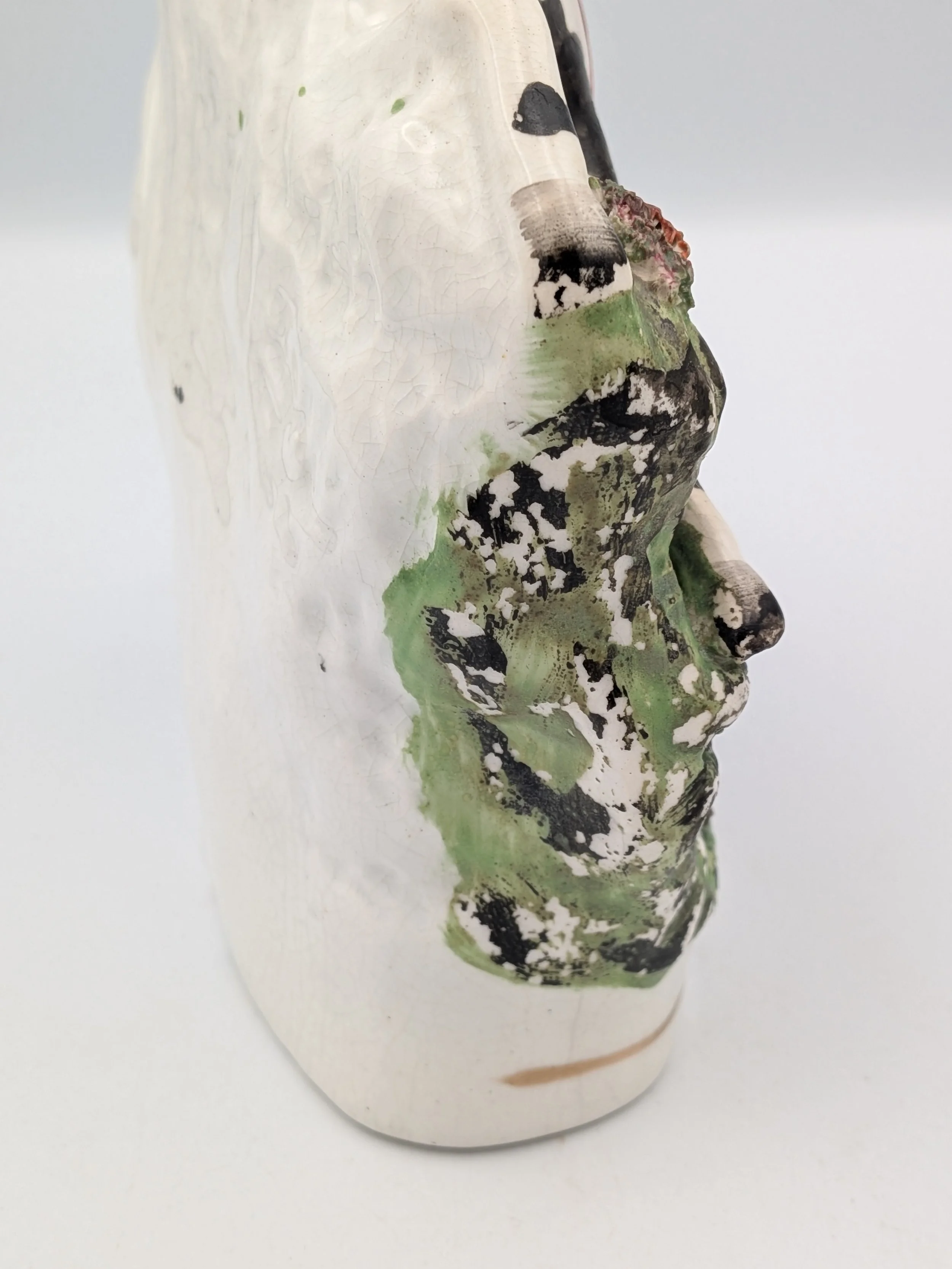 Image 31 of 37
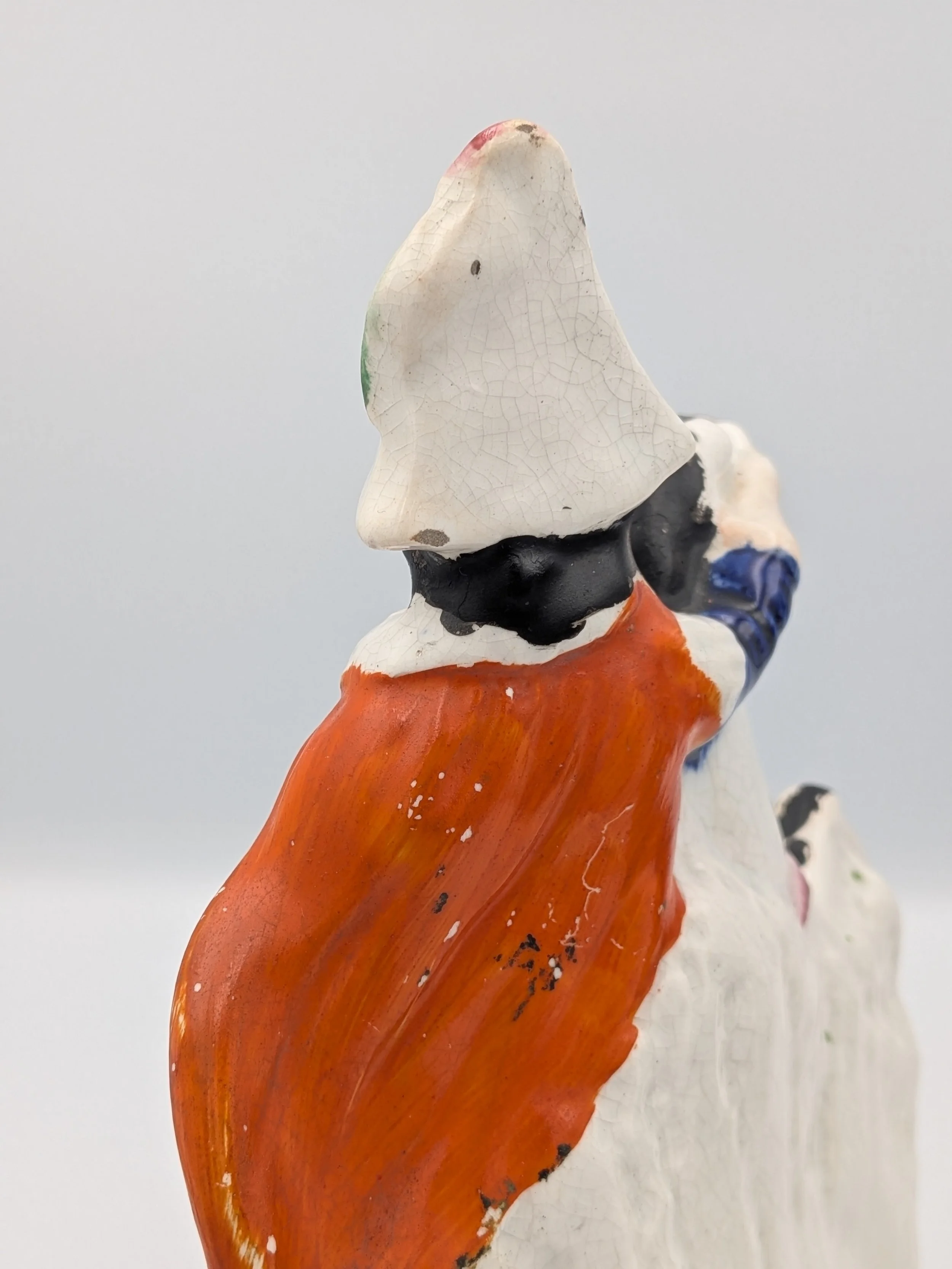 Image 32 of 37
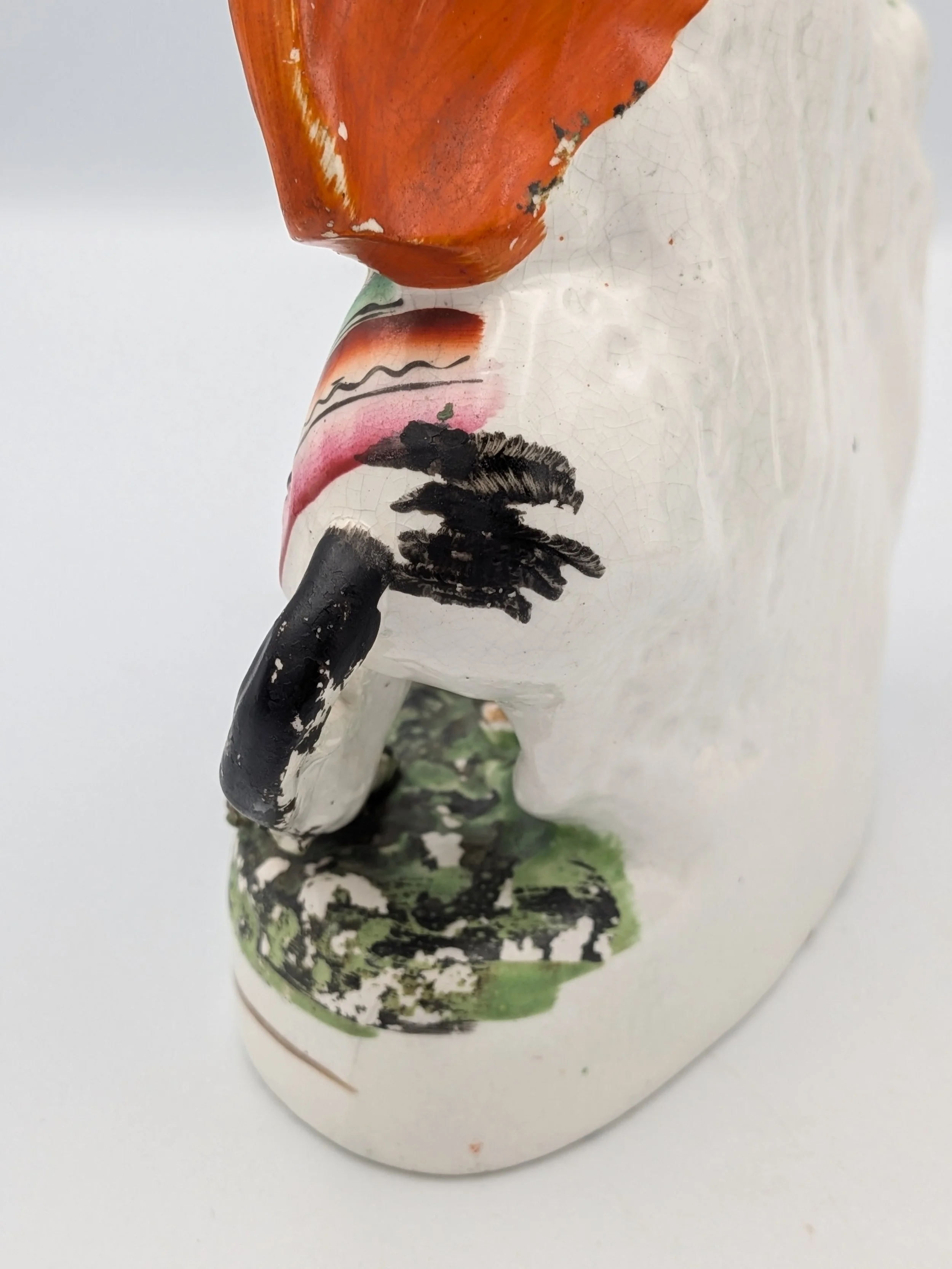 Image 33 of 37
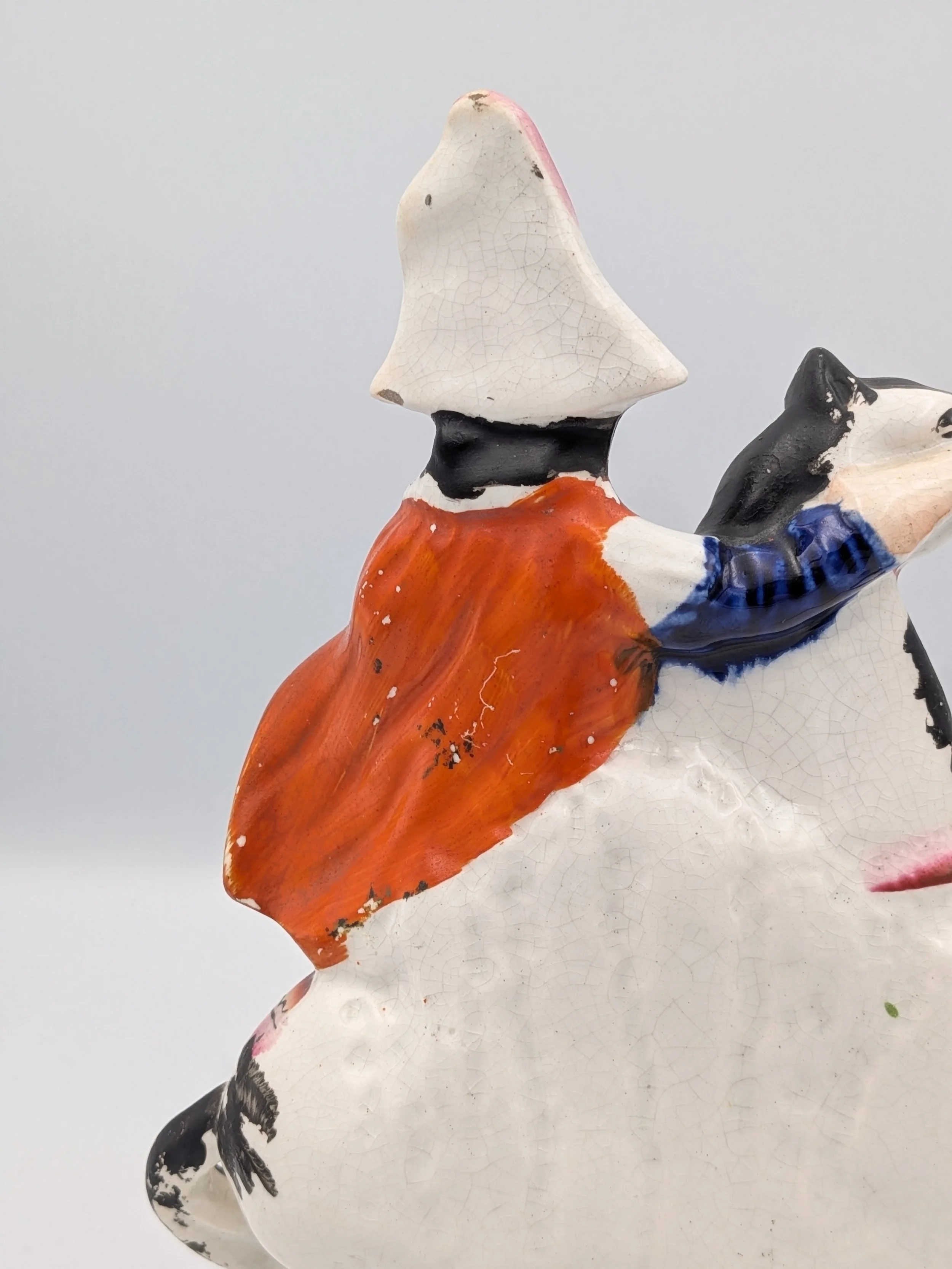 Image 34 of 37
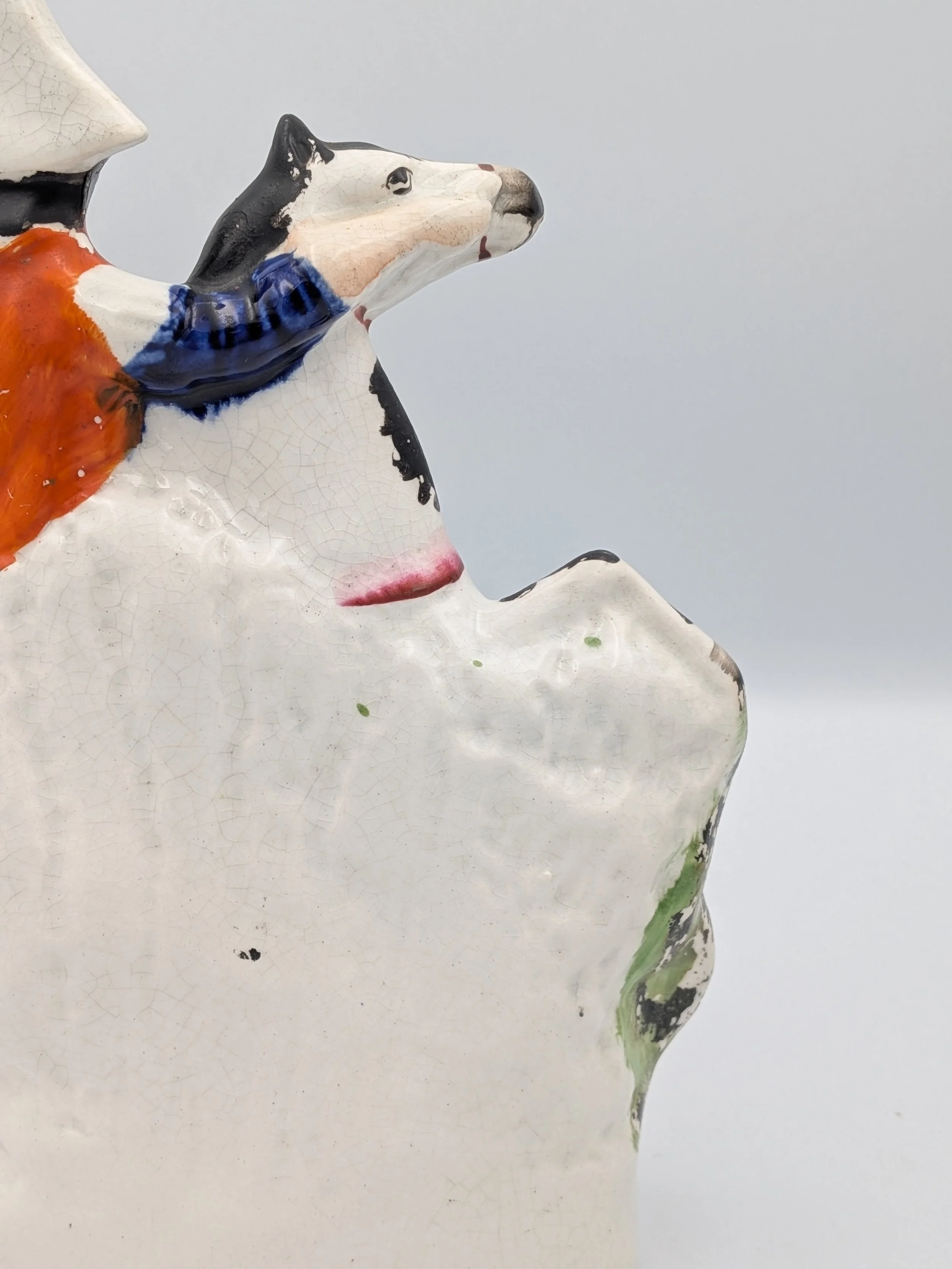 Image 35 of 37
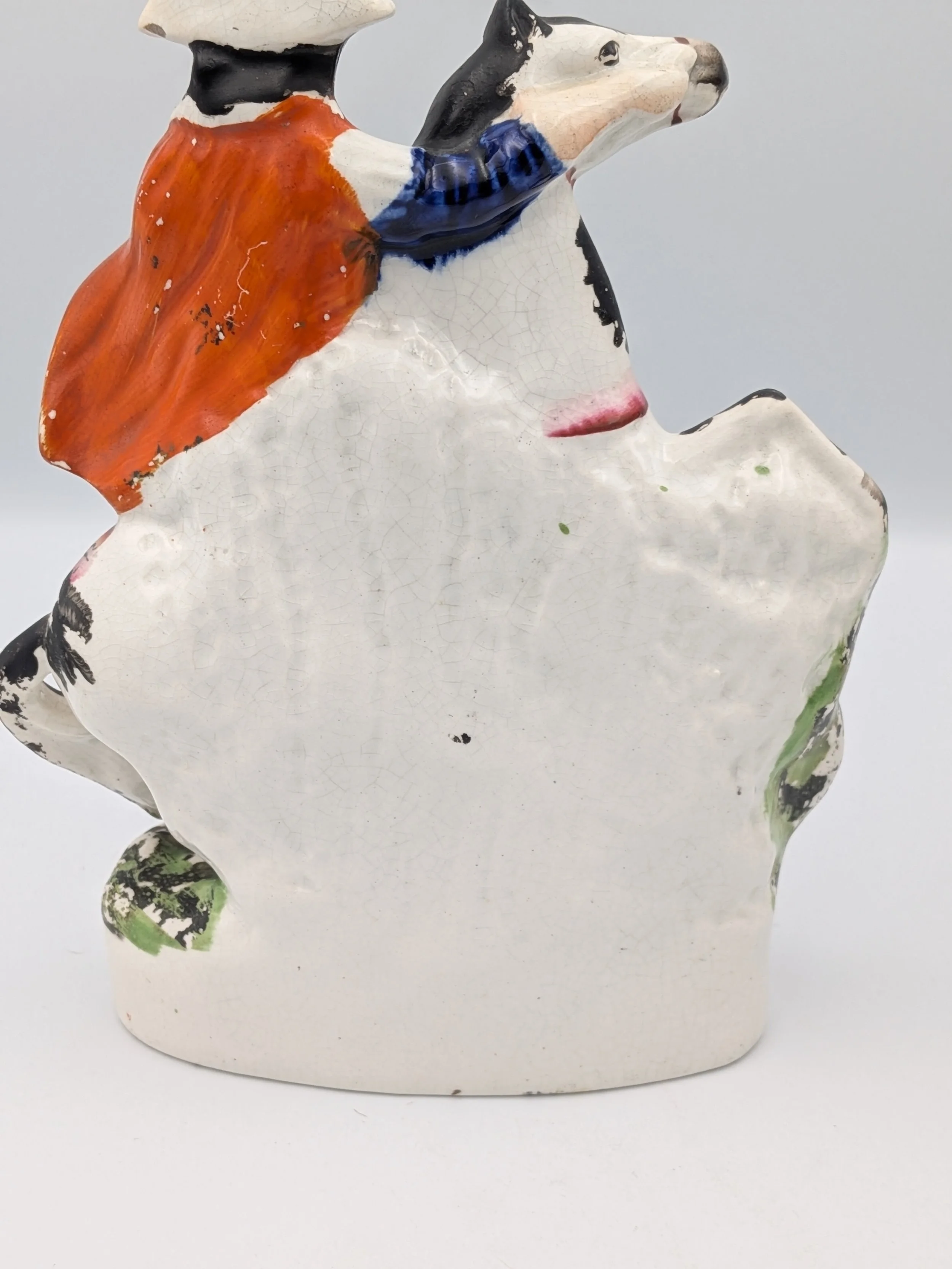 Image 36 of 37
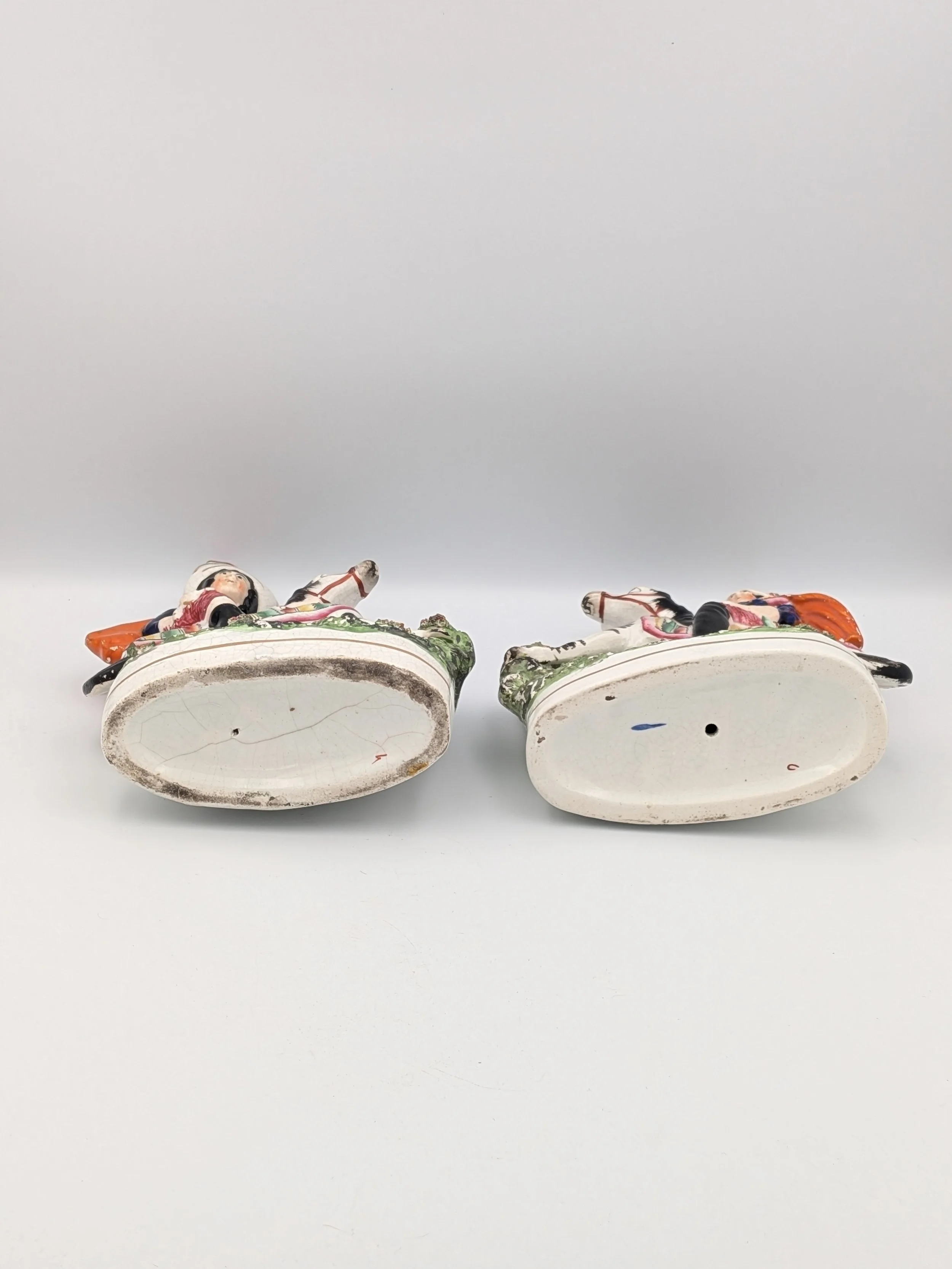 Image 37 of 37