A very rare and highly desirable figure depicting the actor Edward Askew Sothern in the role of the bumbling aristocrat Lord Dundreary in the 1861 London production of Tom Taylor’s Our American Cousin.
He wears very long whiskers, a monocle in his right eye, a pink overcoat, yellow waistcoat and checked trousers. He is using his fingers to count the number of his relations in the Act 4 scene depicted in the figure.
This figure is attributed to Thomas Parr, bearing all the hallmarks of quality, colouring and precision with which we associate the Parr Factory. It is a remarkably good representation of a wood-engraving inscribed ‘MR SOTHERN AS LORD DUNDREARY’, itself based on a photograph by Bassano of Regent Street of the play’s London premier in November 1861. Sothern’s interpretation of the role became iconic and Our American Cousin enjoyed several theatrical revivals through the 19th century with Sothern appearing as Dundreary. So iconic was his interpretation that ‘Dundreary whiskers’ and clothing became a fashion trend in the late 19th century.
This figure was reproduced by the Kent Factory in about 1890 when Our American Cousin was revived at the Novelty Theatre with Sothern’s son, Edward Hugh, in the Dundreary role. Kent reproductions are also very rare - perhaps even more so - but this figure is an original Parr figure.
The figure is in very good condition. There are very small, discreet retouches to flakes - one to the hair, two to worn finger tips, and to the shoes. A very faint stress hairline crack emanates from the left ankle across the right ankle and up the side of the jacket - this is entirely stable and has not resulted in any kind of break, and is practically unnoticeable when displayed.
This ranks as one of the best theatrical figures of the period, produced for only a short while after the play’s 1861 London premier before being reproduced by Kent some three decades later. It perfectly encapsulates the fondness of contemporary English audiences for comedically dim-witted aristocratic characters - a fascination which has flourished from the days of Shakespeare and even to the present. A superb figure.
Reference: P. D. Gordon Pugh, Staffordshire Portrait Figures, p. E428, pl. 18, fig. 41
Height: 8.5”
Date: c. 1861
A very rare and highly desirable figure depicting the actor Edward Askew Sothern in the role of the bumbling aristocrat Lord Dundreary in the 1861 London production of Tom Taylor’s Our American Cousin.
He wears very long whiskers, a monocle in his right eye, a pink overcoat, yellow waistcoat and checked trousers. He is using his fingers to count the number of his relations in the Act 4 scene depicted in the figure.
This figure is attributed to Thomas Parr, bearing all the hallmarks of quality, colouring and precision with which we associate the Parr Factory. It is a remarkably good representation of a wood-engraving inscribed ‘MR SOTHERN AS LORD DUNDREARY’, itself based on a photograph by Bassano of Regent Street of the play’s London premier in November 1861. Sothern’s interpretation of the role became iconic and Our American Cousin enjoyed several theatrical revivals through the 19th century with Sothern appearing as Dundreary. So iconic was his interpretation that ‘Dundreary whiskers’ and clothing became a fashion trend in the late 19th century.
This figure was reproduced by the Kent Factory in about 1890 when Our American Cousin was revived at the Novelty Theatre with Sothern’s son, Edward Hugh, in the Dundreary role. Kent reproductions are also very rare - perhaps even more so - but this figure is an original Parr figure.
The figure is in very good condition. There are very small, discreet retouches to flakes - one to the hair, two to worn finger tips, and to the shoes. A very faint stress hairline crack emanates from the left ankle across the right ankle and up the side of the jacket - this is entirely stable and has not resulted in any kind of break, and is practically unnoticeable when displayed.
This ranks as one of the best theatrical figures of the period, produced for only a short while after the play’s 1861 London premier before being reproduced by Kent some three decades later. It perfectly encapsulates the fondness of contemporary English audiences for comedically dim-witted aristocratic characters - a fascination which has flourished from the days of Shakespeare and even to the present. A superb figure.
Reference: P. D. Gordon Pugh, Staffordshire Portrait Figures, p. E428, pl. 18, fig. 41
Height: 8.5”
Date: c. 1861
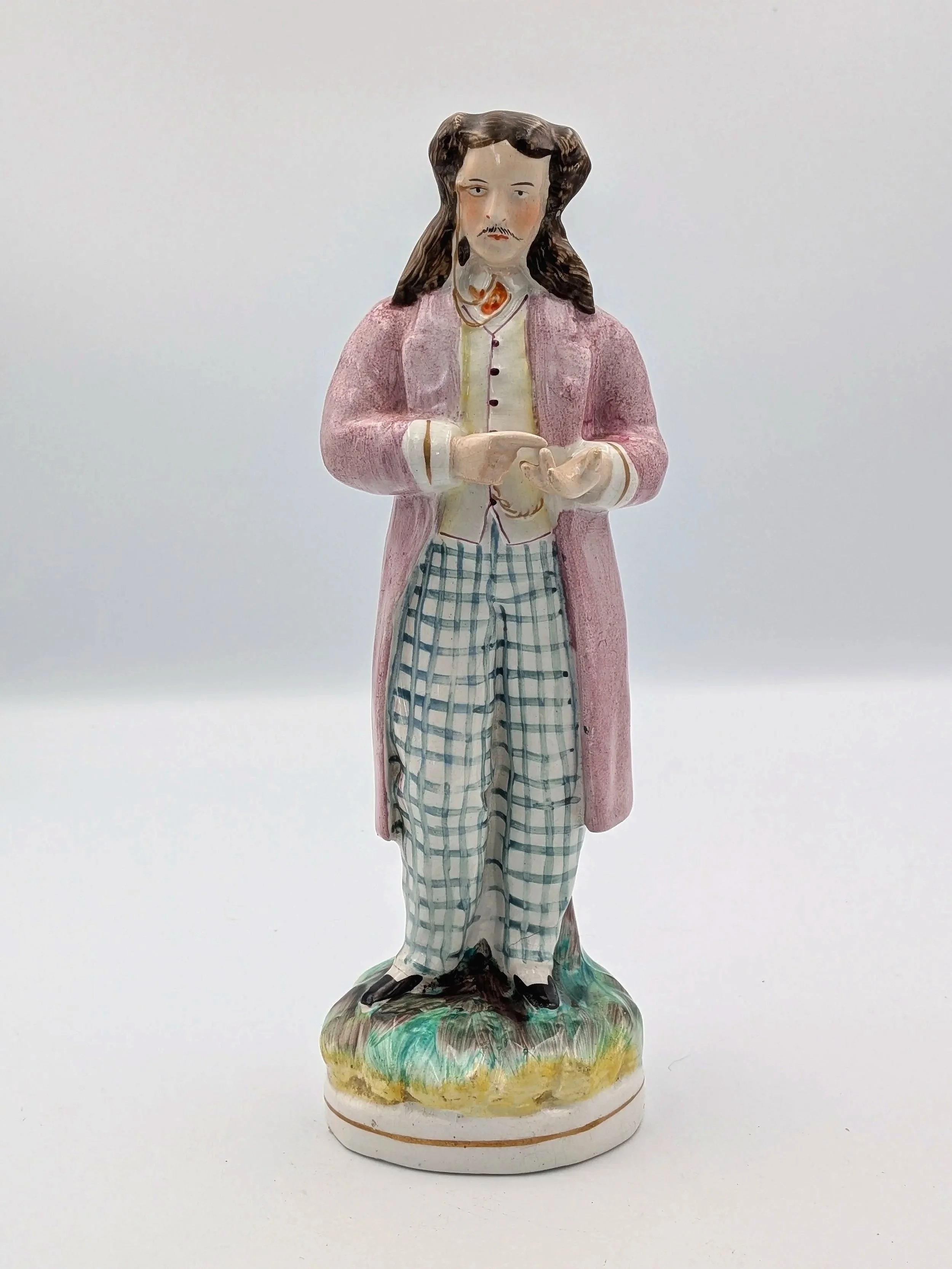 Image 1 of 21
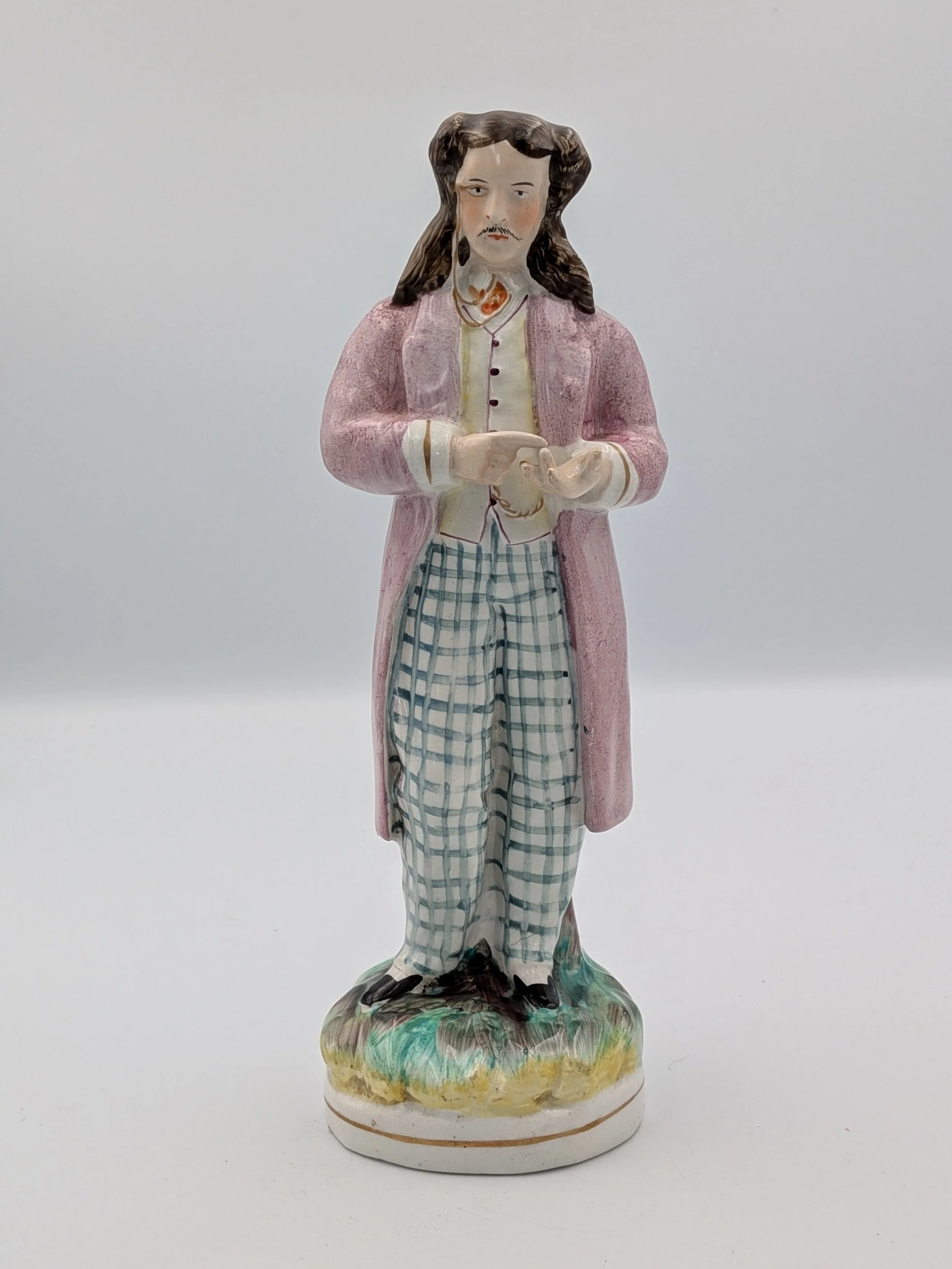 Image 2 of 21
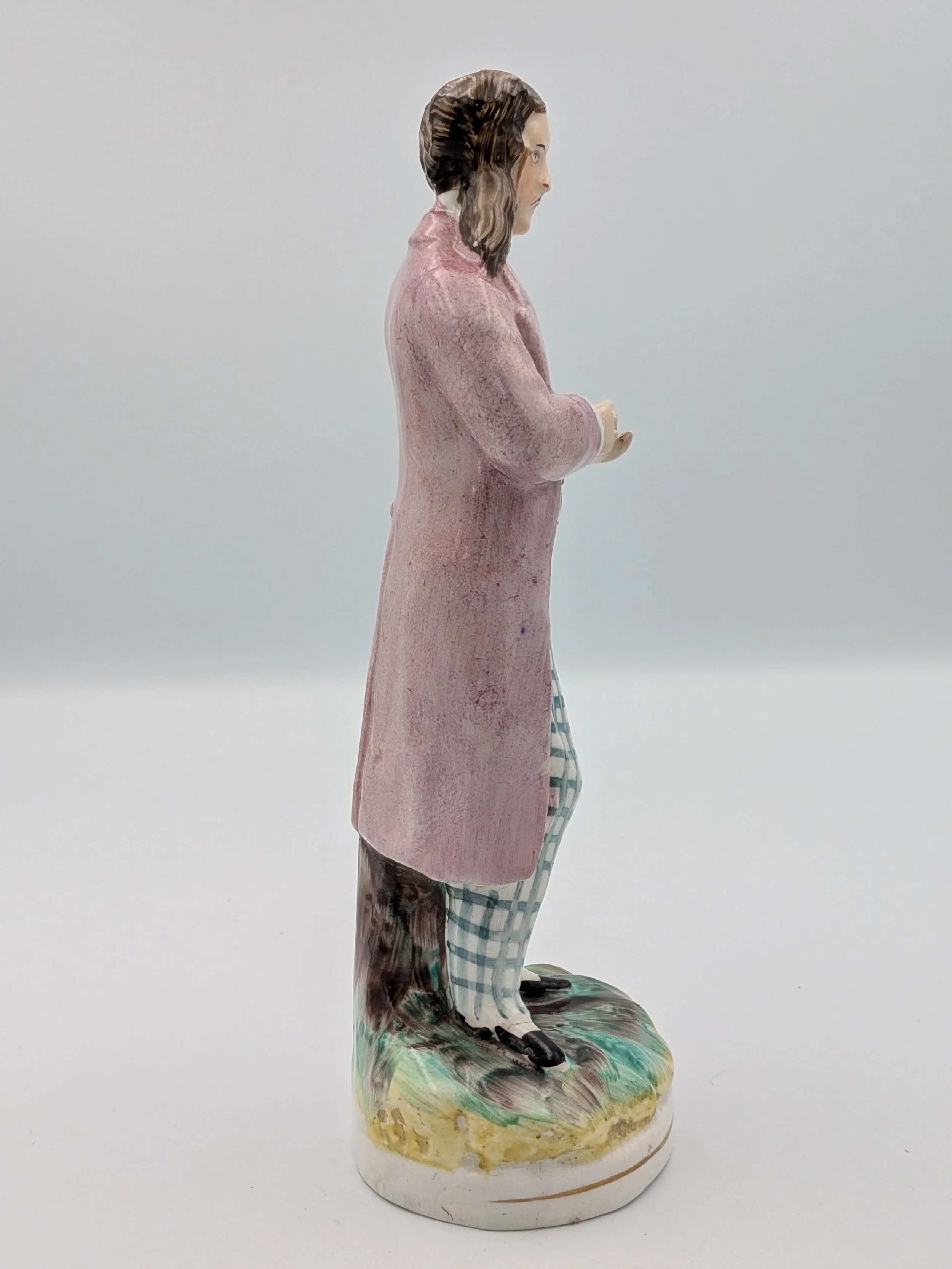 Image 3 of 21
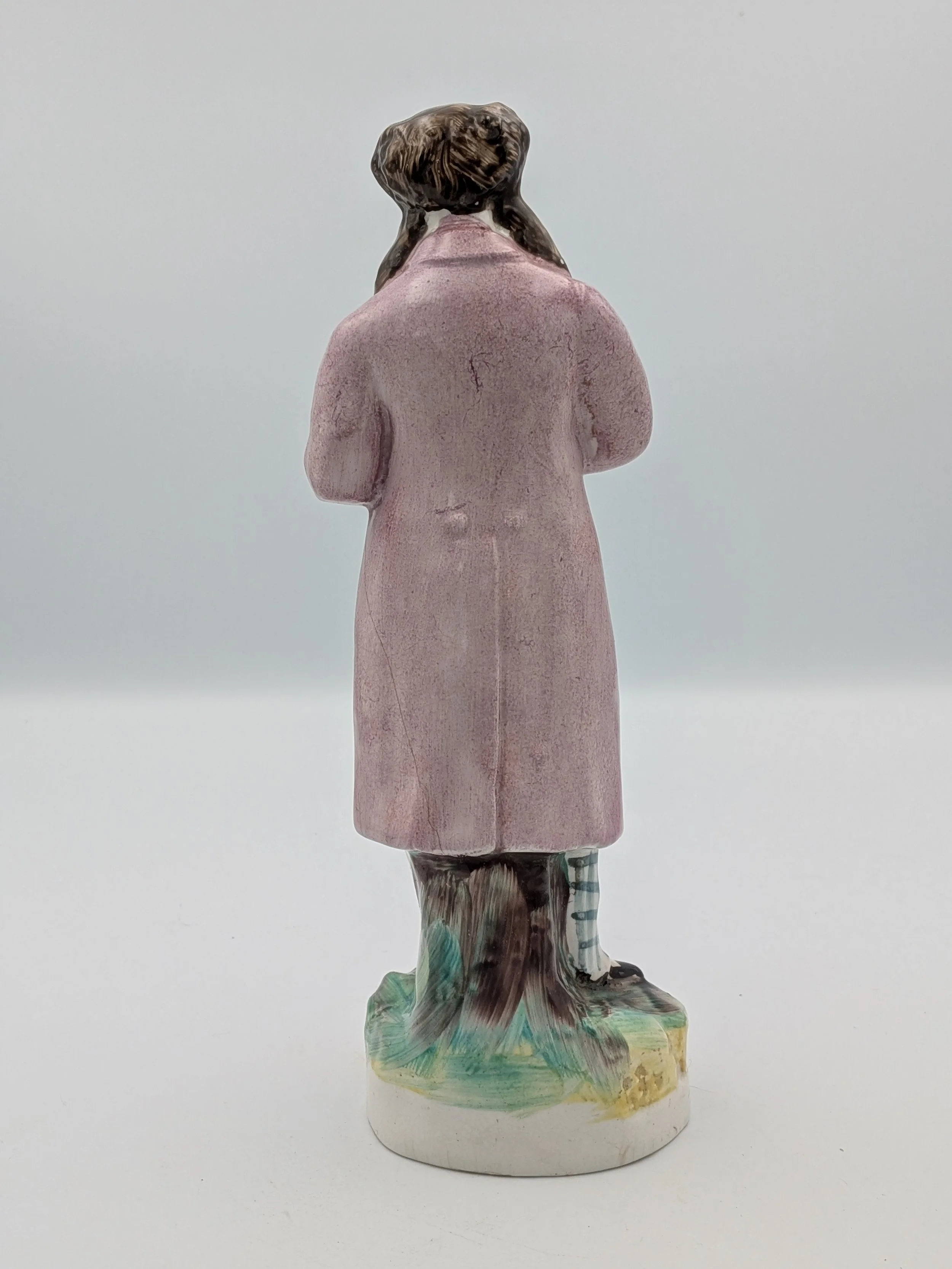 Image 4 of 21
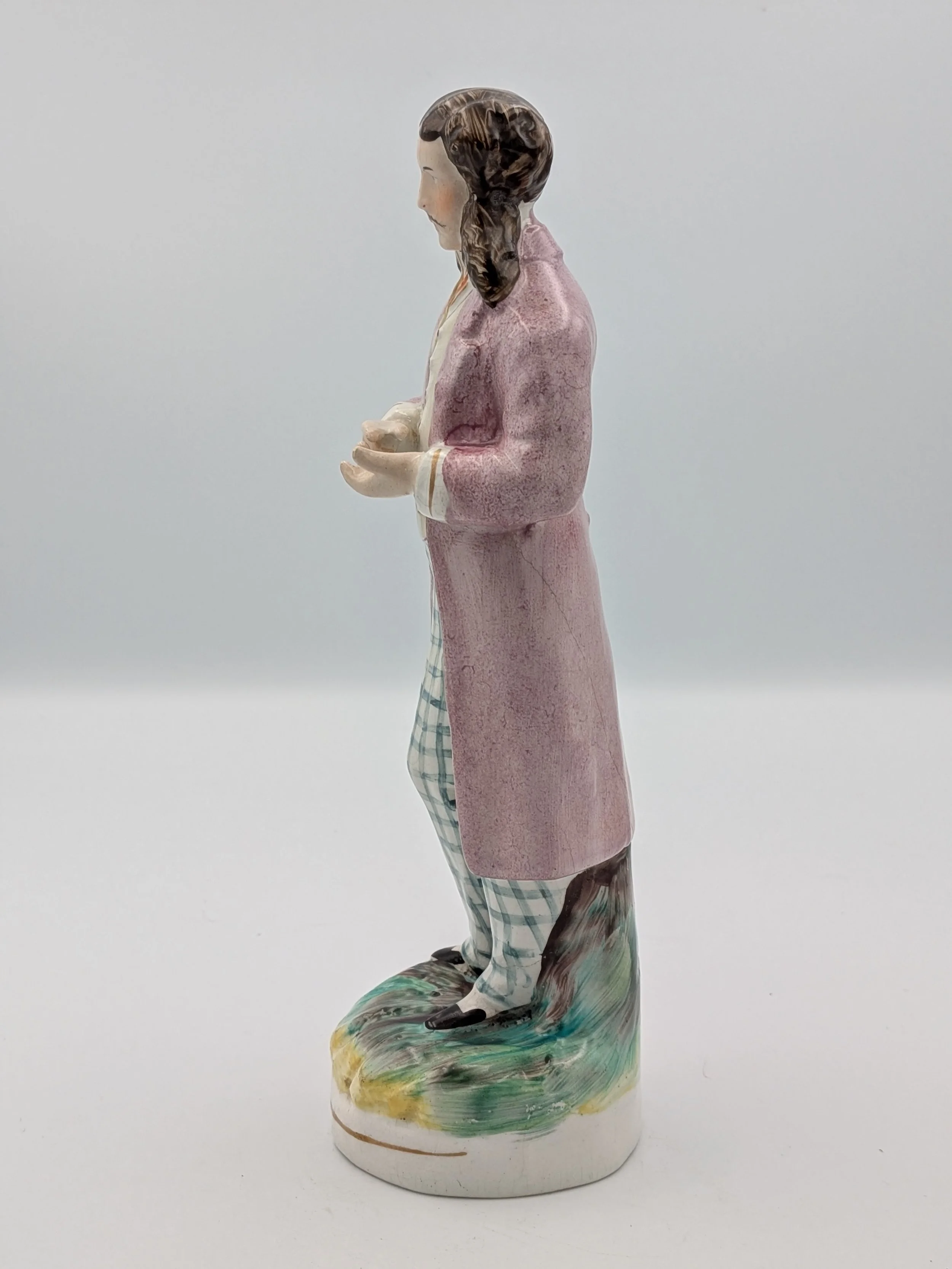 Image 5 of 21
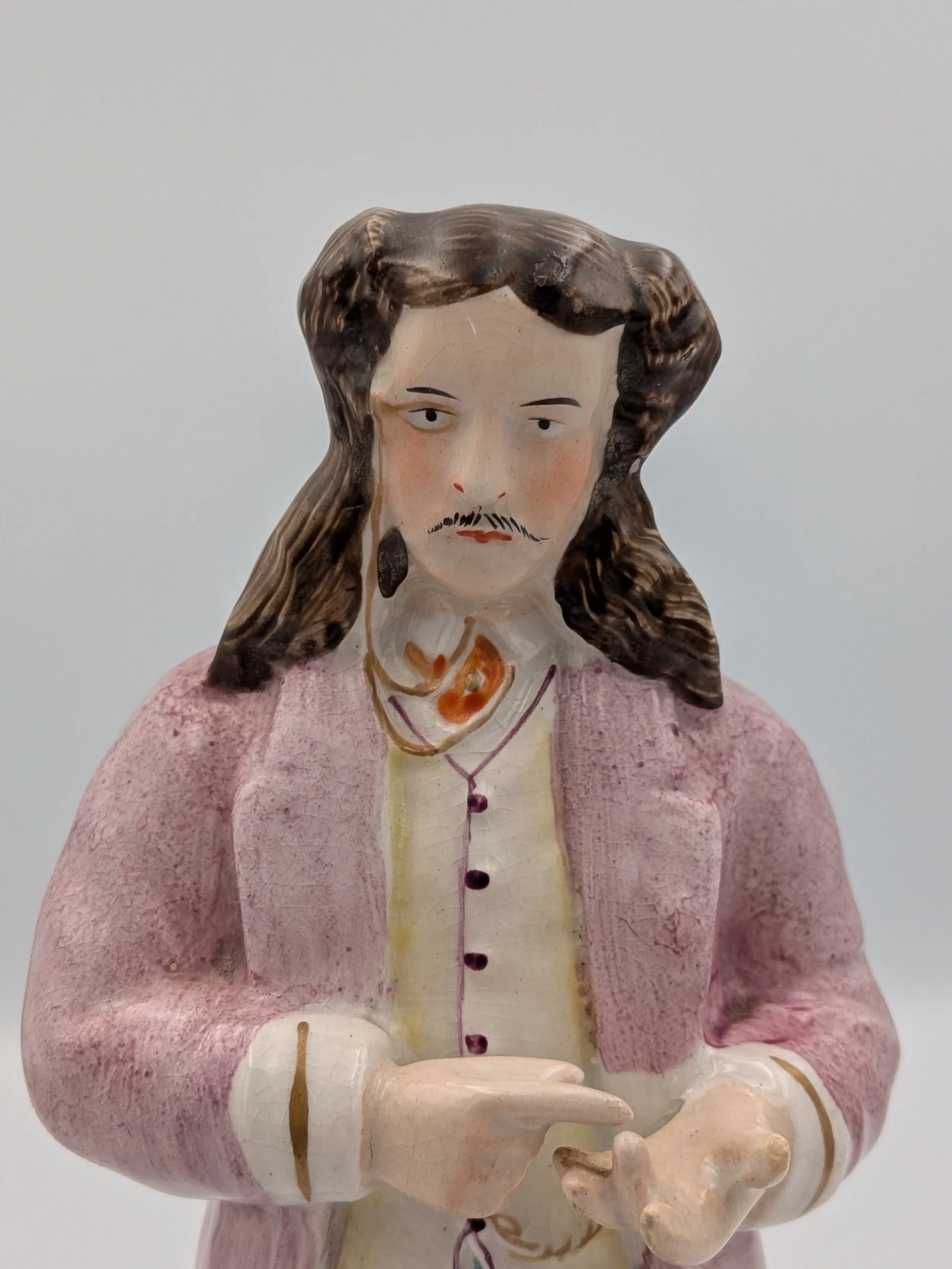 Image 6 of 21
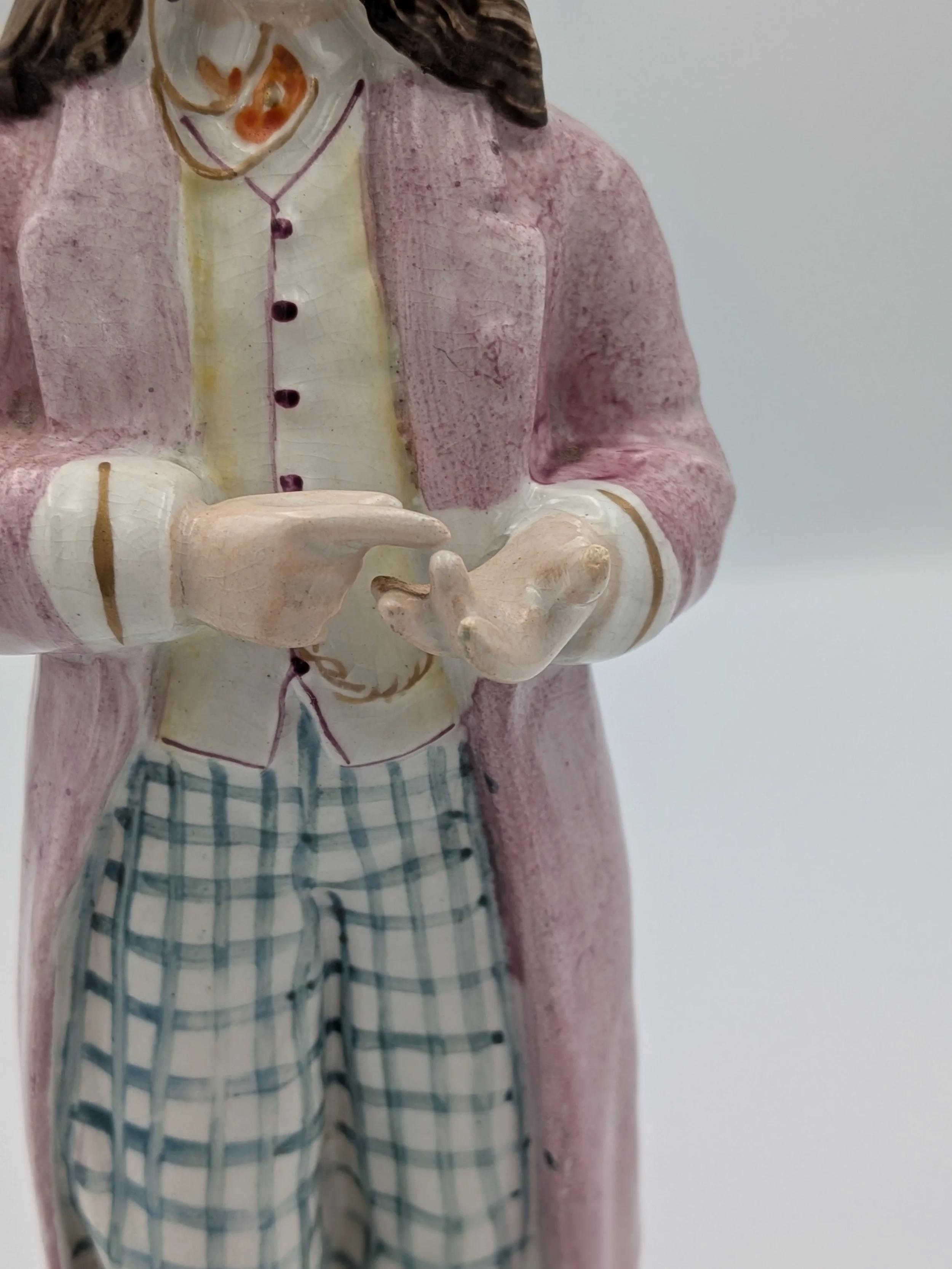 Image 7 of 21
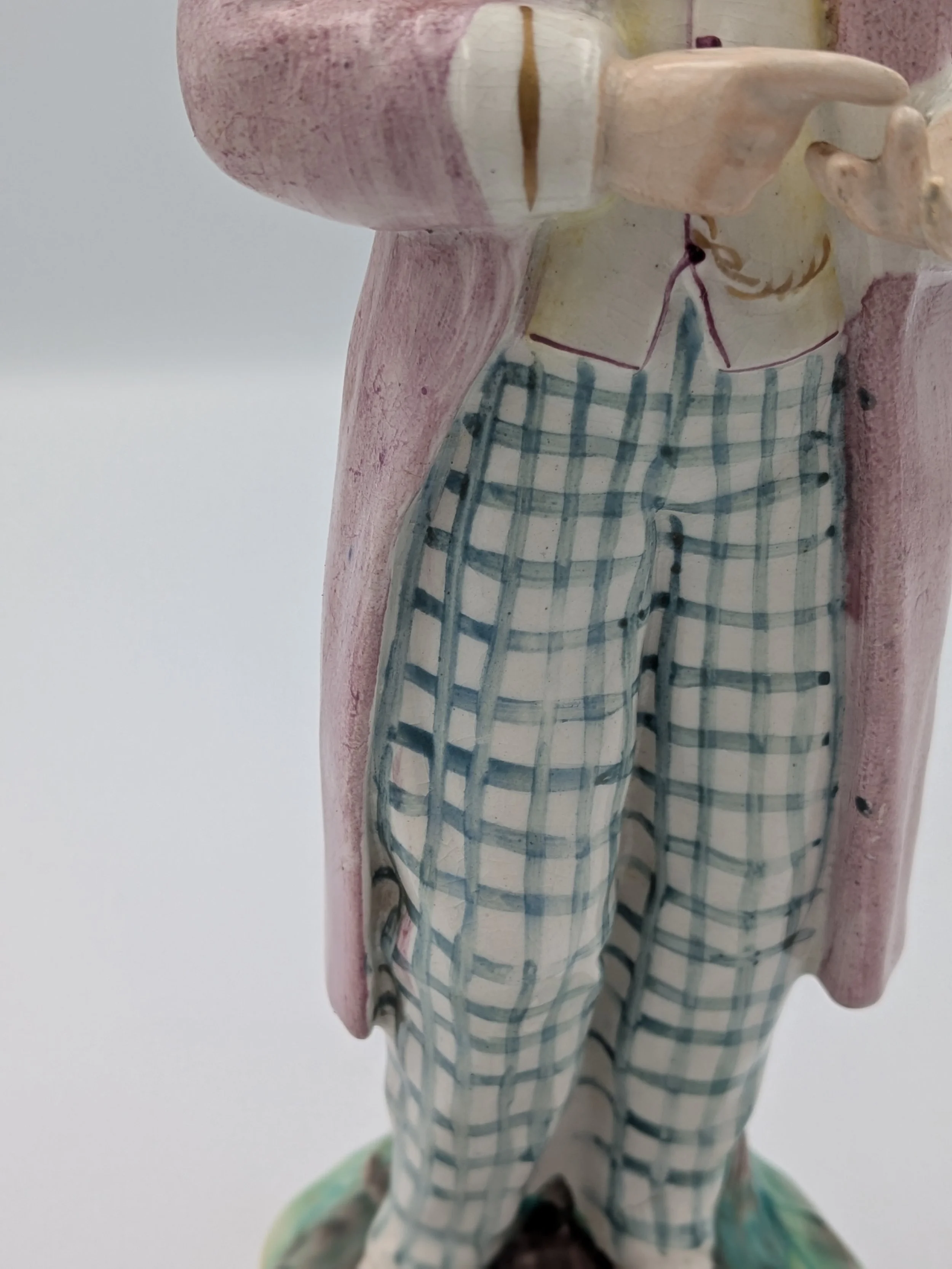 Image 8 of 21
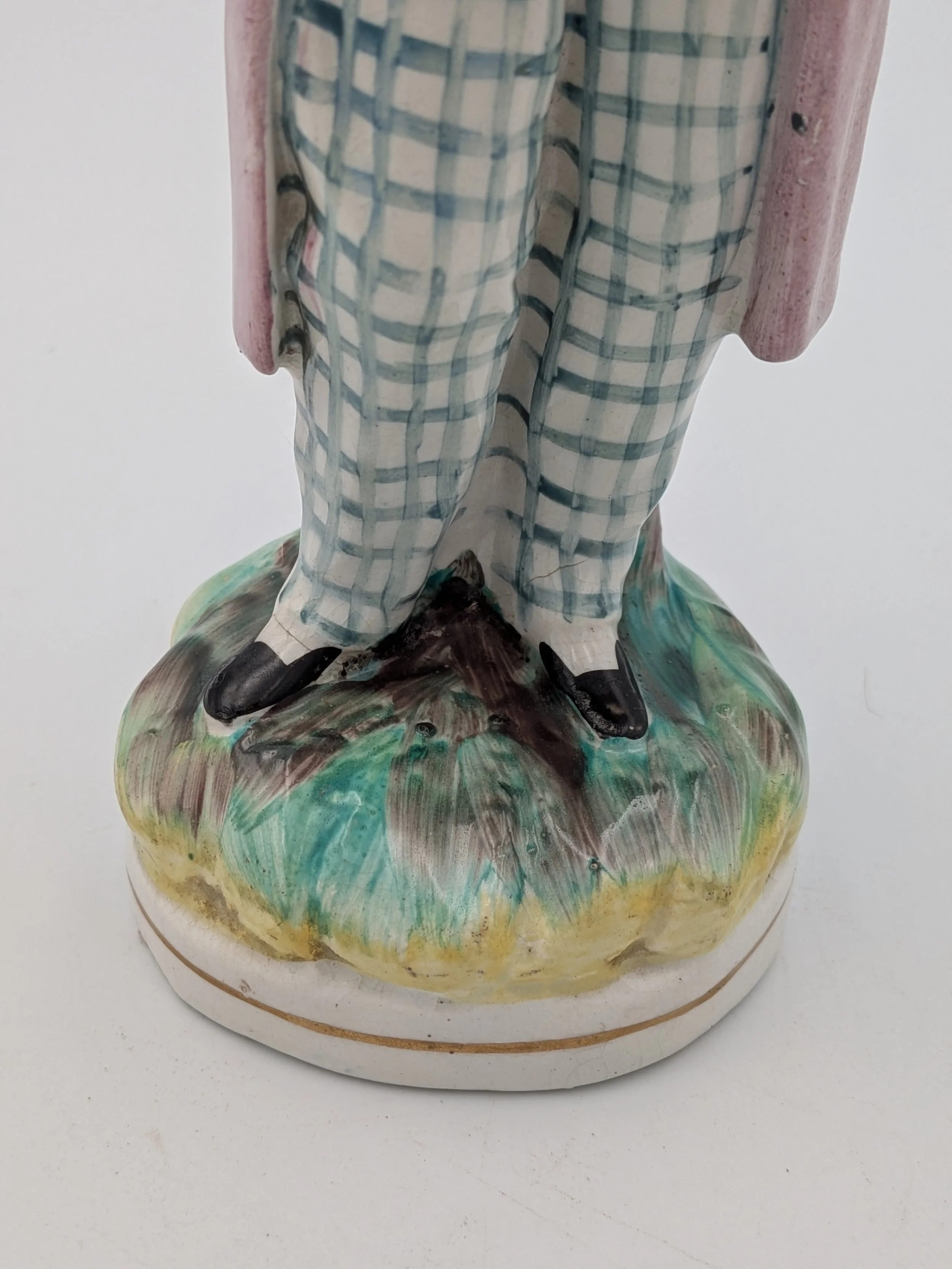 Image 9 of 21
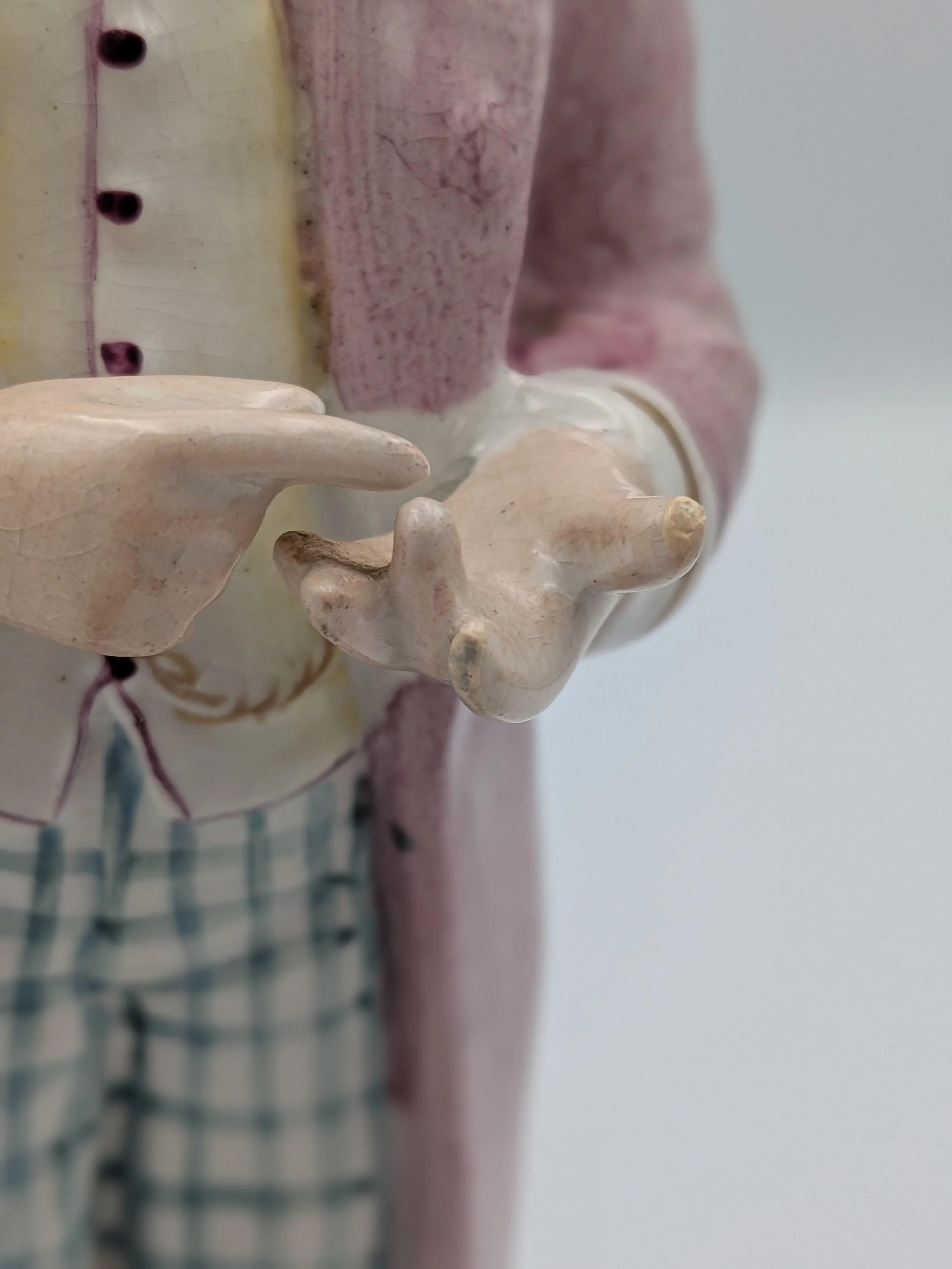 Image 10 of 21
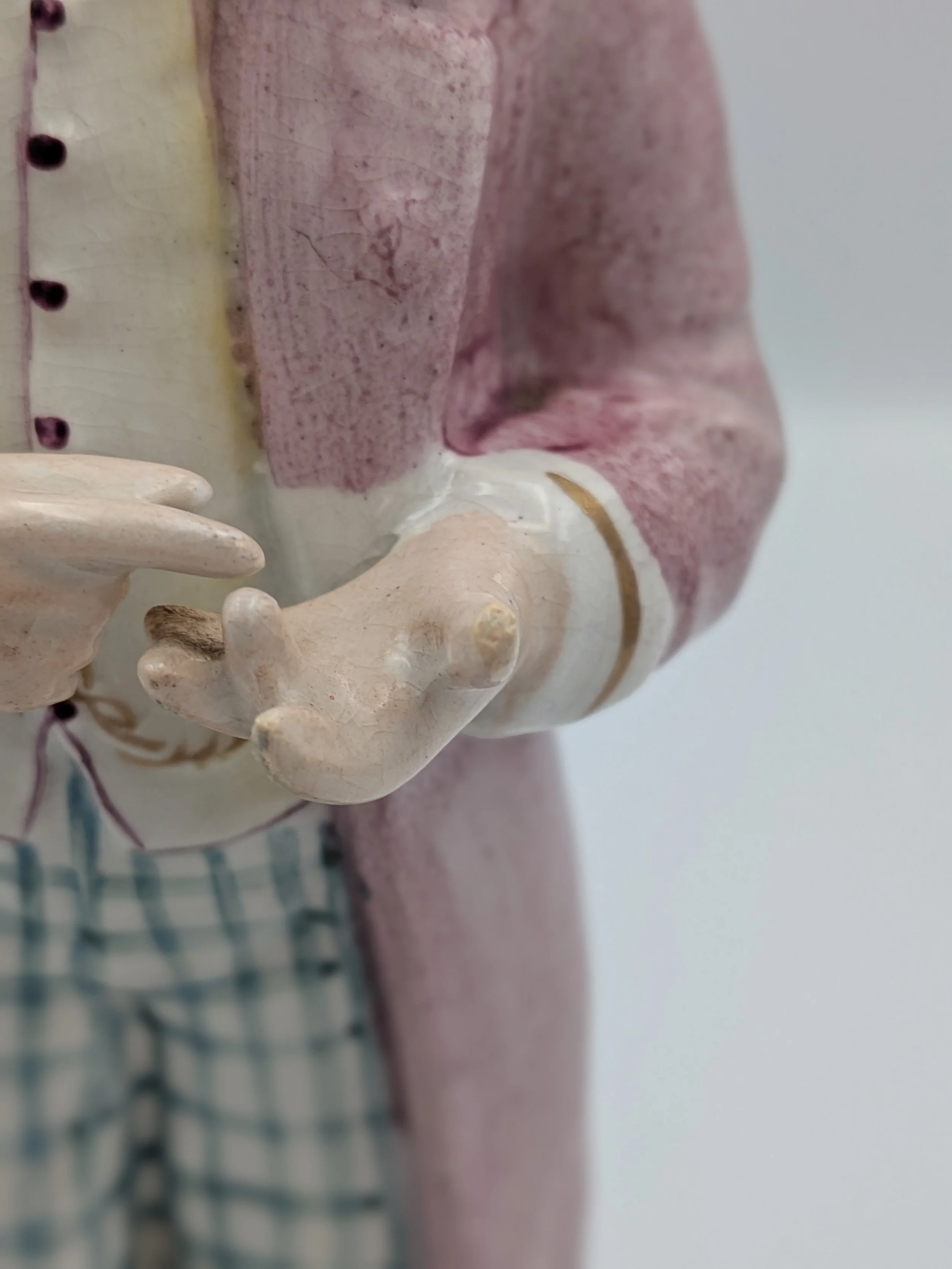 Image 11 of 21
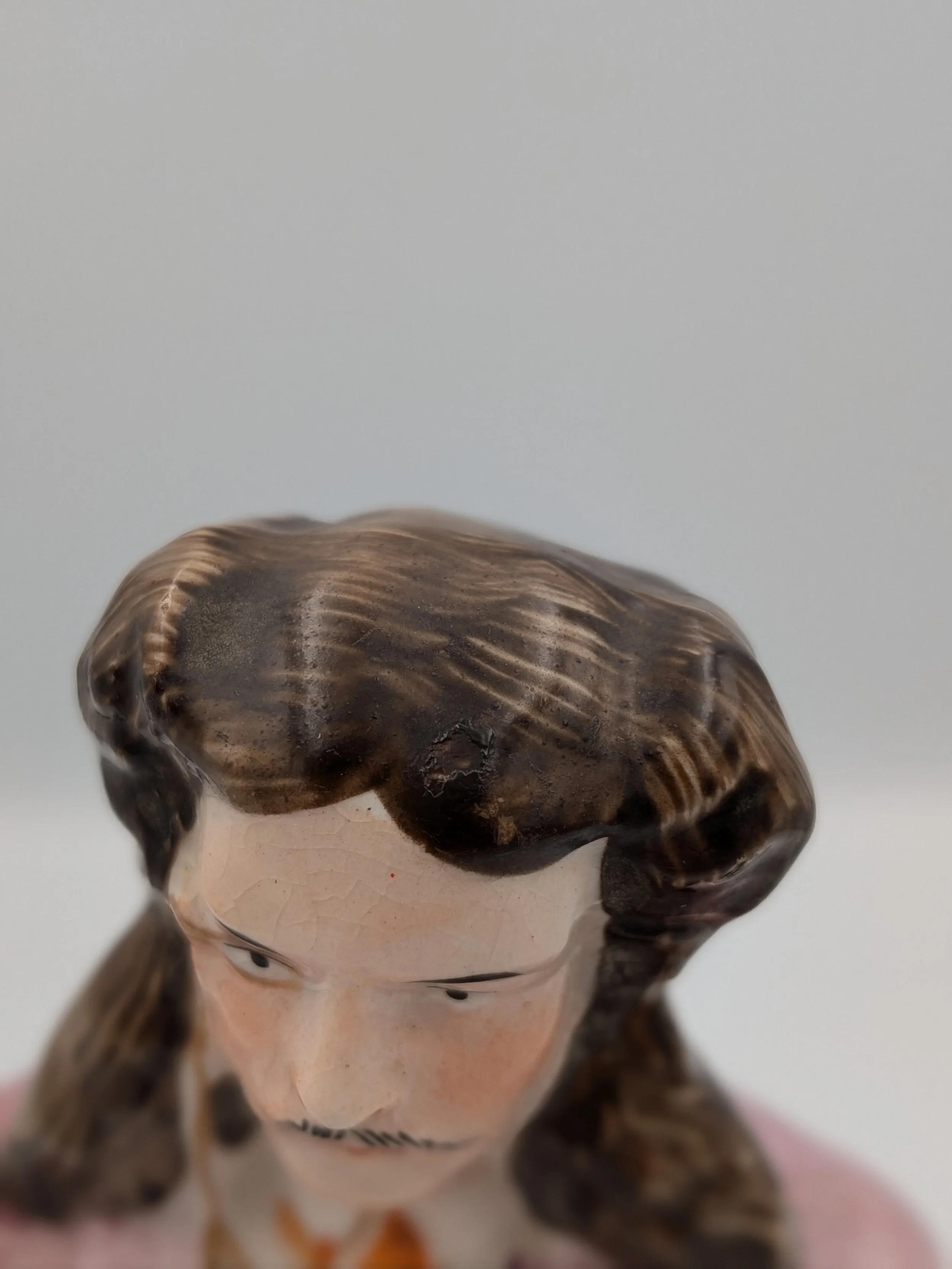 Image 12 of 21
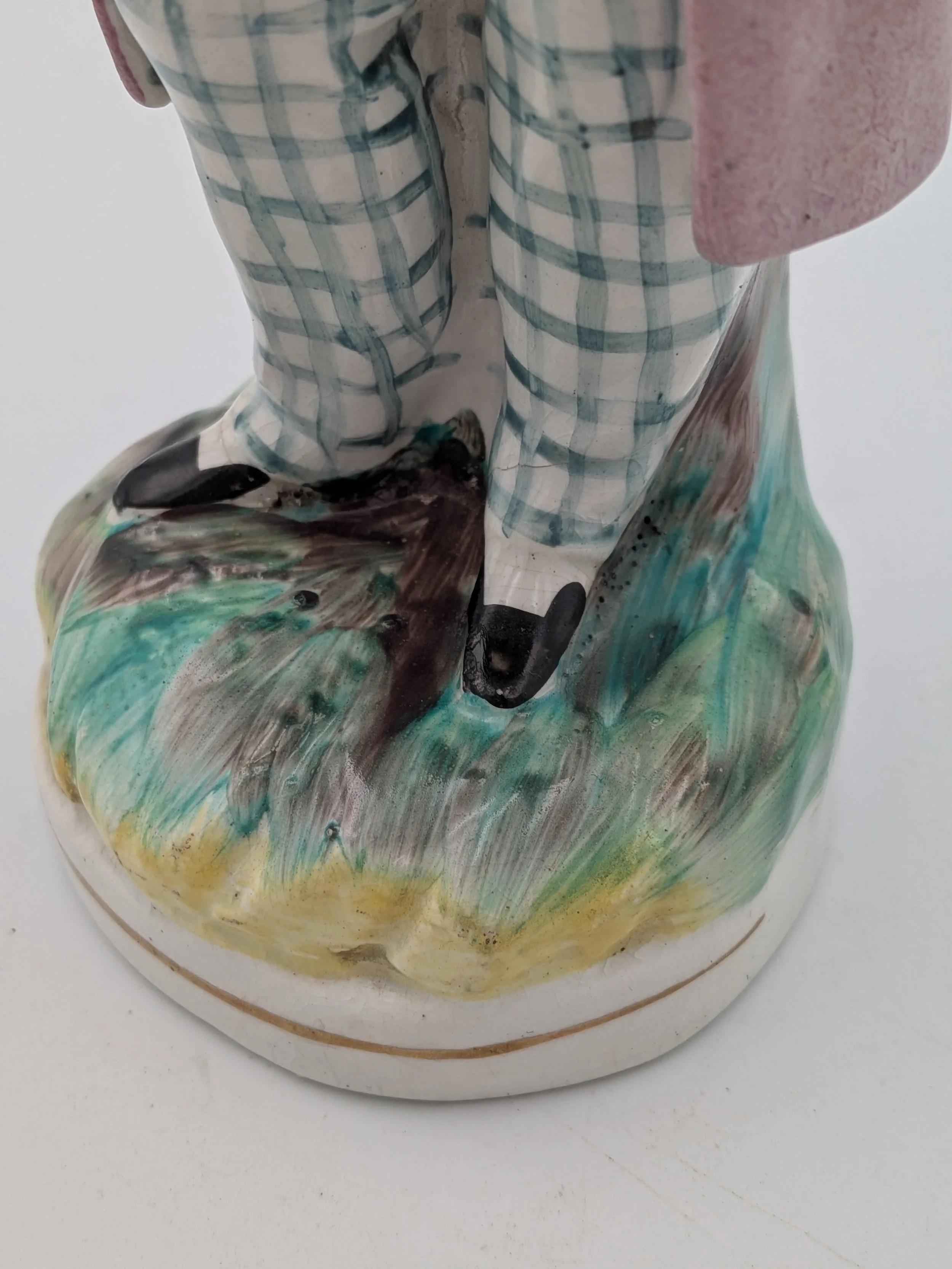 Image 13 of 21
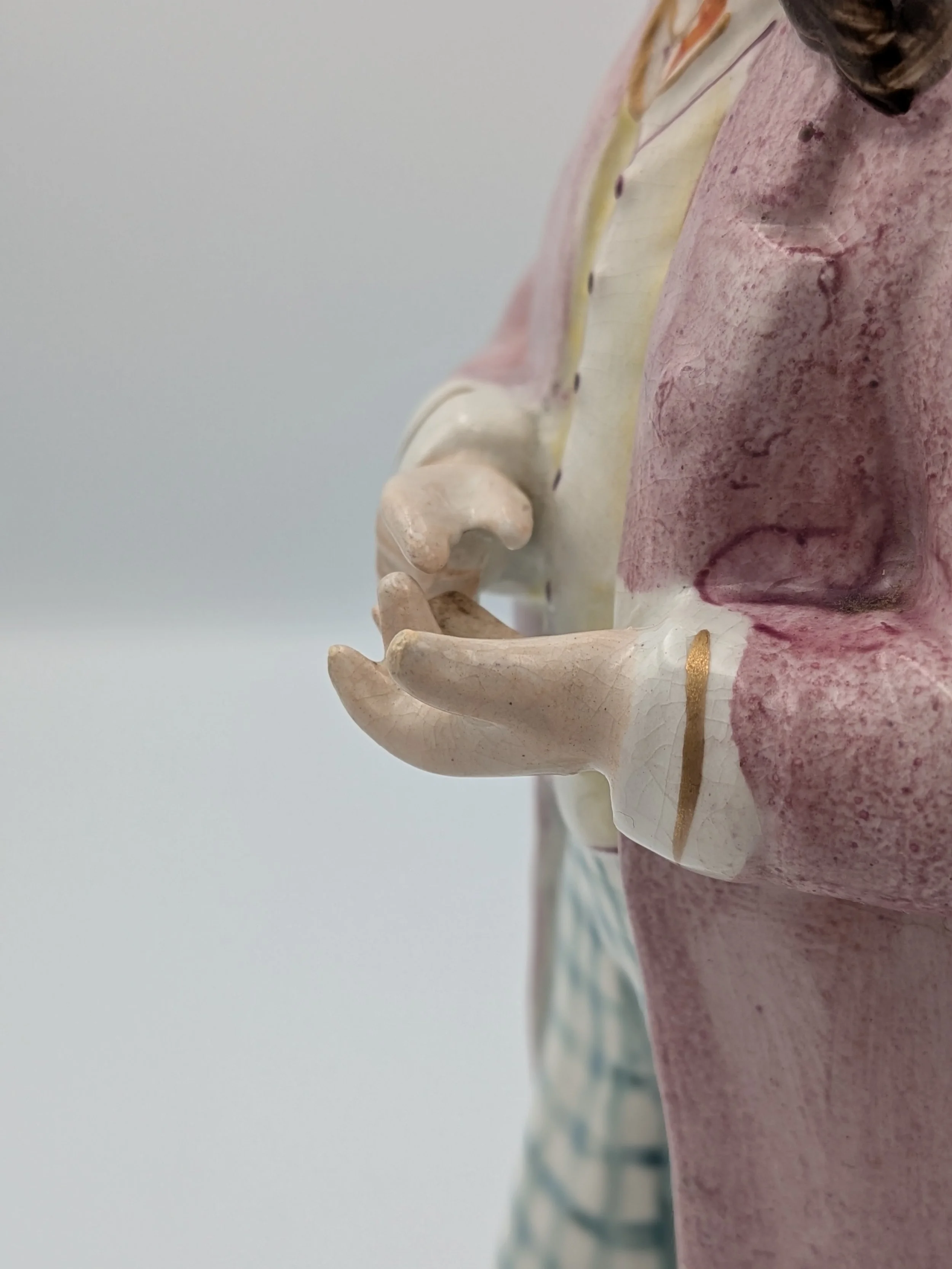 Image 14 of 21
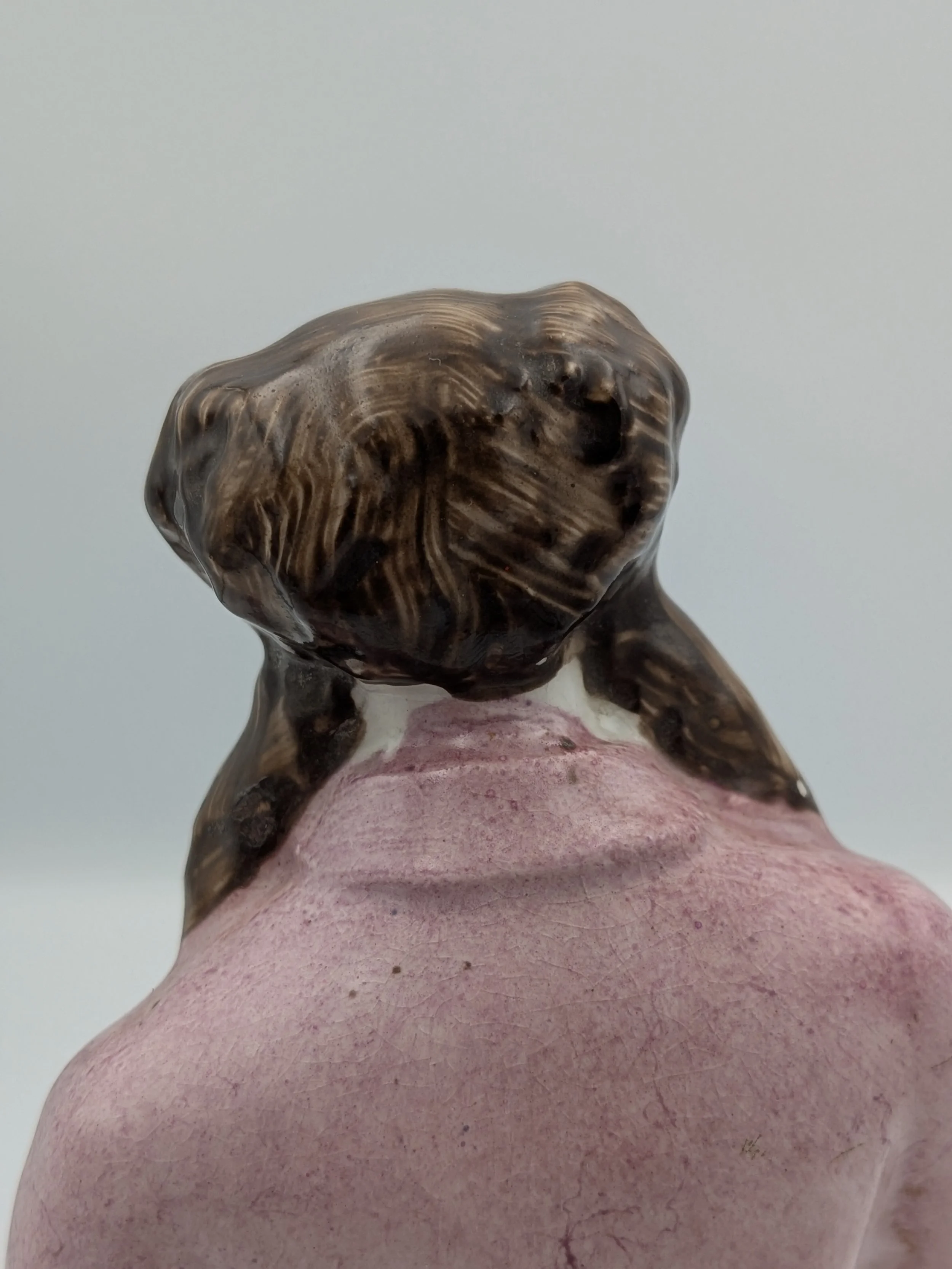 Image 15 of 21
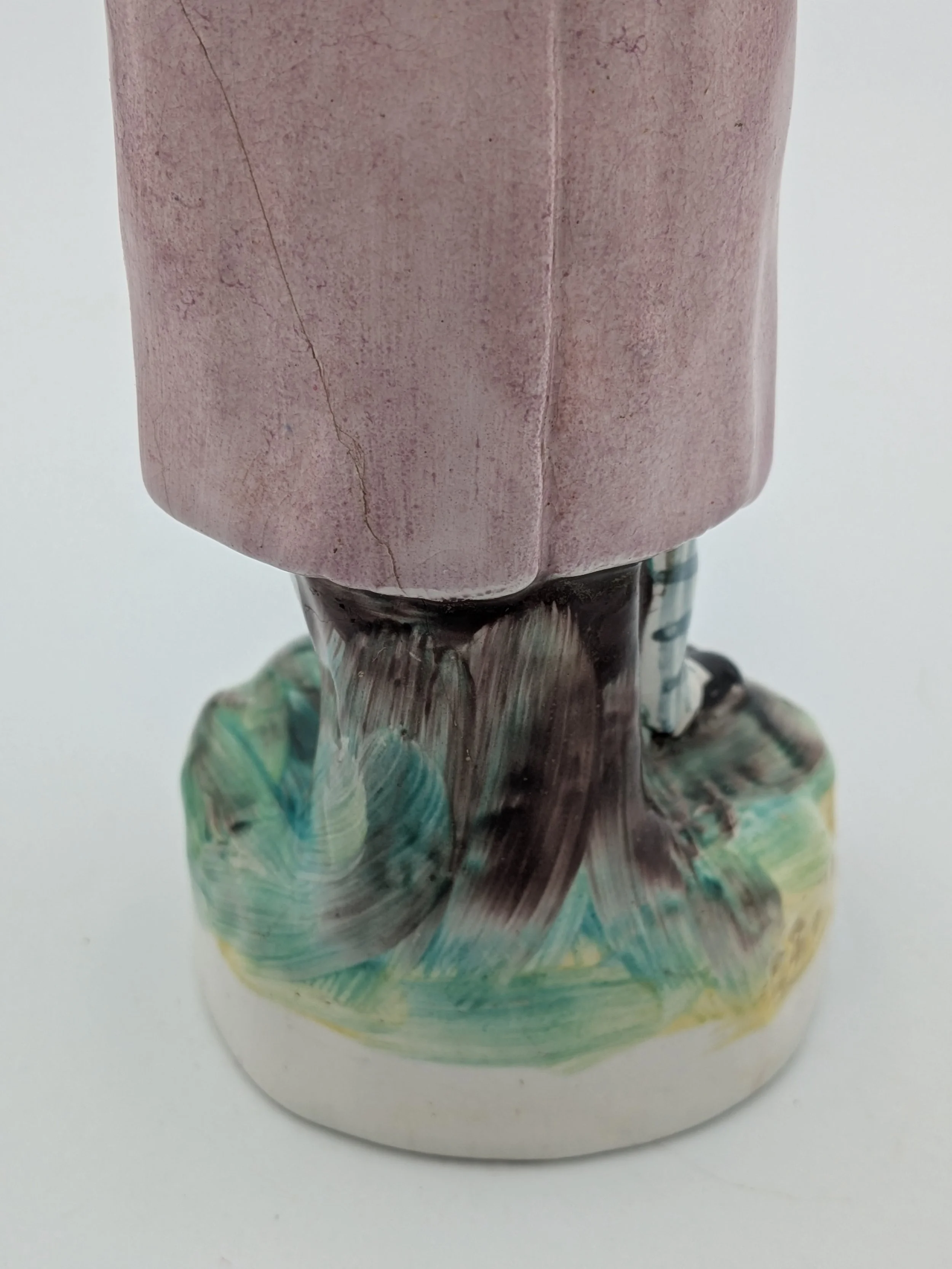 Image 16 of 21
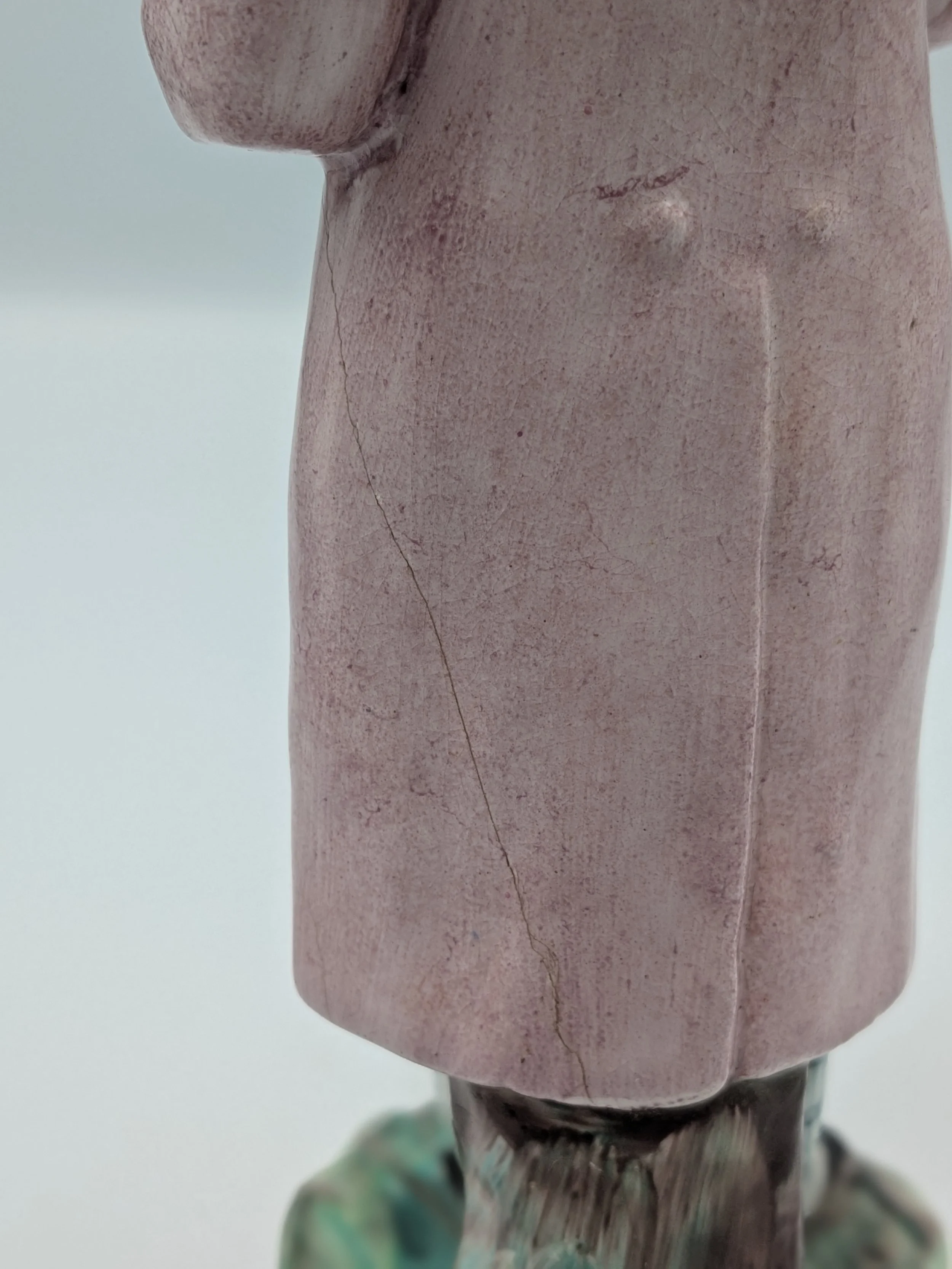 Image 17 of 21
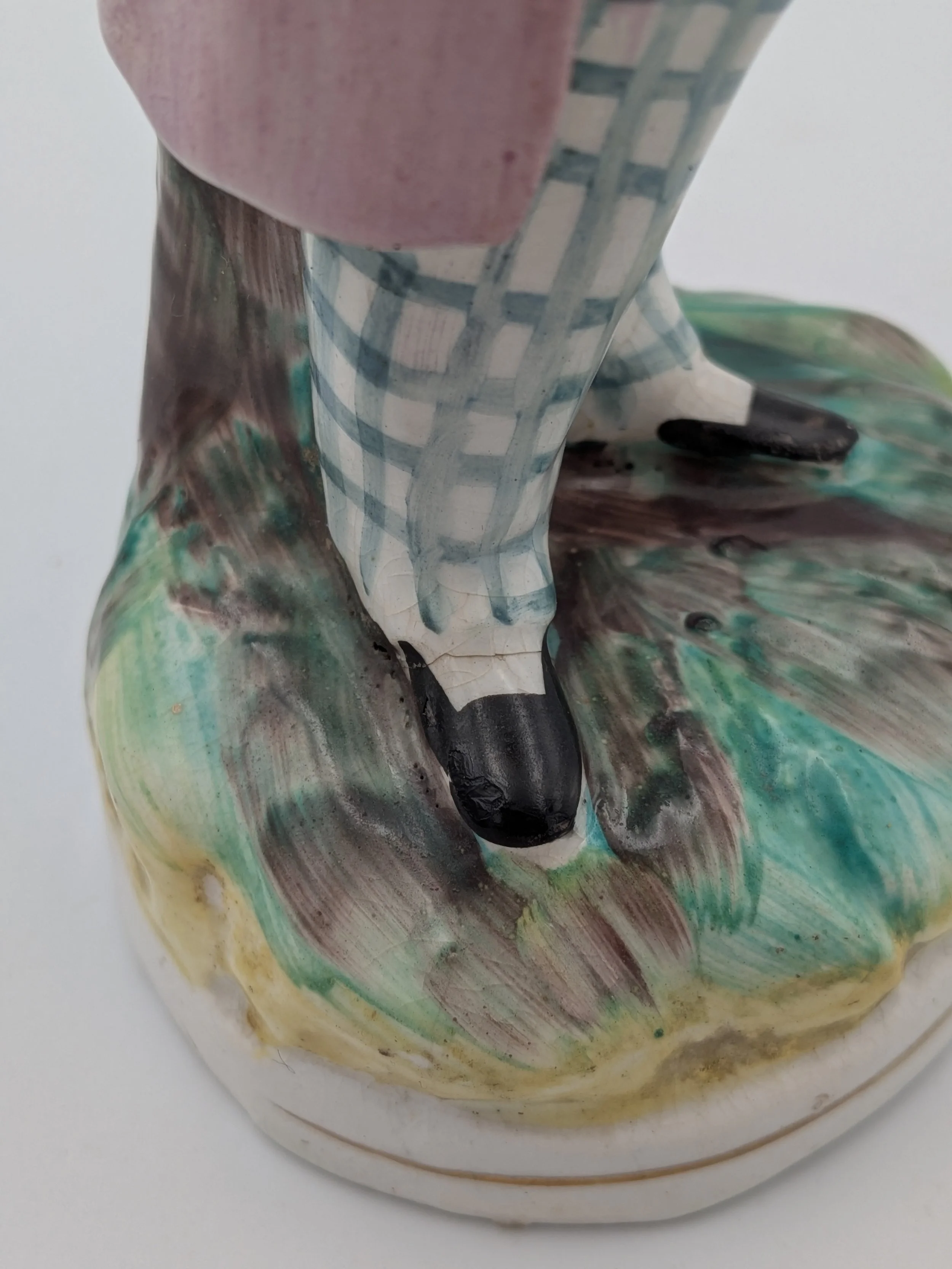 Image 18 of 21
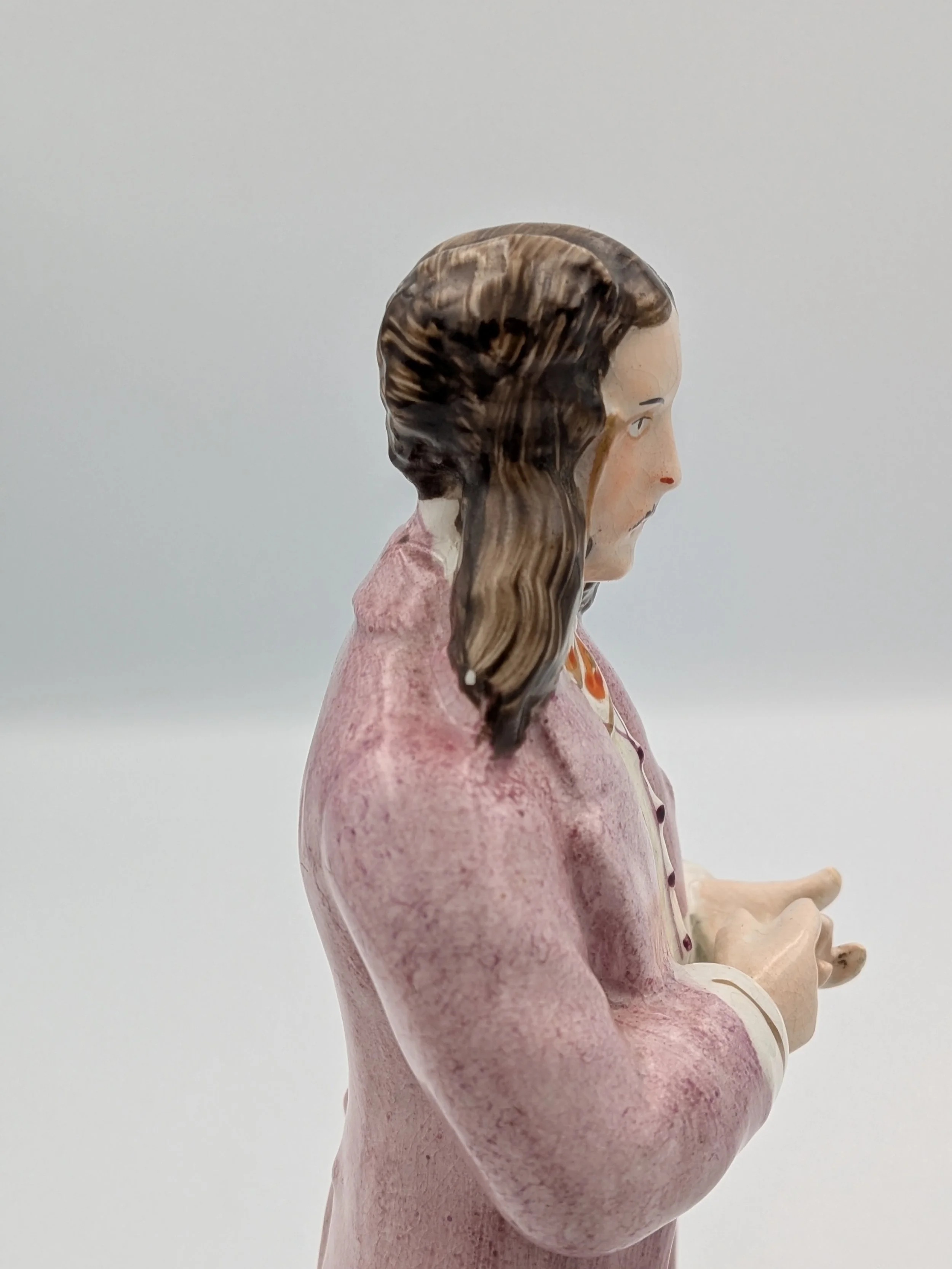 Image 19 of 21
 Image 20 of 21
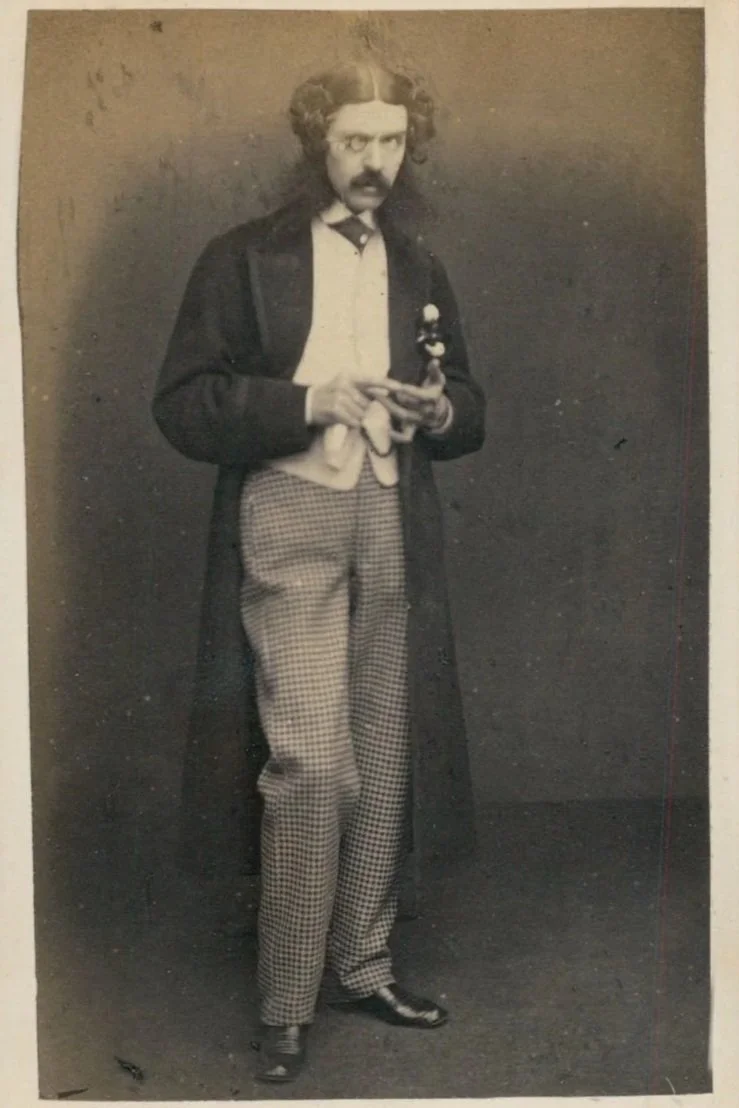 Image 21 of 21